Workplace PPE Guidelines for Professional Cleaners
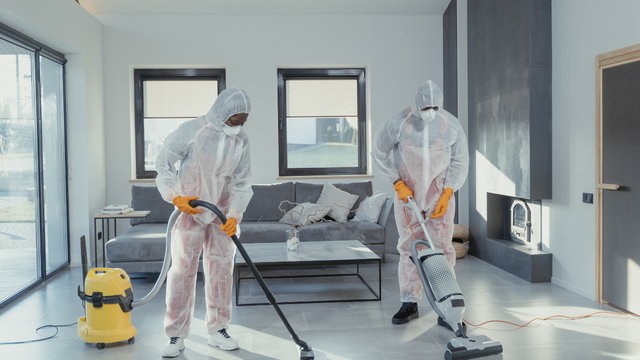


Understanding workplace PPE guidelines is essential for professional cleaners because cleaning work can involve chemicals, contaminated surfaces, wet environments, sharp objects, splashes, dust and other hazards that ordinary clothing may not adequately protect against.
However, professional cleaning does not mean wearing every possible item of PPE for every task.
A cleaner emptying ordinary office bins presents a very different risk profile from someone diluting a corrosive cleaning concentrate, dealing with a body-fluid spill or working in a healthcare isolation area. The correct PPE therefore depends on the hazard, exposure route, cleaning method and environment.
UK health-and-safety practice also follows an important principle: PPE should not be the first or only solution. Employers should first consider whether the hazard can be removed, replaced with something safer or controlled through better equipment and working methods.
When PPE remains necessary, it needs to be suitable, properly fitted, maintained, replaced when required and provided with effective training.
This guide explains cleaning PPE UK employers and workers should understand, from gloves and protective footwear to eye protection, aprons and respiratory equipment, alongside COSHH, healthcare requirements and wider commercial cleaning safety responsibilities.
What Is PPE and Why Is It Important for Cleaners?
PPE stands for personal protective equipment, also known as protective workwear or safety equipment. It is equipment worn or used by workers to reduce exposure to workplace PPE guidelines hazards and health and safety risks.
For professional cleaners, PPE can include:
- protective gloves or hand protection;
- aprons and coveralls or protective clothing;
- eye protection or safety eyewear;
- safety footwear or protective shoes;
- high-visibility clothing;
- respiratory protective equipment (RPE).
The exact combination depends on the cleaning task and level of risk.
Why Cleaning Creates PPE Risks
Cleaning is sometimes wrongly considered low-risk work because the activities are familiar and routine. In reality, professional cleaners may regularly handle concentrated products, disinfectants, contaminated waste and cleaning equipment.
HSE warns that cleaning products can contribute to:
- skin irritation;
- occupational dermatitis;
- allergic reactions;
- asthma;
- chemical burns;
- eye damage.
Frequent contact with water, detergents and cleaning solutions can also increase the risk of dermatitis. PPE, or personal protective equipment, can help reduce these hazards when other control measures cannot provide enough protection.
PPE Is the Last Line of Defence
An important principle in workplace PPE guidelines is that protective equipment should not replace safer working practices or other risk controls.
If a cleaning chemical causes skin irritation, the first question should not simply be, “Which gloves should we buy?” Employers should also consider whether:
- a less hazardous chemical can be used;
- a pre-dosed product can replace manual mixing or dilution;
- a long-handled tool can reduce direct contact;
- better ventilation can improve safety;
- a different cleaning method can reduce splashing.
After these controls have been considered, PPE can provide additional or remaining protection. This approach is an important part of health and safety UK risk-management practice.
Types of PPE Used in Professional Cleaning
Different types of PPE provide protection for different parts of the body and different workplace PPE guidelines hazards.
Protective Gloves
Gloves are one of the most common forms of cleaning PPE UK workplaces use. They may provide protection against:
- wet work;
- detergents;
- disinfectants;
- contamination;
- some chemicals;
- unpleasant or dirty materials.
However, there is no universal “cleaning glove”. HSE explains that no glove material protects against every substance or against the same substance indefinitely.
The correct glove should therefore be selected according to the chemical, task and exposure. For routine wet cleaning, suitable reusable gloves may be appropriate where product information does not specify otherwise. Chemical-resistant gloves should be selected using the product label, safety data sheet and COSHH assessment.
Aprons and Protective Clothing
Aprons, coveralls and other protective clothing can protect skin and work clothes from:
- splashes;
- dirty water;
- cleaning products;
- biological contamination.
A disposable plastic apron may be suitable for a short healthcare-cleaning task where limited contamination is expected. More extensive chemical splashing may require stronger protective clothing. The level of protection should always match the actual hazard.
Eye and Face Protection
Safety glasses, goggles and face shields can protect the eyes and face from splashes or sprays.
They may be needed when:
- diluting chemical concentrates;
- cleaning overhead surfaces;
- pressure cleaning;
- dealing with spillages;
- handling corrosive substances.
Ordinary prescription glasses should not automatically be treated as workplace PPE guidelines eye protection. The COSHH assessment should identify the appropriate safety eyewear.
Safety Footwear
Cleaning often creates wet or slippery floors. Suitable safety footwear can therefore support both personal protection and slip prevention.
Depending on the workplace, footwear may need to be:
- slip resistant;
- closed;
- supportive;
- water resistant;
- resistant to particular contaminants.
Where heavy objects, sharp materials or other hazards are present, stronger protective footwear may be required.
High-Visibility Clothing
Cleaners working near vehicles, loading areas, car parks, warehouses or industrial environments may need high-visibility clothing.
It is not automatically necessary for every cleaner. Its main purpose is to improve worker visibility where vehicles, machinery or moving equipment create a risk.
Masks and Respirators
The phrase gloves and masks is often used when discussing cleaning PPE, but different types of face protection have different purposes.
A surgical or fluid-resistant mask may provide protection against certain splashes or droplets in appropriate healthcare situations. Respiratory protective equipment (RPE), however, is designed to protect the wearer from harmful airborne contaminants.
An FFP respirator is therefore not simply a stronger ordinary face covering. Where tight-fitting RPE is required, HSE states that users should be fit tested for the specific make, model, type and size they will wear.
Choosing the Right PPE for Different Cleaning Tasks
PPE selection should start with a suitable risk assessment. Employers should consider:
- the hazard involved;
- how exposure could happen;
- the possible level of exposure;
- how long the task takes;
- who is carrying out the work.
Routine Office Cleaning
Routine office cleaning may include:
- emptying bins;
- wiping desks;
- vacuuming;
- cleaning kitchens;
- mopping floors.
A risk assessment may identify relatively limited PPE requirements. Gloves may be suitable when handling waste or cleaning products, while appropriate footwear can help reduce slip risks.
There is generally no reason for a cleaner to wear a respirator simply because they are cleaning PPE UK an ordinary office.
Toilet and Washroom Cleaning
Washroom cleaning can involve increased exposure to:
- bodily contamination;
- disinfectants;
- toilet-cleaning chemicals;
- splashes.
The risk assessment may identify gloves and protective clothing as suitable cleaning PPE. Eye protection may also be required where cleaning PPE UK products could splash.
Workers should remember that gloves are not a replacement for proper hand hygiene. Wearing protective gloves and following good hygiene practices should work together to reduce workplace PPE guidelines exposure.
Chemical Dilution
Concentrated cleaning chemicals can create greater risk than products supplied ready to use.
Employers should first explore safer controls such as automated dosing or pre-measured products.
Where manual dilution remains necessary, the product’s safety information and COSHH assessment may identify specific:
- glove materials;
- goggles or face protection;
- apron or coverall requirements.
Guessing based on what “looks strong” is not an adequate PPE-selection process.
Deep Cleaning
Deep-cleaning work can involve greater contact with dirt, chemicals and contaminated surfaces than normal daily cleaning.
Additional protection may be appropriate depending on the actual task.
The phrase protective equipment cleaning teams use should therefore cover risk-specific selection rather than a fixed uniform list.
Industrial Cleaning
Industrial environments can introduce hazards beyond cleaning PPE UK chemicals.
These may include:
- machinery;
- vehicle movements;
- dust;
- noise;
- hazardous residues.
A cleaner working in a warehouse might require high-visibility clothing because vehicles operate nearby.
A cleaner entering an industrial production area could require site-specific footwear or other equipment.
PPE should reflect both the cleaning PPE UK task and the environment.
PPE Requirements for Healthcare and Workplace Cleaning

Healthcare cleaning requires additional attention because cleaners can encounter infectious materials and environments occupied by vulnerable patients.
Standard Infection Control Precautions
NHS England’s National Infection Prevention and Control Manual requires standard infection-control precautions to be applied in care settings.
PPE is selected according to likely exposure.
For healthcare cleaners, this can include exposure to:
- blood;
- body fluids;
- contaminated equipment;
- contaminated environmental surfaces;
- disinfectants and cleaning chemicals.
Gloves in Healthcare Cleaning
Gloves should be used where a risk assessment identifies likely exposure to contamination or hazardous cleaning PPE UKproducts.
They need to:
- fit properly;
- be suitable for the task;
- provide appropriate durability and protection.
Healthcare guidance also makes an important point: gloves should not be worn automatically for tasks with no relevant exposure risk.
Unnecessary glove use can increase waste and may contribute to poor infection-control behaviour if workers move between surfaces without changing gloves appropriately.
Disposable Aprons
Aprons should protect uniforms or clothing where contamination is anticipated.
For example, a cleaner dealing with a contaminated patient area may require an apron according to local infection-prevention guidance.
Aprons should be changed at the appropriate point rather than treated as an all-day protective garment.
Eye and Face Protection
Eye or face protection is needed when splashing or spraying of potentially harmful material is anticipated.
This might arise during certain spill-management or decontamination tasks.
Respiratory Protection
Healthcare cleaners do not automatically need FFP3 respirators.
Respiratory protection depends on the infection risk, procedure, environment and relevant local guidance.
Where tight-fitting RPE is required, fit testing and appropriate training become essential.
Healthcare PPE and Chemicals
Healthcare infection-control PPE does not replace COSHH assessment.
A glove suitable for biological contamination may not necessarily provide the chemical resistance required for a particular disinfectant.
Healthcare employers need to consider both risks.
That is an important part of workplace hygiene and safe healthcare cleaning.
Correct Use and Maintenance of Cleaning PPE
Even well-selected PPE can fail if it is used incorrectly.
Check PPE Before Use
Workers should look for:
- tears;
- cracks;
- worn straps;
- damaged seals;
- contamination;
- missing components.
Defective equipment should be reported and replaced.
Put PPE On Correctly
Training should show workers how to wear equipment correctly.
Poorly positioned goggles can leave the eyes exposed.
Loose gloves can reduce dexterity.
Incorrectly worn respirators can allow contaminants to leak around the face seal.
Remove PPE Without Contamination
Removal matters particularly where PPE has become contaminated.
Healthcare guidance, for example, emphasises techniques that avoid touching contaminated outer surfaces during removal.
Workers should understand how to remove gloves without transferring contamination onto bare skin.
Cleaning Reusable PPE
Reusable PPE should be cleaned according to the manufacturer’s instructions.
Reusable:
- goggles;
- visors;
- protective clothing;
- reusable gloves;
- respirator components
may have different cleaning PPE UK requirements.
Using an inappropriate chemical to clean PPE can damage the material and reduce protection.
PPE Storage
HSE states that PPE should be stored appropriately when not in use. A clean, dry cupboard or other suitable designated area may be appropriate. PPE should not routinely be:
- left in contaminated cleaning PPE UK buckets;
- thrown onto dirty floors;
- stored while wet;
- mixed with chemicals;
- left in direct sunlight where the material can degrade.
Respirators and reusable eye protection may require particularly careful, clean and hygienic storage.
Replacement
Some PPE is single use. Other equipment can be reused until damaged, contaminated beyond safe cleaning or reaching a manufacturer’s replacement interval. Employers should establish clear replacement arrangements before PPE becomes unsuitable or unsafe.
PPE Safety Procedures for Cleaning Staff
Good commercial cleaning safety requires a consistent PPE process rather than relying on individual cleaners to make every decision themselves. Clear procedures help maintain safe, hygienic and controlled working practices.
Before Starting
Workers should know:
- what the cleaning task involves;
- which hazards are present;
- what controls are required;
- which PPE must be used;
- how the equipment should be worn.
Relevant chemical information should be available through the employer’s COSHH arrangements and safety procedures.
During Cleaning
Workers should use the equipment for the entire period of exposure. HSE specifically warns against ignoring PPE requirements because a task will “only take a few minutes”. Staff should also avoid contaminating clean areas through poorly managed gloves or protective clothing.
After the Task
Depending on the PPE, staff may need to:
- dispose of single-use items correctly;
- clean reusable equipment;
- inspect it;
- return it to suitable storage;
- report defects.
Handwashing and other hygiene measures should follow the workplace PPE guidelines procedure.
Spill Response
Cleaning staff should know what to do when a product spills. The correct response depends on the substance. Workers should not improvise by mixing cleaning PPE UK products or using unknown chemicals to neutralise a spill. The COSHH assessment and emergency procedure should specify appropriate controls and PPE.
Protecting the Skin
Glove use itself can cause problems if the hands remain hot and damp for long periods. HSE recommends suitable glove breaks where appropriate and good hand care. Workers should report signs such as:
- dryness;
- redness;
- itching;
- cracking.
Early occupational dermatitis should not simply be accepted as “part of cleaning”. This is an often overlooked aspect of housekeeping safety and workplace PPE guidelines hygiene.
Employer Responsibilities for Providing PPE
Employers have important legal responsibilities under the applicable PPE regulations.
Assess the Risk
PPE should follow a suitable risk assessment. The employer should identify hazards and decide whether risks can be removed or controlled by more effective measures. If PPE is still required, its specification should reflect the remaining risk.
Provide Suitable PPE Free of Charge
Under Great Britain’s PPE at Work framework, required PPE must be provided free to covered workers. The 2022 amendments extended PPE duties to qualifying limb (b) workers as well as employees. Northern Ireland has its own corresponding PPE framework.
A business cannot avoid its legal responsibilities merely by telling workers to purchase whatever gloves they prefer.
Ensure PPE Is Suitable
Suitable PPE should take account of:
- the hazard;
- the task;
- the wearer;
- size and fit;
- duration of use;
- compatibility with other PPE.
For example, safety glasses should not interfere with a respirator’s seal.
Maintain and Replace PPE
Employers remain responsible for appropriate:
- maintenance;
- replacement;
- cleaning arrangements;
- storage.
There should be a reliable supply of replacements where disposable or frequently damaged PPE is used.
Provide Information, Instruction and Training
Workers need to understand:
- why the PPE is required;
- when it must be worn;
- how to put it on;
- how to remove it;
- its limitations;
- how to maintain or dispose of it;
- how defects are reported.
A box of gloves left in a cleaning PPE UK cupboard is not a complete PPE management system. Proper instruction, information and training are also essential.
Supervise Use
Employers should monitor whether PPE is actually being used correctly. If workers repeatedly avoid particular equipment, managers should investigate why. Possible reasons include:
- poor fit;
- discomfort;
- incorrect size;
- lack of understanding;
- PPE interfering with the task.
The solution should be to correct the system rather than simply blame workers.
Common PPE Mistakes Cleaners Should Avoid
Using One Glove for Every Chemical
Different chemicals require different resistance. Use COSHH information and product guidance to select suitable gloves and protective equipment.
Wearing Disposable Gloves for Too Long
Single-use gloves should not become all-day gloves. They should be changed according to the task, exposure and contamination risk.
Wearing Gloves on Contaminated and Clean Tasks
A cleaner who uses the same contaminated gloves to clean a toilet and then touches door handles or cleaning equipment can spread contamination. Gloves need to be managed as part of workplace PPE guidelines hygiene, infection control and general cleaning PPE UK safety.
Assuming All Masks Provide Respiratory Protection
A loose surgical mask or face covering does not become RPE simply because it covers the mouth and nose.
Where protection from hazardous airborne material is required, the employer needs appropriate RPE selected for that hazard.
Using Tight-Fitting RPE Without Fit Testing
HSE requires tight-fitting respiratory equipment to be fit tested to the individual wearer.
Facial hair can prevent an effective seal, so alternative RPE may need to be considered.
Wearing Damaged PPE
Cracked goggles, torn gloves or worn respirator seals may provide inadequate protection.
Report defects promptly.
Over-Relying on PPE
The presence of gloves does not make unsafe chemical handling acceptable.
This is one of the most important cleaning PPE UK compliance lessons.
Use safer products and processes first where reasonably practicable.
Ignoring Compatibility
Multiple PPE items must work together.
Goggles, respirators and protective clothing should not interfere with each other’s protective function.
Incorrect Storage
Leaving reusable PPE dirty, wet or contaminated can reduce its life and potentially create additional exposure.
Best Practices for Cleaner Health and Safety

Effective PPE management should sit within a broader health-and-safety system.
Build PPE Into COSHH Assessments
Do not maintain one generic “cleaner PPE list” for every substance.
The COSHH assessment should identify controls for the actual chemical and method.
Use Safety Data Information Correctly
Safety data sheets can help employers understand:
- hazards;
- handling;
- exposure controls;
- PPE recommendations;
- emergency arrangements.
They support—but do not replace—the employer’s own risk assessment.
Reduce Direct Contact
HSE suggests using methods that create distance between the cleaner and hazardous products.
A long-handled mop is preferable to cleaning PPE UK a floor by hand where it prevents unnecessary contact.
Dosing systems can also reduce the need to handle concentrates.
Train New Cleaners Before Exposure
New workers should receive practical instruction before undertaking hazardous tasks independently.
Training can include:
- COSHH;
- chemical handling;
- glove selection;
- eye protection;
- PPE removal;
- spill procedures;
- hand care;
- respiratory protection where relevant.
Workers can also use broader educational resources to strengthen background knowledge. For example, Skills Pack currently offers a Level 3 Health and Safety course containing modules on occupational health and PPE, hazardous substances, work equipment and other workplace risks.
Such learning can support awareness, but employer-specific instruction remains necessary because cleaners need to understand the actual products, tasks and hazards in their workplace.
Include PPE in Cleaning Audits
Supervisors can review whether:
- required PPE is available;
- correct sizes are stocked;
- equipment is being used;
- reusable PPE is clean;
- defective items are replaced;
- workers understand procedures.
This helps transform PPE from a written policy into everyday commercial cleaning safety.
Maintain Good Skin Care
Professional cleaners perform substantial wet work.
Employers should encourage appropriate hand care, while workers should report early signs of dermatitis.
Gloves are only part of the solution.
Review Risk Assessments
Cleaning products, equipment and working environments change.
A risk assessment completed years ago may no longer reflect the current task.
Review PPE requirements when:
- a new chemical is introduced;
- cleaning PPE UK methods change;
- incidents occur;
- workers report problems;
- new evidence identifies a hazard.
This supports stronger cleaning compliance and safer working practices.
Key Takeaways
Effective workplace PPE guidelines begin with risk assessment rather than a universal PPE checklist.
PPE is generally a final layer of protection after employers have considered removing hazards, replacing products and using safer working methods.
Typical cleaning PPE UK workers may need includes gloves, protective clothing, eye protection, suitable footwear and, for particular risks, respiratory protection.
Glove materials should be selected for the substance and task because no glove protects against every chemical indefinitely.
Healthcare cleaners need to consider both chemical hazards and infection-prevention risks.
An ordinary mask is not automatically respiratory protective equipment. Tight-fitting RPE requires appropriate selection and face-fit testing.
Employers must provide required PPE free of charge to covered workers, train them in its use and ensure it is maintained, replaced and stored correctly.
PPE is most effective when combined with COSHH controls, good workplace hygiene, appropriate supervision and practical training.
FAQ
What PPE should professional cleaners wear?
There is no universal set. Depending on the risk assessment, cleaners may need protective gloves, aprons or coveralls, eye protection, suitable footwear, high-visibility clothing or respiratory protective equipment. PPE should be matched to the actual task and hazard.
Why is PPE important in cleaning jobs?
cleaning PPE UK can expose workers to chemicals, contaminated materials, splashes, wet work and other hazards. Appropriate PPE reduces exposure where risks cannot be adequately controlled through safer methods alone.
When should cleaning gloves be replaced?
Disposable gloves should be replaced after the relevant task, when contaminated, damaged or otherwise unsuitable for continued use. Reusable gloves should be replaced according to their condition, chemical breakthrough characteristics and manufacturer’s guidance. Employers should establish clear replacement rules.
Do employers have to provide PPE?
Yes, where a workplace PPE guidelines risk assessment shows suitable PPE is required because the risk cannot be adequately controlled by other means. In Great Britain, required PPE must be provided free of charge to covered employees and limb (b) workers. Northern Ireland operates a separate but comparable legal framework.
What PPE is needed for healthcare cleaning?
It depends on anticipated exposure. Gloves and aprons may be appropriate where contamination is expected, with eye or face protection where splashing is likely. Masks or RPE are used only where the relevant infection or exposure assessment requires them. Local NHS or healthcare procedures should be followed.
How should PPE be stored?
Reusable PPE should generally be stored clean, dry and protected from contamination or damage, following the manufacturer’s instructions. Some equipment may require dedicated cases, cupboards or other storage arrangements.
Can incorrect PPE cause workplace risks?
Yes. Incorrectly selected gloves may allow chemicals through, loose clothing can interfere with tasks and incompatible eye protection can break a respirator seal. PPE that fits badly or is damaged can provide a false sense of security while failing to control exposure.
What training do cleaners need for PPE?
Training should explain why PPE is necessary, when to use it, correct fitting, putting on and removing equipment, limitations, cleaning, storage, replacement and defect reporting. Cleaners handling hazardous substances should also receive relevant COSHH information and task-specific instruction.

Conclusion
Good workplace PPE guidelines for professional cleaners are based on one central principle: use the right protection for the actual risk.
Professional cleaning can involve chemicals, contaminated materials, wet work, splashes, dust and physical hazards, but every task is different. Effective cleaning PPE UK practice therefore cannot be reduced to telling every cleaner to wear the same gloves and masks throughout the working day.
Employers should first remove or reduce hazards wherever reasonably practicable. Safer chemicals, dosing equipment, ventilation, long-handled tools and improved cleaning methods may provide better protection than PPE alone.
Where protective equipment remains necessary, it must be selected carefully. Gloves should suit the chemical and duration of contact, eye protection should address realistic splash risks and respiratory equipment must match the airborne hazard. Tight-fitting respirators also require individual fit testing.
These requirements form part of wider health and safety UK practice and the applicable PPE regulations. Employers have responsibilities for assessment, free provision, maintenance, replacement, storage, training and supervision.
Healthcare and other higher-risk environments require additional care. PPE should support infection prevention, chemical control and workplace PPE guidelines hygiene without encouraging unnecessary or incorrect use.
Strong commercial cleaning safety also depends on more than equipment. COSHH assessments, good hand care, safe chemical handling, effective supervision and ongoing worker training all contribute to reliable housekeeping safety.
Ultimately, protective equipment cleaning staff use is only effective when it forms part of a properly managed safety system. Correct PPE selection, combined with better controls and practical training, protects workers while helping organisations maintain stronger cleaning compliance every day.