Cross-Contamination Prevention in Commercial Cleaning
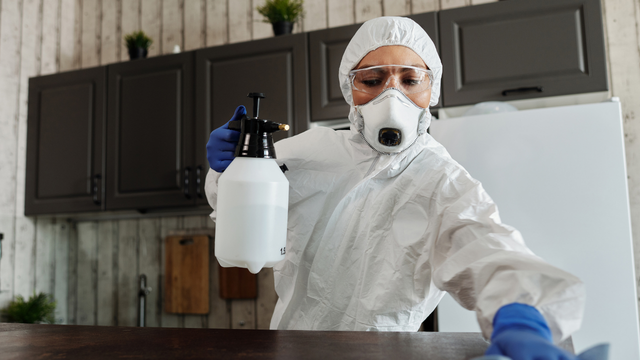

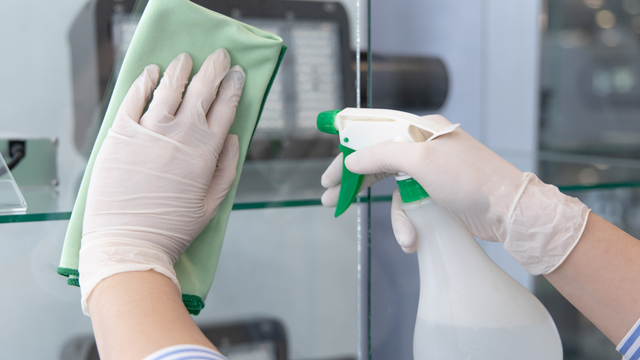
Effective cross contamination prevention is one of the foundations of safe professional cleaning.
A workplace can look visually clean while microorganisms, allergens, dirt or hazardous material are still being transferred between surfaces by cleaning cloths, mops, gloves, hands or equipment. A cloth used in a toilet and then taken into a kitchen, for example, can move contamination rather than remove it.
Professional cleaners therefore need more than strong chemicals and good intentions. They need organised housekeeping procedures, appropriate equipment, hand hygiene, correct PPE, safe working methods and clear separation between higher-risk and lower-risk areas.
In some environments, particularly healthcare, effective infection prevention can directly affect the health of patients, employees and visitors. In offices, hospitality, schools and other workplaces, controlling contamination still contributes to cleaner surfaces, safer facilities and stronger workplace hygiene.
This commercial cleaning guide explains how contamination spreads, how cleaning and disinfection differ, why colour coding cleaning systems are useful and how cleaners can improve day-to-day cleaning safety.
What Is Cross-Contamination in Cleaning?
Cross-contamination happens when microorganisms, allergens, chemicals or other unwanted substances are transferred from one person, object, surface or area to another. In other words, contamination can spread from a contaminated source to a clean area.
In professional cleaning, the cleaning process itself can become the transfer mechanism. For example, imagine a cleaner wipes a toilet flush handle and then uses the same cloth on a reception desk. The second surface may look cleaner afterwards, but contamination from the washroom may have been carried or transferred into a lower-risk public area.
Common Routes of Transfer
Contamination can spread through:
- hands;
- gloves;
- cloths;
- mop heads;
- buckets;
- cleaning solutions;
- brushes;
- cleaning machinery.
The problem is therefore not limited to visible dirt or surface contamination. A microfiber cloth that looks clean may still carry microorganisms from an earlier task if it has not been changed or correctly decontaminated.
Cross-Contamination Is Not Only About Germs
Although infection control receives considerable attention, contamination can also involve:
- food allergens;
- hazardous chemicals;
- bodily fluids;
- dust;
- dirt;
- residues.
For example, using equipment from a food area where allergens are present in another food-preparation zone can create a different type of contamination risk. Good sanitation practices and hygiene measures should therefore reflect the hazards present in the actual workplace.
Why Preventing Cross-Contamination Is Important
Preventing contamination spread is important because cleaning should reduce risk rather than redistribute or transfer contaminants. HSE’s COSHH guidance makes this principle clear: cleaning methods should not themselves spread contamination.
Protecting Employees
Workplace contamination can expose employees to harmful biological or chemical substances. Cleaners themselves can face particular risks because they repeatedly handle:
- waste;
- chemicals;
- dirty equipment;
- contaminated surfaces.
Proper cleaning safety and hygiene controls protect the cleaner as well as everyone using the building.
Protecting Customers and Visitors
Commercial premises may be used by hundreds of people each day. Shared surfaces such as:
- door handles;
- lift buttons;
- taps;
- reception desks;
- handrails
can receive frequent contact. The appropriate cleaning frequency depends on the workplace, level of use and risk. High-touch surfaces may require more frequent attention than low-contact areas.
Protecting Vulnerable People
Cross-contamination becomes particularly important in environments occupied by people who may be more vulnerable to infection. These can include:
- hospitals;
- clinics;
- care services.
Healthcare cleaning therefore operates within stricter infection-control frameworks than ordinary office cleaning.
Supporting Business Standards
Poor cleaning can result in:
- complaints;
- unpleasant environments;
- staff absence;
- damaged reputation;
- regulatory concerns in higher-risk sectors.
Strong hygiene standards and cleaning procedures UK organisations adopt should therefore be supported by documented processes rather than depending entirely on individual cleaners’ judgement.
Common Causes of Cross-Contamination
Many contamination problems are caused by ordinary shortcuts or poor cleaning practices.
Reusing the Same Cloth Everywhere
This is one of the most obvious risks. A single cloth should not simply travel from toilets to desks, kitchens and meeting rooms. Equipment should be allocated according to the workplace’s cleaning system.
Double-Dipping Cloths or Mops
A cloth or mop that has already contacted a contaminated surface can contaminate the cleaning solution when placed back into the bucket. That solution may then spread microorganisms elsewhere. The British Cleaning Council’s current cleaning framework particularly warns about double dipping in healthcare environments.
Using Dirty Cleaning Solutions
NHS England’s healthcare-cleaning standards note that cleaning solutions can become contaminated during use. They should be replaced according to the manufacturer’s instructions and sooner where they become visibly dirty or where heavily contaminated material has been cleaned. Commercial cleaning procedures should apply the same principle according to the task and product.
Wearing the Same Gloves Between Tasks
Gloves protect hands, but contaminated gloves can also spread material between surfaces. A cleaner should not assume: “I’m wearing gloves, so everything I touch is safe.” Changing gloves at appropriate points and maintaining good hand hygiene standards UK remain essential.
Mixing Clean and Dirty Equipment
Clean mop heads stored beside used, wet equipment can become contaminated before the next shift begins. Separate storage and transport arrangements help preserve clean equipment and prevent cross-transfer.
Poor Hand Hygiene
Workers can transfer contamination when they:
- remove gloves incorrectly;
- touch phones with contaminated hands;
- handle clean equipment immediately after dirty work;
- fail to wash their hands at appropriate points.
Hand hygiene standards UK is therefore part of commercial cleaning rather than something relevant only to healthcare workers.
Cleaning in the Wrong Direction
Cleaning randomly can repeatedly move contamination back onto cleaned surfaces. NHS England recommends a logical approach:
- top to bottom;
- clean to dirty;
- high surfaces before floors.
Although designed for healthcare, these principles are sensible for many professional cleaning environments.
Cleaning Methods to Prevent Contamination Spread
Effective cleaning relies on method as much as chemical selection. Good contamination-control practices can help reduce unnecessary transfer.
Work From Cleaner Areas Towards Dirtier Areas
Start with lower-risk or cleaner surfaces and progress towards more contaminated areas. Do not clean a toilet first and then use the same equipment throughout the room. A planned sequence reduces the likelihood of recontamination or cross-transfer.
Work From High to Low
Dust and debris can fall onto lower surfaces. It therefore makes sense to clean higher horizontal surfaces before floors. Cleaning the floor first and then dusting above it may simply create another cleaning task.
Use Controlled Wiping Techniques
NHS England recommends an overlapping S-shaped wiping motion for large flat surfaces rather than repeatedly wiping backwards over an already cleaned section. The principle is simple: once contamination has been collected, avoid spreading or redistributing it.
Change Cleaning Materials Appropriately
Cloths, wipes, mop heads and cleaning solutions should be changed according to:
- contamination level;
- task;
- local procedure;
- manufacturer guidance.
There is no universal rule that every reusable cloth must be discarded after a particular number of minutes. The correct change interval depends on the cleaning system, hygiene standards UK requirements and level of contamination.
Follow Product Contact Times
Disinfection is only effective when the product is used correctly.
A disinfectant may need to remain wet on the surface for a specified contact time.
Spraying it on and immediately wiping it away may not achieve the manufacturer’s intended disinfection performance.
Workers should therefore know:
- correct dilution;
- required contact time;
- compatible surfaces;
- appropriate PPE.
Avoid Unnecessary Disinfection
More disinfectant is not automatically better.
Routine office cleaning may often require effective physical cleaning rather than constant use of powerful disinfectants.
In healthcare, NHS England specifically states that routine environmental disinfection is not recommended everywhere and local policy should determine where detergent alone is sufficient and where disinfectant is required.
This reduces unnecessary chemical exposure while maintaining suitable hygiene.
Correct Use of Cleaning Equipment and Materials

Professional workplace cleaning depends heavily on the condition and management of equipment.
Cloths
Reusable cloths should be managed according to a defined process.
Clean cloths should remain clean until use, while used cloths should be separated for laundering or decontamination.
Disposable cloths should be discarded according to local procedures after their intended use.
Mop Heads
Mop heads can become significant contamination reservoirs when left:
- wet;
- dirty;
- in contaminated water;
- attached to equipment between jobs.
Reusable mop heads should be laundered or decontaminated according to the organisation’s procedure and equipment instructions.
Buckets
Buckets should themselves be cleaned.
A freshly laundered mop placed into a contaminated bucket defeats part of the purpose of cleaning the mop.
Cleaning Trolleys
A cleaning trolley should separate clean supplies from contaminated or used materials.
Consider distinct locations for:
- unused cloths;
- chemicals;
- waste;
- used cloths;
- PPE.
A poorly organised trolley can become a cross-contamination point moving throughout the building.
Vacuum Cleaners and Machines
Mechanical equipment also requires maintenance.
Filters, tanks, brushes and pads should be dealt with according to the manufacturer’s instructions.
Equipment used in specialist contaminated environments may require specific decontamination procedures before use elsewhere.
When Should Equipment Be Replaced?
There is no universal UK replacement timetable for all workplace cleaning equipment.
Replacement should depend on factors including:
- whether it is single use;
- visible damage;
- wear;
- ability to be decontaminated;
- manufacturer guidance;
- workplace procedure.
Disposable materials should not be reused merely to save money.
Reusable equipment does not necessarily need replacing after each job, but it must remain clean, functional and fit for purpose.
Colour Coding Systems in Commercial Cleaning
A well-designed colour system is one of the simplest ways to reduce accidental cross-contamination.
The principle is straightforward: equipment assigned to one type of area should not normally be used in another.
The NHS England System
The National Standards of Healthcare Cleanliness 2025 use this scheme:
| Colour | Assigned healthcare area |
| Red | Bathrooms, washrooms, showers, toilets and associated floors |
| Blue | General areas including wards, departments and offices |
| Green | Catering, ward kitchens and patient food-service areas |
| Yellow | Isolation areas |
The scheme applies to workplace cleaning materials and equipment such as cloths, mops and buckets.
For example, red equipment used for a toilet should remain within the designated sanitary-cleaning category.
Commercial Colour Coding
Outside healthcare, there is an important difference.
There is no compulsory national colour-coding system applying to every UK cleaning business.
BICSc explicitly notes this exception.
However, widely used industry conventions broadly associate:
- red with sanitary areas;
- blue with general low-risk areas;
- green with food areas;
- yellow with clinical or higher biological-risk areas.
A commercial organisation can adopt this scheme or another suitable documented approach.
What matters is consistency.
Why Colour Coding Works
Effective colour coding cleaning equipment provides an immediate visual instruction.
A cleaner does not need to read a label every time they pick up a cloth.
The colour itself indicates where it belongs.
This can help reduce:
- accidental equipment mixing;
- language-related misunderstanding;
- mistakes during busy shifts.
Staff Must Still Be Trained
Colour coding only works if everyone understands it.
New workers, agency workers and contractors need to know:
- what each colour means;
- where equipment is stored;
- when equipment should be changed;
- what happens after use.
A beautifully designed poster is ineffective if staff have never been shown the system.
PPE and Hygiene Practices for Cleaners
PPE and personal hygiene standards UK can help prevent both worker exposure and contamination spread.
Gloves
Gloves may be required for:
- waste handling;
- chemical exposure;
- contaminated materials;
- body-fluid cleaning.
The correct glove should be selected through the relevant risk assessment, including COSHH where hazardous workplace cleaning substances are involved.
Gloves should also be changed when the task or contamination risk requires it.
Aprons and Protective Clothing
Protective clothing may be appropriate where splashing or contamination of uniforms is reasonably foreseeable.
In healthcare environments, disposable aprons may be required for particular tasks.
Eye Protection
Goggles or face protection can be needed when cleaners work with chemicals or tasks that may produce splashes.
PPE requirements should be determined by risk rather than worn automatically.
Hand Hygiene
Hands should be cleaned at appropriate times, including after removing contaminated gloves.
HSE warns that contamination can transfer from the outside of gloves during removal, which is why correct technique and training matter.
Keep Workwear Separate Where Necessary
Where contamination risk is significant, workplaces may need arrangements separating dirty workwear from ordinary clothing.
HSE recommends segregation of clean and dirty areas when the risk warrants it.
These basic sanitation practices support contamination control beyond surface workplace cleaning alone.
Common Cross-Contamination Mistakes to Avoid
Using Toilet Equipment in General Areas
This is precisely the sort of error colour coding is designed to prevent.
Keeping Gloves on Too Long
A worker may believe changing gloves wastes time.
In reality, using contaminated gloves across multiple areas can spread the contamination they were supposed to protect against.
Cleaning Without a Defined Sequence
Random workplace cleaning increases the chance of going back over previously cleaned surfaces.
Follow a consistent route.
Using Too Much Chemical
A stronger concentration is not automatically more effective.
Incorrect dilution can:
- damage surfaces;
- expose workers;
- leave residues;
- interfere with manufacturer performance instructions.
Follow the product directions and COSHH controls.
Ignoring Contact Time
Disinfectants need sufficient contact time where specified.
A surface that smells strongly of disinfectant is not necessarily properly disinfected.
Mixing Chemicals
Never mix workplace cleaning chemicals unless the manufacturer explicitly instructs that combination.
Some mixtures can create dangerous gases or other harmful reactions.
Storing Used Equipment While Wet
Damp, dirty equipment can support microbial growth and create unpleasant odours.
Clean and dry reusable equipment according to procedure before storage.
Assuming Visual Cleanliness Means Hygiene
A shiny surface is not necessarily free from harmful contamination.
Good cleaning focuses on process as well as appearance.
Moving Equipment Between Sites Without Decontamination
Commercial cleaners may serve several buildings.
Equipment transported between sites should be handled so that contamination from one customer is not brought into another.
Best Practices for Safe Commercial Cleaning
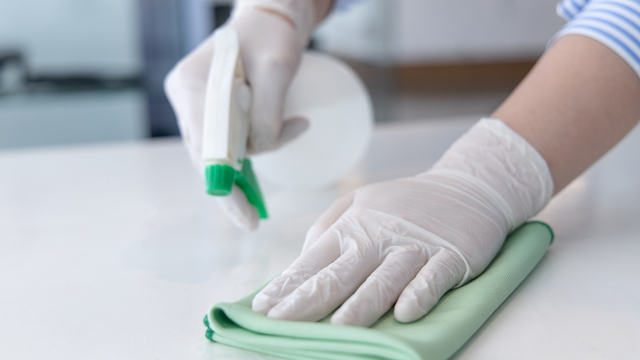
Strong contamination control comes from a complete cleaning system rather than one individual rule.
Start With a Risk Assessment
Different workplaces require different controls.
A low-risk office does not require exactly the same housekeeping procedures as:
- a healthcare clinic;
- a commercial kitchen;
- a laboratory.
Identify the hazards before setting workplace cleaning methods.
Write Clear Cleaning Procedures
Procedures should specify:
- which areas are cleaned;
- how frequently;
- which equipment is used;
- colour coding;
- cleaning products;
- PPE;
- equipment decontamination.
Clear instructions reduce inconsistency between workers.
Separate Clean and Dirty Supplies
Design storage and trolley arrangements so that clean materials remain protected from used equipment.
Train Staff Practically
Professional cleaning training should not consist entirely of reading policies.
Workers should practise:
- colour coding;
- cloth folding and changing;
- cleaning sequences;
- glove removal;
- chemical dilution;
- equipment cleaning.
Training should be refreshed when products, procedures or risks change.
Supervise and Audit
Managers should check whether procedures are actually being followed.
Useful observations include:
- whether workers follow colour coding;
- condition of mop heads;
- chemical dilution;
- storage practices;
- hand hygiene.
A written policy means little if the real workplace operates differently.
Use Sector-Specific Standards
Healthcare cleaners should follow NHS or relevant healthcare requirements.
Food environments need appropriate food-hygiene standards UK controls.
General workplaces may use BICSc or British Cleaning Council guidance as industry best practice.
This is why hygiene standards UK workplaces follow cannot always be reduced to one universal checklist.
Build Wider Knowledge
Workers and supervisors can benefit from learning about health and safety, PPE, chemical hazards and biological risks.
For example, Skills Pack currently offers Health and Safety in the Workplace training covering PPE, chemical and biological hazards, self-hygiene standards UK and workplace safety.
This type of course can support background understanding.
However, professional cleaners still need workplace-specific instruction based on the actual chemicals, equipment, colour-coding system and hazards they encounter.
Key Takeaways
Effective cross contamination prevention means ensuring that cleaning does not transfer contamination from one surface or area to another.
Cloths, gloves, mop heads, buckets, hands and workplace cleaning solutions can all become routes of contamination.
Good methods include cleaning from high to low and from clean to dirty, changing contaminated materials appropriately and following correct chemical dilution and contact times.
Cleaning removes dirt and microorganisms physically, while disinfection reduces or eliminates harmful microorganisms on surfaces. The two terms should not be used interchangeably.
The NHS in England uses a national red, blue, green and yellow cleaning-equipment colour scheme. Outside healthcare, there is no compulsory universal commercial-cleaning colour system, although similar industry conventions are widely used.
PPE, hand hygiene, equipment decontamination, training and documented housekeeping procedures all support safer workplace cleaning.
FAQ
What causes cross-contamination in cleaning?
Common causes include using the same cloth or mop in different risk areas, contaminated gloves, dirty workplace cleaning solutions, poor hand hygiene, mixing clean and dirty equipment and failing to decontaminate reusable materials properly.
How can cleaners prevent cross-contamination?
Cleaners can use designated equipment, follow colour coding, work from cleaner areas towards dirtier areas, change cloths and solutions appropriately, practise hand hygiene standards UK and correctly clean or dispose of equipment after use.
Why is colour coding important in cleaning?
Colour coding provides an easy visual method for separating cleaning equipment by area. It reduces the chance that equipment used in toilets or other high-risk locations will later be used in kitchens, offices or other lower-risk areas.
What PPE helps prevent contamination?
Depending on the task, appropriate PPE can include gloves, aprons, protective clothing and eye protection. PPE should be selected through risk assessment and should not replace hand hygiene standards UK or safe cleaning procedures.
How often should cleaning equipment be replaced?
There is no universal replacement interval for every product. Single-use materials should be discarded after their intended use, while reusable equipment should be replaced when damaged, excessively worn, no longer effectively decontaminated or when required by manufacturer or workplace instructions.
What is the difference between cleaning and disinfecting?
Cleaning physically removes dirt, organic matter and microorganisms from a surface. Disinfection uses an appropriate process or chemical to eliminate or reduce harmful microorganisms. Effective cleaning may need to take place before disinfection.
How does cross-contamination affect workplaces?
It can spread microorganisms, allergens, chemicals and other contaminants into previously clean areas. This can undermine hygiene, increase infection or exposure risks and reduce confidence in the cleaning service.
Do commercial cleaners need infection control training?
The training required depends on the workplace and role. Employers must provide employees with suitable information, instruction and training about workplace risks and controls. Cleaners in healthcare or other higher-risk settings generally require more specific infection prevention instruction than someone performing routine low-risk office workplace cleaning.
Conclusion
Effective cross contamination prevention is one of the clearest differences between simply making a building look tidy and delivering professional cleaning.
Cleaners need to think about where contamination comes from, how it can move and what controls stop that transfer.
The solution is rarely one product.
Successful workplace cleaning combines organised equipment, good hand hygiene, correct PPE, safe chemical use, logical workplace cleaning sequences and appropriate sanitation practices.
Colour coding can make that system considerably easier to follow. The NHS in England has a specific national scheme, while general commercial businesses can adopt a suitable industry approach. Whatever method is chosen, colour coding cleaning equipment only works when employees understand it and use it consistently.
Cleaners should also understand the difference between cleaning and disinfection. Removing dirt effectively may be sufficient for some low-risk areas, while higher-risk settings may require appropriate disinfectants and carefully followed contact times.
Equipment deserves equal attention. Dirty mop heads, contaminated buckets and poorly managed cloths can undermine otherwise good housekeeping procedures.
For employers, strong cleaning safety therefore depends on risk assessment, COSHH controls, clear procedures, staff supervision and practical cleaning training.
Industry resources and courses can support professional development, including broader health-and-safety learning from providers such as Skills Pack. They should complement rather than replace site-specific training and the requirements of the workplace.
There is no single set of hygiene standards UK businesses can apply identically in every sector. A commercial office, food environment and healthcare facility have different risks.
The consistent principle is simpler: clean in a way that removes contamination instead of moving it somewhere else.
That is the foundation of reliable infection control, stronger workplace hygiene standards UK and safer professional cleaning.