Organisational Skills Training UK for Workplace Success


Effective organisational skills training UK employees can access should help them do more than keep a tidy desk or write a longer to-do list. Real organisation at work involves understanding priorities, planning realistic workloads, managing information, coordinating deadlines and knowing what deserves attention first.
Those abilities influence almost every occupation.
An administrator may need strong planning skills to coordinate several calendars. A project employee may need reliable time management to balance deadlines and dependencies. A manager must often organise both their own work and the responsibilities of an entire team.
Strong productivity skills can therefore contribute to better workplace efficiency, particularly when employees combine personal organisation with clear processes and realistic workloads.
However, organisation has limits. An employee cannot solve a fundamentally excessive workload simply by buying a new planner or working faster. Employers also have responsibilities around work design, resources, role clarity and work-related stress.
The strongest training therefore teaches both practical organisation and professional judgement.
What Is Organisational Skills Training and Why Is It Important?
Organisational skills training teaches people how to structure their work so that important tasks, information and deadlines are managed systematically.
Depending on the programme, training can cover:
- prioritisation;
- scheduling;
- task management;
- time management;
- planning;
- record keeping;
- meeting coordination;
- digital organisation.
For managers, it may also include:
- delegation;
- resource allocation;
- workflow design;
- project planning.
The objective is not to create one identical productivity system for everyone.
Different jobs require different approaches.
A receptionist responding continuously to customer enquiries cannot organise the day in exactly the same way as an analyst who needs several uninterrupted hours for complex work.
Good training therefore helps employees create systems appropriate to their responsibilities.
Organisation reduces dependence on memory
One of the simplest principles is to stop relying entirely on memory.
Suppose an employee receives five requests during the morning:
One arrives by email.
One through Microsoft Teams.
Two are discussed verbally.
Another appears in a project-management platform.
Trying to remember all five creates unnecessary cognitive pressure.
A reliable task system captures them somewhere deliberate.
That might be:
- a digital task manager;
- a project board;
- a calendar;
- an approved workplace system.
The specific tool matters less than using it consistently.
Organisation supports decision-making
Good organisation is also about choices.
Employees rarely have unlimited time.
They need to decide:
What must happen today?
What can wait?
What depends on somebody else?
What should be delegated?
What no longer needs doing?
Those questions turn organisation into professional judgement rather than clerical tidiness.
Why Organisational Skills Are Important for Workplace Success in the UK
Employers expect staff to manage responsibilities with reasonable independence.
The National Careers Service treats abilities such as time management, teamwork and problem-solving as transferable skills relevant across many careers.
These become increasingly important as employees gain responsibility.
Organisational skills help people meet deadlines
A deadline becomes easier to manage when the employee identifies the work required before the final day.
Suppose a report is due Friday.
The employee may need to:
collect data on Monday, analyse it on Tuesday, draft on Wednesday, obtain comments on Thursday and finalise on Friday.
Without that planning, the employee may discover on Thursday evening that essential information has not yet been requested.
Strong planning skills make dependencies visible earlier.
They improve coordination
Modern work is interconnected.
One employee’s delay can affect several colleagues.
For example:
Marketing cannot launch until design finishes.
Design cannot finish until product information is approved.
Product information cannot be approved until legal review is complete.
Organisation therefore requires communication as well as personal productivity.
A professional employee flags delays before they create surprises for everybody else.
They can reduce avoidable pressure
Disorganisation creates stress through:
- forgotten deadlines;
- lost documents;
- repeated searching;
- last-minute work.
A better system can remove some of that pressure.
However, it is important not to confuse disorganisation with excessive workload.
HSE’s work-related stress framework specifically identifies workload and work patterns as organisational risks.
If one employee is consistently being given 60 hours of realistic work to complete in a 40-hour week, better time management cannot solve the underlying problem.
The workload itself may need review.
Essential Organisational Skills for Professional Success
Organisational ability is made up of several connected skills.
Prioritisation
Prioritisation means deciding what should receive attention first.
Not every task labelled “urgent” is equally important.
A useful starting point is to consider:
Importance: What happens if this is not completed?
Urgency: When does action genuinely need to occur?
Dependency: Is another person’s work waiting for this?
Effort: How much time does it realistically require?
A minor task due tomorrow may be less important than a major regulatory deadline next week that requires five days of preparation.
Prioritisation should be visible
When managers give several competing priorities, employees should clarify them.
For example:
“I can complete the client presentation or the monthly report by 3 pm, but not both to the required standard. Which should take priority?”
That is better than silently attempting both and missing both deadlines.
Time management
Strong time management means allocating limited time deliberately.
It can include:
- scheduling focused work;
- grouping similar tasks;
- allowing preparation time;
- protecting deadlines;
- reviewing the day.
It does not mean trying to remain productive every minute.
People need breaks and realistic recovery time.
Time blocking
Time blocking involves reserving calendar space for particular work.
For example:
9:00–10:30 – draft proposal
10:30–11:00 – email and admin
11:00–12:00 – team meeting
This can help employees protect time for substantial tasks rather than allowing every incoming notification to determine the day.
It works best in jobs where employees have some control over their schedules.
Planning skills
Planning skills involve thinking beyond the immediate next task.
Planning identifies:
- objectives;
- steps;
- resources;
- deadlines;
- dependencies;
- risks.
A good plan is detailed enough to guide action without becoming so elaborate that maintaining the plan takes more time than doing the work.
Break large work into smaller tasks
“Complete website redesign” is not a useful single task.
A better plan might include:
- confirm requirements;
- produce wireframes;
- review copy;
- develop prototype;
- test;
- revise;
- launch.
Smaller stages make progress easier to monitor.
Goal setting
Clear goals help employees determine which activities deserve time.
The National Careers Service recommends SMART goals:
- specific;
- measurable;
- achievable;
- relevant;
- time-bound.
“Get more organised” is vague.
“Review my task list every morning and identify my three highest-priority actions before 9:15 for the next four weeks” is measurable.
Calendar management
Calendars should reflect genuine commitments.
Employees should include:
- meetings;
- deadlines;
- preparation time;
- important follow-ups.
A common mistake is filling a calendar entirely with meetings while assuming project work will somehow happen between them.
If a task requires two hours of concentration, those two hours need to exist somewhere.
Information management
Poor information organisation wastes time.
Employees should understand where files, records and correspondence belong.
Useful practices include:
- consistent file names;
- logical folders;
- version control;
- authorised storage systems.
Saving documents as:
“Final.docx”
“Final2.docx”
“FinalFinalCorrect.docx”
is not an effective version-management system.
Attention to detail
Organisation requires accuracy.
Employees should check:
- dates;
- names;
- file versions;
- deadlines;
- meeting locations.
Small administrative errors can create larger operational problems.
Best Organisational Skills Training Courses in the UK
There is no single best programme because organisation is relevant across many jobs.
Training should reflect the work the learner actually performs.
General productivity and time-management courses

These courses commonly cover:
- prioritisation;
- schedules;
- procrastination;
- goal setting;
- workflow planning.
They can suit employees who feel their work is reactive or poorly structured.
The strongest programmes should avoid simplistic promises such as “double your productivity instantly”.
Work is more complicated than one technique.
Administrative organisation training
Administrative professionals often need particularly strong organisation.
Their responsibilities can include:
- diary management;
- records;
- meetings;
- correspondence;
- deadlines.
Skills Pack’s current Administrative Skills for Personal Assistant programme includes time management, prioritisation, calendar management, record organisation and information management.
Its Administrative Assistant programme also includes a dedicated module on Time Management and Organisation.
This type of training can suit:
- administrative assistants;
- personal assistants;
- office support workers.
Leadership and management training
Managers need organisation at team level.
They may be responsible for:
- allocating resources;
- prioritising workloads;
- setting objectives;
- monitoring progress.
Skills Pack’s Leadership Essentials programme includes time management and prioritisation alongside team leadership and decision-making.
This is more relevant to someone managing people than an elementary personal-productivity course.
Team Leader occupational training
England’s current Team Leader apprenticeship standard provides a useful example of more formal occupational development.
Its skills include:
- organising daily and weekly work;
- prioritising activities;
- allocating resources;
- using digital planning tools;
- monitoring project progress;
- improving work processes.
This is substantially broader than a short organisational-skills course because competence is developed within employment.
From 1 September 2026, however, new starts are no longer government-funded under the previous apprenticeship funding arrangement.
Existing apprentices can continue, and privately funded delivery remains possible.
Skills Pack and qualification status
Skills Pack can provide flexible self-paced development.
Current relevant programmes issue certificates of completion.
That can be useful evidence of CPD activity.
However, a completion certificate should not automatically be treated as:
- a regulated qualification;
- professional membership;
- management accreditation;
- independent proof of competence.
The main benefit is the knowledge and techniques the learner applies afterwards.
Comparing common options
| Training route | Best suited to | Main focus |
| General organisational skills course | Employees seeking better personal organisation | Priorities, tasks and scheduling |
| Skills Pack admin learning | Administrative and PA roles | Calendars, records and task coordination |
| Skills Pack leadership learning | Managers and aspiring supervisors | Prioritisation and team organisation |
| Employer workshop | Teams with specific workflow problems | Workplace-specific systems |
| Team Leader occupational route | Employees managing teams | Planning, allocation and performance |
Choose according to the problem you want training to solve.
Organisational Skills Training Entry Requirements, Formats, and Professional Development
Most general organisational-skills courses have low entry barriers.
The subject is relevant from entry-level employment through to management.
Beginner online courses
Online programmes are suitable for teaching:
- prioritisation methods;
- task systems;
- planning frameworks;
- calendar techniques.
They commonly require no previous qualifications.
Skills Pack’s relevant administrative course states that it has no specific prerequisites, although basic computer and English-language skills are useful.
The limitation of online learning
Organisation only improves when behaviour changes.
Watching a lesson about prioritisation is easy.
Prioritising real competing responsibilities on a busy Monday morning is harder.
Learners should therefore apply each technique immediately.
Live workshops
Live training can help teams solve shared problems.
For example:
Why do deadlines keep being missed?
Why are meetings taking too much time?
Why are employees receiving conflicting priorities?
These questions sometimes reveal organisational problems rather than individual skill gaps.
Employer-led development
Employer-led training can be especially valuable because it can focus on the actual systems being used.
A team might agree:
- where tasks are recorded;
- how urgent work is escalated;
- how project updates are communicated;
- which platform contains the authoritative deadline.
Standardisation can improve workplace efficiency more than giving every employee a different personal app.
Organisational Skills, Time Management, and Workplace Applications
Organisation becomes easier to develop when techniques are linked with real workplace situations.
Daily planning
At the start of the day, review:
- fixed meetings;
- deadlines;
- outstanding tasks;
- new priorities.
Then identify the most important work.
Avoid creating an unrealistic list of 27 “top priorities”.
If everything is a priority, nothing is.
Weekly planning
Weekly planning provides broader visibility.
Ask:
What deadlines are coming?
Which tasks require input from someone else?
Which meetings need preparation?
Where might workload become excessive?
HSE’s stress-management guidance specifically recommends regular conversations about anticipated workloads and challenges.
Planning can therefore be both an individual and management responsibility.
Managing interruptions
Interruptions are inevitable.
Not every interruption deserves an immediate response.
Employees can consider whether:
- notifications need to remain permanently enabled;
- email can be checked at defined intervals;
- focus time can be protected.
This depends on the job.
A customer-support employee cannot simply ignore incoming work for three hours.
Organisation needs to reflect operational reality.
Managing email
Email can easily become a task list controlled by everyone else.
Useful habits include:
- clear folders or labels;
- deleting unnecessary messages;
- converting genuine actions into tasks;
- using meaningful subject lines.
Avoid using the inbox as the only record of every responsibility.
Meeting discipline
Poorly managed meetings reduce available work time.
Before scheduling one, ask:
What decision is needed?
Who actually needs to attend?
Could the information be shared asynchronously?
At the end, record:
- decisions;
- actions;
- owners;
- deadlines.
A meeting without clear actions often creates more work rather than progress.
Delegation
Managers should not personally organise every detail of their team’s work.
Effective delegation identifies:
- outcome;
- authority;
- deadline;
- constraints.
Then the employee should have reasonable space to complete the work.
Micromanagement often damages workplace efficiency because both manager and employee effectively spend time doing the same task.
Career and Professional Benefits of Organisational Skills Training
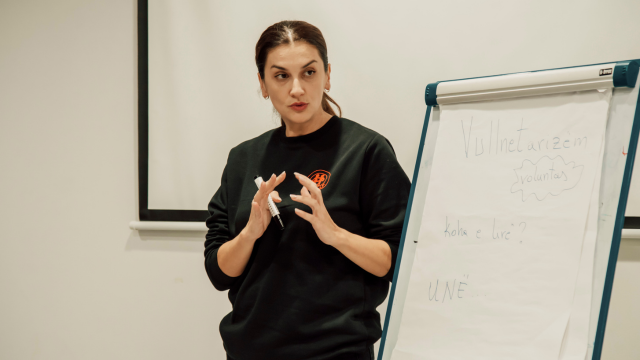
Organisational ability supports many careers because employers value people who can manage responsibilities reliably.
Greater reliability
Employees who consistently:
- meet deadlines;
- prepare for meetings;
- track actions;
- raise problems early;
become easier to trust with greater responsibility.
Reliability can support career progression even when the underlying job is highly technical.
Better administrative performance
Organisation is particularly important in:
- administration;
- office management;
- personal assistance;
- project support.
These roles often require coordination across other people’s work as well as the employee’s own.
Preparation for management
Management increases organisational complexity.
A manager may need to balance:
- team capacity;
- deadlines;
- absences;
- priorities.
Good personal organisation provides a useful foundation, although management also requires leadership and people skills.
Improved focus
Strong productivity skills help employees distinguish activity from progress.
Responding to 50 emails can feel productive.
Completing one important report may produce more actual value.
Organisation helps workers identify the difference.
Reduced avoidable rework
Poor planning often creates repeated work.
For example:
A report is drafted before the required data arrives.
A meeting is arranged before key stakeholders can attend.
A project begins before requirements are agreed.
Better planning can prevent these mistakes.
How to Improve Organisational Skills for Workplace Success
Improvement should begin with understanding the actual problem.
Audit your work
For one week, record how time is spent.
Look for patterns.
Are meetings consuming most of the day?
Are you frequently searching for information?
Do unexpected requests repeatedly interrupt planned work?
This provides evidence rather than assumptions.
Create one trusted task system
Avoid spreading personal tasks across:
- paper;
- email flags;
- sticky notes;
- several apps.
Choose an appropriate main system.
The organisation may already provide one.
The most important characteristic is trust: when something enters the system, you know it will be reviewed.
Review priorities daily
Priorities change.
A task that mattered yesterday may become irrelevant today.
Daily review prevents lists becoming historical archives.
Plan backwards from deadlines
For important work, begin with the completion date.
Then work backwards.
If a proposal must be approved on Friday:
Final review – Thursday.
Internal draft – Wednesday.
Research – Monday and Tuesday.
This makes the required preparation visible.
Build buffer time
Plans should not assume every minute will proceed perfectly.
Unexpected work happens.
A calendar filled to 100% capacity leaves no room for:
- delays;
- urgent requests;
- technical problems.
Planning some buffer can make schedules more realistic.
Learn to renegotiate priorities
When workload becomes impossible, raise the issue early.
For example:
“I currently have three deadlines due Thursday. I can complete A and B to the required standard, but C would need to move to Monday unless another task is reassigned.”
That is stronger than silently working unsustainable hours.
Improve systems rather than relying on willpower
If you repeatedly forget one type of task, redesign the process.
Use:
- recurring reminders;
- checklists;
- templates;
- automated notifications.
Strong organisation often comes from good systems rather than exceptional memory.
Future Trends in Workplace Productivity and Professional Development
Technology is changing how employees organise work.
AI-supported task management
AI tools can increasingly:
- summarise meetings;
- draft action lists;
- organise information;
- suggest schedules.
This can reduce routine administrative effort.
However, an AI system does not automatically know which organisational priority matters most.
Employees need to verify outputs.
A meeting summary may assign the wrong owner or misunderstand a deadline.
AI and productivity
Skills England’s 2026 research suggests AI adoption is growing quickly across UK workplaces.
However, simply giving employees access to AI does not guarantee productivity gains.
Workers still need:
- critical thinking;
- communication;
- judgement.
Those abilities are closely connected with organisation.
AI may produce five possible plans.
The employee still decides which plan is realistic.
Fewer disconnected productivity tools
Organisations increasingly use integrated collaboration environments combining:
- messaging;
- calendars;
- documents;
- tasks;
- automation.
This can reduce switching between applications.
It can also create information overload if every platform generates constant notifications.
Future productivity skills will include deciding which information deserves attention.
Asynchronous work
Hybrid and remote teams increasingly depend on asynchronous communication.
Employees may need to leave clearer written updates because colleagues are not always online simultaneously.
This requires stronger:
- documentation;
- task ownership;
- deadline clarity.
Organisation becomes a team skill rather than purely a personal habit.
Increased focus on sustainable productivity
There is growing recognition that productivity cannot simply mean increasing individual work intensity indefinitely.
HSE guidance already requires employers to consider workload and work-related stress.
Future workplace development is likely to place greater emphasis on sustainable systems that balance:
- performance;
- realistic capacity;
- employee wellbeing.
This distinction matters.
Teaching employees to work faster is not necessarily the same as improving productivity.
Automation of routine administration
AI and automation can take over parts of:
- scheduling;
- document preparation;
- reminders;
- data entry.
Administrative professionals may spend less time performing repetitive coordination manually.
Their role can shift towards:
- judgement;
- problem-solving;
- stakeholder coordination.
This means organisational skills remain important even if particular administrative tasks become automated.
Key Takeaways
Effective organisational skills training UK employees choose should improve the way work is planned and controlled rather than merely introduce productivity terminology.
Key points include:
- organisation involves priorities, tasks, deadlines and information;
- good time management helps employees allocate limited time deliberately;
- strong planning skills make dependencies and workload visible before deadlines;
- reliable systems can reduce dependence on memory;
- productivity skills include knowing what not to do as well as what to complete;
- organisational training cannot solve a structurally excessive workload by itself;
- HSE expects employers to manage workload and work-related stress appropriately;
- Skills Pack offers flexible administrative and leadership learning covering organisation and prioritisation;
- Skills Pack completion certificates should not automatically be confused with regulated qualifications;
- employer-led workflow training can improve workplace efficiency by standardising how teams manage tasks;
- AI will increasingly support planning and administration but still requires human judgement;
- sustainable productivity is more valuable than simply trying to work faster.
FAQ
What is organisational skills training?
Organisational skills training teaches employees how to manage priorities, tasks, deadlines, information and workloads more systematically. Courses may cover planning, time management, scheduling, record keeping and digital productivity tools.
Why should I take organisational skills training in the UK?
Training can help employees become more reliable, manage competing responsibilities and improve the way they plan work. These abilities are transferable across administration, management, project work and many other occupations.
What are the most important organisational skills for the workplace?
Important skills include prioritisation, planning skills, task management, calendar management, attention to detail and information organisation. Managers may also need delegation and resource-allocation skills.
What are the entry requirements for organisational skills training?
Many short organisational-skills courses have no formal entry requirements. Skills Pack’s relevant administrative programme, for example, states that there are no specific prerequisites, although basic computer and English-language skills are useful.
Which organisational skills course is best in the UK?
There is no universal best programme. Administrative staff may benefit from courses focused on calendars, records and scheduling, while managers may need broader team-planning and workload-management training. Choose the course according to your actual role.
What skills can I develop through organisational training?
Training can develop prioritisation, scheduling, time management, goal setting, record organisation, workflow planning and general productivity skills. The exact skills depend on the course.
How can organisational skills improve workplace productivity?
Organisation can reduce missed deadlines, duplication, unnecessary searching and poorly coordinated work. It can therefore support workplace efficiency, provided employees also have realistic workloads, sufficient resources and clear responsibilities.
Who should take organisational skills training courses?
Training can benefit administrators, personal assistants, project employees, managers, remote workers and professionals struggling with competing priorities. The level and focus should reflect the learner’s actual responsibilities.

Conclusion
Effective organisational skills training UK employees use successfully should make everyday work easier to control, not simply produce a more complicated to-do list.
Strong organisation starts with knowing what matters.
Employees need realistic planning skills, dependable task systems and effective time management. They should understand deadlines, anticipate dependencies and raise workload conflicts before they become emergencies.
Skills Pack offers flexible administrative and leadership programmes that can support development in these areas, particularly around prioritisation, calendars, records and productivity. Its completion certificates should still be understood as evidence of course completion rather than automatic proof of formal occupational competence.
The broader workplace matters too.
Employees cannot personally organise their way out of permanent understaffing, unclear roles or unrealistic demands. Managers and employers need to create systems in which workloads are achievable and priorities are clear.
Technology can then strengthen those systems.
AI, digital planning tools and automation can reduce repetitive administration and support scheduling. Yet the strongest productivity skills remain human: deciding what deserves attention, making sensible trade-offs and recognising when the plan needs to change.
That combination of individual organisation and good work design creates sustainable workplace efficiency and provides a stronger foundation for long-term professional success.