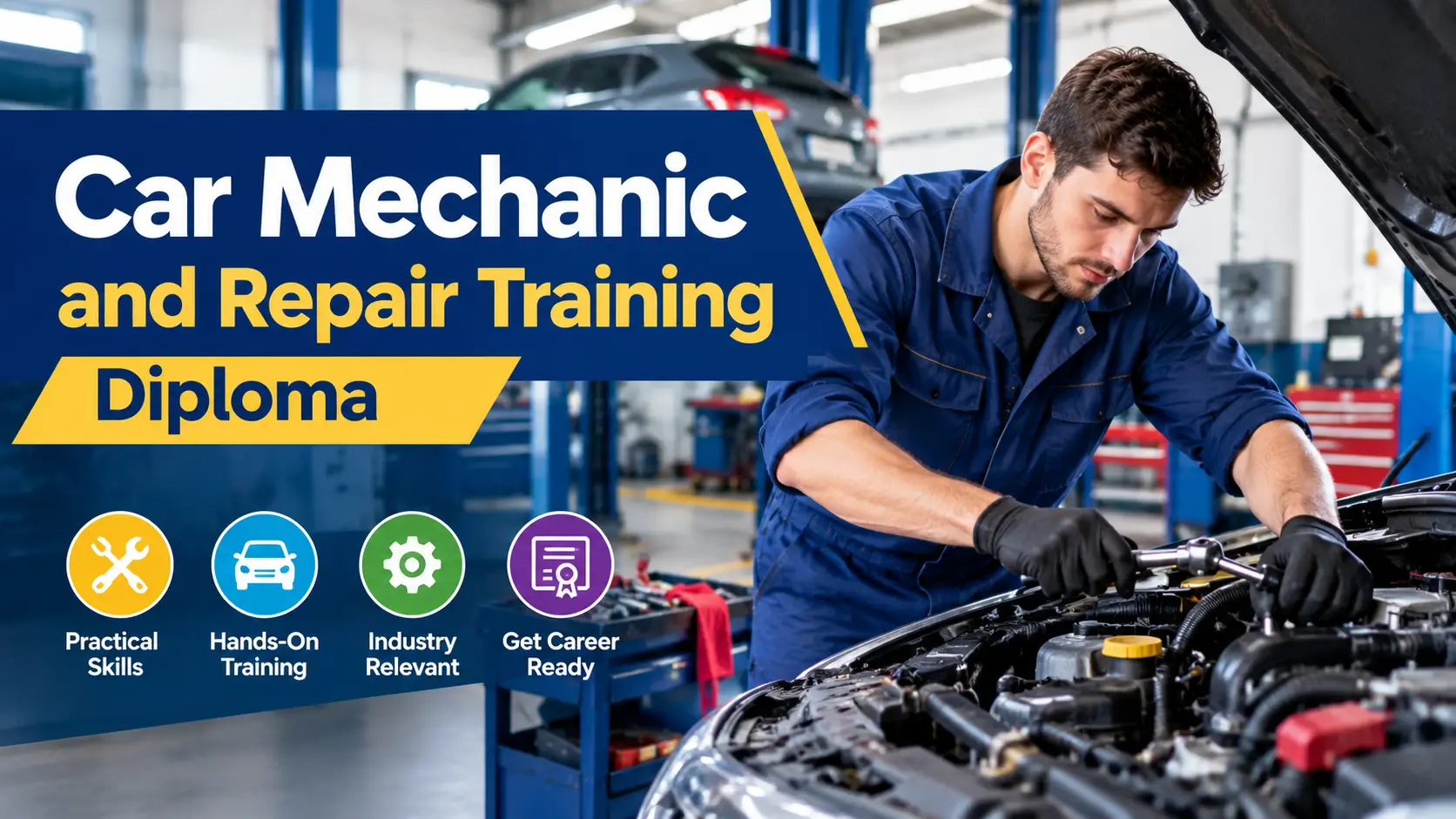
Car Mechanic and Repair Training Diploma
Car Mechanic and Repair Training Diploma The Car Mechanic and Repair Training Diploma introduces learners to essential vehicle...
Official Certification
Recognized by top tech firms
Learn With Confidence





About This Course
Car Mechanic and Repair Training Diploma
The Car Mechanic and Repair Training Diploma introduces learners to essential vehicle maintenance and repair concepts. This course explores how key automotive systems operate, including the engine, drivetrain, fuel system, ignition system, cooling system and electrical components. You will also learn about air conditioning, exhaust systems, braking, steering and suspension. Whether you are exploring a career in the automotive industry or want to understand how cars work, this training provides a foundation for further learning. It may suit beginners and aspiring mechanics looking for an online car mechanic course with broad coverage of common vehicle systems.
What You Will Learn:
- The fundamentals of car maintenance and workshop preparation.
- How engines, drivetrains and fuel systems operate.
- The functions of ignition, cooling and exhaust systems.
- Basic knowledge of electrical systems and air conditioning.
- The principles of braking, steering and suspension systems.
Course Overview
The Car Mechanic and Repair Training Diploma introduces the main systems found in modern vehicles and explains their roles in vehicle operation and maintenance. The curriculum begins with car maintenance and preparation before exploring the engine, drivetrain, fuel delivery and ignition systems. You will also study cooling, air conditioning, exhaust and electrical systems, followed by braking, steering and suspension.
This car repair training course can help learners build foundational automotive knowledge and understand common maintenance concepts. It may be useful for beginners, automotive enthusiasts and people considering further study in vehicle servicing or repair.
If you are searching for an online car mechanic course in the UK, review the provider’s current course details, assessment methods and certificate arrangements before enrolling. This diploma should not automatically be treated as equivalent to a regulated Level 2 car mechanic course or as proof of practical workshop competence. Hands-on experience, appropriate supervision and further technical training may be necessary for professional repair work.
Course Description
Explore automotive fundamentals with the Car Mechanic and Repair Training Diploma. This course introduces essential vehicle systems, from engines and drivetrains to fuel delivery, ignition, cooling and electrical components. You will also learn about air conditioning, exhaust systems, brakes, steering and suspension. Designed for people interested in understanding how cars operate, the course offers a starting point for further automotive learning. It may support personal development or help you prepare to explore additional car repair training. Before enrolling, check the provider’s curriculum, study format, assessment requirements and certificate details to ensure the course matches your goals.
Course Curriculum
Module 1 – Introduction to Car Maintenance
Discover the basic principles of maintaining a vehicle, including routine checks, preventative maintenance and the importance of following manufacturer recommendations.
Key learning topics:
- The purpose and benefits of regular car maintenance.
- Routine vehicle inspections and maintenance schedules.
- Identifying common signs of vehicle wear or faults.
- Safe maintenance practices and the importance of service records.
Module 2 – Being Prepared
Learn about preparing for vehicle maintenance tasks, including suitable equipment, workshop organisation and basic safety precautions.
Key learning topics:
- Selecting appropriate tools and equipment.
- Preparing a safe and organised workspace.
- Using personal protective equipment where appropriate.
- Following safety procedures and recognising potential hazards.
Module 3 – The Engine
Understand the role of the engine and explore the basic principles behind how it produces the power needed to move a vehicle.
Key learning topics:
- Main engine components and their functions.
- The basic operation of internal combustion engines.
- Four-stroke engine principles.
- Common engine symptoms and introductory fault identification.
Module 4 – The Drivetrain
Explore how engine power is transferred to the wheels through the drivetrain, helping a vehicle move at different speeds and under varying conditions.
Key learning topics:
- The purpose of the drivetrain.
- The roles of the clutch and gearbox.
- Driveshafts, differentials and power transmission.
- Common drivetrain symptoms and maintenance considerations.
Module 5 – The Fuel System
Learn how a vehicle’s fuel system stores and delivers fuel to support engine operation.
Key learning topics:
- Main fuel system components.
- Fuel storage, supply and delivery.
- Differences between petrol and diesel fuel systems.
- Common fuel system symptoms and maintenance principles.
Module 6 – The Ignition System
Understand how the ignition system helps start and operate petrol engines by producing the spark needed for combustion.
Key learning topics:
- The purpose of the ignition system.
- Spark plugs and ignition coils.
- Ignition timing and engine performance.
- Common ignition faults and their symptoms.
Module 7 – The Cooling System
Explore how the cooling system regulates engine temperature and helps prevent overheating during vehicle operation.
Key learning topics:
- The purpose of engine cooling.
- Radiators, coolant, pumps and thermostats.
- Coolant circulation and temperature regulation.
- Recognising overheating and common cooling system problems.
Module 8 – The Air Conditioning System
Discover how automotive air conditioning works and how its main components contribute to cabin comfort and temperature control.
Key learning topics:
- The purpose of vehicle air conditioning.
- Compressors, condensers, evaporators and refrigerants.
- The basic refrigeration cycle.
- Common air conditioning problems and maintenance awareness.
Module 9 – The Exhaust System
Learn how the exhaust system carries combustion gases away from the engine and helps manage emissions and engine noise.
Key learning topics:
- The main components of an exhaust system.
- The function of catalytic converters.
- Exhaust noise, leaks and emissions awareness.
- Recognising common exhaust system faults.
Module 10 – The Electrical System
Understand the role of a vehicle’s electrical system in starting the engine, powering accessories and supporting electronic components.
Key learning topics:
- Batteries, alternators and starter motors.
- Fuses, relays, wiring and electrical connections.
- Basic vehicle lighting and electrical accessories.
- Recognising common electrical symptoms and fault indicators.
Module 11 – The Braking System
Explore the importance of the braking system and how its components work together to help slow and stop a vehicle safely.
Key learning topics:
- The purpose and main components of braking systems.
- Brake pads, discs, callipers and brake fluid.
- Differences between disc and drum brakes.
- Common brake warning signs and maintenance considerations.
Important: Braking systems are safety-critical. Practical inspection and repair should be carried out only by appropriately trained people using suitable procedures and equipment.
Module 12 – Steering and Suspension
Learn how steering and suspension systems help drivers control vehicle direction, maintain tyre contact with the road and improve ride comfort.
Key learning topics:
- Main steering system components and their functions.
- Springs, shock absorbers and suspension components.
- Wheel alignment and handling fundamentals.
- Common steering and suspension symptoms.
Who Is This Course For?
The Car Mechanic and Repair Training Diploma may be suitable for:
- Beginners: People who want to understand the fundamentals of vehicle maintenance.
- Aspiring car mechanics: Learners exploring a future in automotive servicing or repair.
- Automotive enthusiasts: Individuals interested in how cars operate and how their systems work.
- Career changers: People considering a move into the automotive industry.
- Vehicle owners: Those who want to develop their understanding of routine maintenance and common vehicle problems.
- Further-study learners: Individuals preparing to explore more advanced automotive training.
- Entry-level automotive learners: People who want an introduction before pursuing practical workshop experience.
The course is intended to provide foundational knowledge and should not be assumed to qualify learners for independent professional repairs.
Requirements
No specific entry requirements have been confirmed for this course. Check the provider’s enrolment information before signing up.
Learners may benefit from:
- An interest in cars and automotive technology.
- Basic reading, writing and communication skills.
- Access to a computer, tablet or smartphone.
- A reliable internet connection for online study.
- A willingness to learn about tools, components and vehicle systems.
- An understanding of the importance of workshop safety.
No previous mechanic experience may be necessary for introductory study. However, professional automotive work can require recognised qualifications, supervised practical training and competency assessments.
Skills You Can Develop
Through the course material, you may develop knowledge and understanding of:
- Basic car maintenance principles.
- Workshop preparation and safety awareness.
- Engine components and operation.
- Drivetrain and transmission fundamentals.
- Fuel delivery and ignition systems.
- Engine cooling and temperature control.
- Automotive air conditioning.
- Exhaust systems and emissions awareness.
- Vehicle electrical components.
- Braking system fundamentals.
- Steering and suspension systems.
- Recognising common vehicle symptoms.
- Understanding preventative maintenance.
- Identifying areas for further automotive training.
These are learning areas rather than a guarantee of practical repair competence. Hands-on experience and appropriate assessment are important for developing professional workshop skills.
Learning Outcomes
After studying the course material, learners should be able to:
- Explain the importance of regular vehicle maintenance and preventative checks.
- Identify basic workshop preparation and vehicle maintenance safety considerations.
- Describe the main components and operating principles of a car engine.
- Explain how the drivetrain transfers engine power to the wheels.
- Identify the main components and functions of a vehicle fuel system.
- Describe the role of the ignition system in petrol engine operation.
- Explain how the cooling system helps regulate engine temperature.
- Describe the basic operation of automotive air conditioning and exhaust systems.
- Identify the main components of a vehicle electrical system and explain their functions.
- Explain the purpose of braking, steering and suspension systems and recognise common warning signs associated with them.
Career Paths
The Car Mechanic and Repair Training Diploma may help learners explore automotive career options and identify areas for further study. Depending on practical competence, qualifications, experience and employer requirements, possible pathways include:
- Automotive mechanic trainee.
- Vehicle maintenance assistant.
- Garage or workshop assistant.
- Vehicle servicing trainee.
- Automotive technician trainee.
- Vehicle inspection support roles, subject to relevant requirements.
- Automotive parts and accessories roles.
- Further study in motor vehicle maintenance and repair.
- Specialised training in vehicle electrical systems or diagnostics.
Is This Diploma Equivalent to a Level 2 Car Mechanic Course?
Not necessarily. A course title containing the word “diploma” does not automatically establish that the programme is a regulated qualification or equivalent to a Level 2 car mechanic course. Check the awarding organisation, qualification number (if applicable), assessment arrangements and practical training requirements before comparing courses.
Can This Course Help You Become a Car Mechanic in the UK?
It can provide introductory knowledge about vehicle systems and maintenance. To work as a professional mechanic, you may also need practical workshop experience, further technical training and qualifications suited to your intended role. Employers may look for evidence of hands-on competence, safe working practices and familiarity with diagnostic equipment.
If your goal is to work in a garage, use this course as a starting point for researching recognised automotive qualifications, apprenticeships or supervised workplace training.
Frequently Asked Questions
1. What is the Car Mechanic and Repair Training Diploma?
It is a course that introduces learners to essential vehicle maintenance and repair concepts, including engines, drivetrains, fuel systems, ignition, cooling, electrical systems, brakes, steering and suspension.
2. Is this an online car mechanic course?
The course may be suitable for people looking for online automotive learning. Check the provider’s current course page for confirmation of its delivery format, study access and any practical training arrangements.
3. Is this online car mechanic course available in the UK?
The course is aimed at people interested in automotive learning, including those searching for an online car mechanic course in the UK. Before enrolling, check the provider’s eligibility, course content, fees, certificate details and recognition information.
4. Is this a Level 2 car mechanic course?
The title provided does not establish that the course is a regulated Level 2 qualification. Confirm the awarding organisation, qualification level and any official qualification reference with the provider.
5. What will I learn in a car mechanic diploma course?
You will explore car maintenance, workshop preparation, engines, drivetrains, fuel and ignition systems, cooling, air conditioning, exhausts, electrical systems, brakes, steering and suspension.
6. Is a car mechanic diploma enough to become a professional mechanic?
A diploma alone may not be sufficient. Professional work typically requires practical competence, relevant training and, depending on the role, recognised qualifications or employer-specific assessments.
7. Is this car repair training course suitable for beginners?
The curriculum covers foundational automotive topics and may suit beginners interested in understanding how vehicles work. Check the provider’s entry requirements before enrolling.
8. What is the difference between car maintenance and car repair?
Car maintenance involves routine checks and servicing intended to keep a vehicle operating properly. Car repair involves identifying and correcting faults, replacing damaged components or restoring a system to working condition.
9. Does the course teach engine repair?
The course includes a module on the engine and introduces engine components and operating principles. Confirm with the provider whether detailed practical engine repair or hands-on assessment is included.
10. Will I learn about car electrical systems?
Yes. Module 10 covers the electrical system, including topics such as batteries, alternators, starter motors, fuses, wiring and common electrical symptoms.
11. Does the course cover brakes and suspension?
Yes. The curriculum includes a braking system module and a steering and suspension module. These introduce their main components, functions and common warning signs.
12. Can I study car mechanic training online without previous experience?
Introductory online study can be a useful starting point for learners without previous mechanic experience. However, practical tasks require appropriate training, tools, supervision and safety precautions.
13. What career opportunities are available after car repair training?
Possible areas to explore include workshop assistance, vehicle servicing, mechanic apprenticeships and further automotive technician training. Actual employment options depend on your qualifications, experience and employer requirements.
14. Will I receive a certificate after completing the course?
Certificate availability and completion requirements depend on the provider. Confirm whether a certificate is offered and whether it represents course completion or a formally recognised qualification.
15. How do I enrol in the Car Mechanic and Repair Training Diploma?
Visit the course page and review the current curriculum, study format, fees, assessment arrangements and certificate details. Make sure the programme matches your learning goals before enrolling.
Course Content
Module 1- Introduction to Car Maintenance
-
Introduction to Car Maintenance
00:00
Module 2- Being Prepared
Module 3- The Engine
Module 4- The Drivetrain
Module 5- The Fuel System
Module 6- The Ignition System
Module 7- The Cooling System
Module 8- The Air Conditioning System
Module 9- The Exhaust System
Module 10- The Electrical System
Module 11- The Braking System
Module 12- Steering And Suspension
Frequently Asked Questions
There are many things that you might want to know. Well we have the answers.
