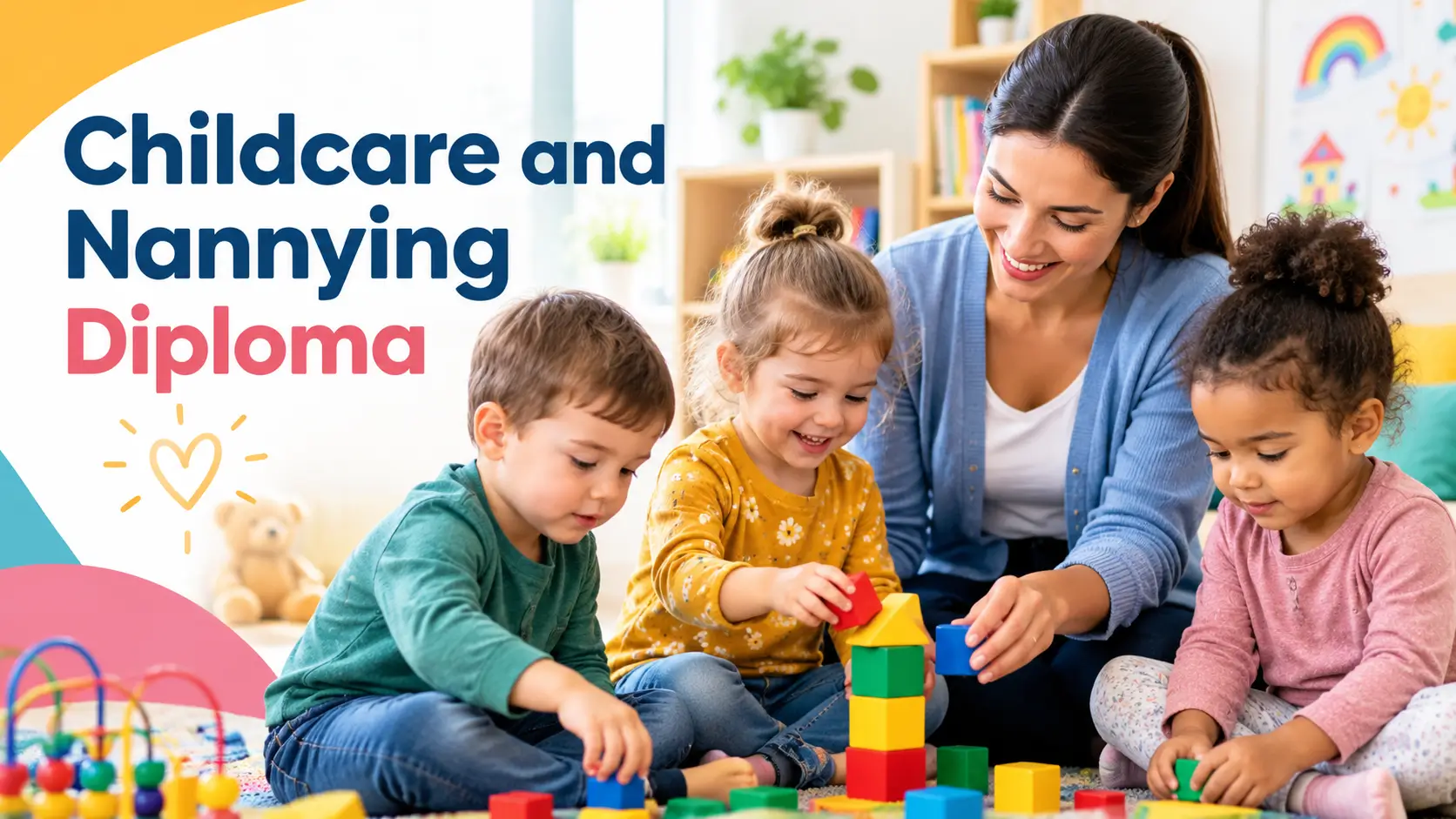
Childcare and Nannying Diploma
Childcare and Nannying Diploma The Childcare and Nannying Diploma introduces learners to the knowledge and skills involved in caring for...
Official Certification
Recognized by top tech firms
Learn With Confidence





About This Course
Childcare and Nannying Diploma
The Childcare and Nannying Diploma introduces learners to the knowledge and skills involved in caring for children and supporting their development. Covering child development theories, physical and cognitive growth, emotional and social development, health and safety, and play-based learning, the course provides a foundation for understanding children’s needs. It also explores communication, inclusive practice, special educational needs and professional development. Whether you are considering nannying jobs, exploring childcare as a career or looking to expand your existing knowledge, this course can help you understand important childcare principles and prepare for further learning in the childcare and early years sector.
What You Will Learn
- The foundations of childcare and the responsibilities involved in caring for children.
- Key child development theories and stages of development.
- Physical, cognitive, emotional and social development in children.
- Health, safety and well-being principles in childcare settings.
- The importance of play and learning in children’s development.
- Effective communication and collaboration with parents, carers and colleagues.
- Special educational needs, inclusion and individual support.
- Professional practice and career development in childcare and nannying.
Course Overview
The Childcare and Nannying Diploma is designed for learners who want to develop their understanding of childcare principles and children’s development. Across ten modules, the course explores the foundations of childcare, major child development theories and the physical, cognitive, emotional and social aspects of growing up. Learners also examine health, safety and well-being, alongside the role of play in supporting learning and development.
The programme introduces effective communication and collaboration, inclusive approaches to supporting children with special educational needs, and the importance of professional practice. These topics can help learners build a foundation for further study or explore opportunities in childcare and nannying. Individuals researching a level 3 childcare course online may find the subject areas useful when comparing learning options. However, course levels and recognition depend on the specific qualification and awarding organisation. Learners should check the provider’s course details and any relevant employment requirements before enrolling or applying for childcare positions.
Course Description
The Childcare and Nannying Diploma offers an introduction to the principles of caring for children and supporting their development. It covers child development theories, physical and cognitive growth, emotional and social development, health and safety, play-based learning, communication and inclusive practice. Learners also explore special educational needs and professional career development. The course may be suitable for aspiring nannies, childcare assistants and individuals interested in early years learning. It provides foundational knowledge that can support further study and career exploration. Practical childcare responsibilities may require additional training, supervised experience, safeguarding checks or recognised qualifications, depending on the role and location.
Course Curriculum
Module 1: Foundations of Childcare
This module introduces the basic principles of childcare and the responsibilities involved in creating a safe, supportive environment for children. Learners explore children’s needs, care practices and the importance of respectful relationships.
Key learning topics:
- Understanding the purpose and principles of childcare.
- Recognising children’s basic physical, emotional and developmental needs.
- Exploring the responsibilities of parents, nannies and childcare practitioners.
- Understanding safeguarding awareness, professional boundaries and children’s rights.
Module 2: Child Development Theories
This module introduces theories that explain how children grow, learn and develop. Learners explore how developmental perspectives can help adults understand children’s behaviour, abilities and individual needs.
Key learning topics:
- Understanding the purpose of child development theories.
- Exploring key perspectives on children’s learning and development.
- Recognising that children develop at different rates and in different ways.
- Applying developmental knowledge to support age-appropriate care and learning.
Module 3: Physical Development
This module explores children’s physical growth and the development of movement, coordination and motor skills. Learners consider how everyday activities, play and suitable environments can support healthy physical development.
Key learning topics:
- Understanding the main stages and patterns of physical development.
- Exploring gross motor skills, fine motor skills and coordination.
- Recognising the importance of nutrition, rest, movement and active play.
- Identifying ways to provide safe opportunities for physical activity.
Module 4: Cognitive Development
This module focuses on how children develop thinking, memory, attention, problem-solving and language-related abilities. Learners explore the importance of curiosity, exploration and appropriate learning experiences.
Key learning topics:
- Understanding cognitive development and its importance in early childhood.
- Exploring memory, attention, reasoning and problem-solving.
- Recognising how language and communication contribute to learning.
- Supporting curiosity through exploration, questions and age-appropriate activities.
Module 5: Emotional and Social Development
This module examines how children develop emotional awareness, relationships and social skills. Learners explore the importance of supportive interactions, positive guidance and environments where children feel secure and valued.
Key learning topics:
- Understanding emotional development and children’s ability to express feelings.
- Exploring social skills, friendships, cooperation and sharing.
- Recognising the role of attachment, reassurance and consistent care.
- Encouraging emotional regulation, empathy and positive behaviour.
Module 6: Health, Safety, and Wellbeing
This module introduces important considerations for maintaining children’s health, safety and overall well-being. Learners explore safe environments, hygiene, healthy routines and the importance of recognising and reporting concerns.
Key learning topics:
- Understanding health and safety principles in childcare settings.
- Exploring hygiene, nutrition, rest and healthy daily routines.
- Recognising potential hazards and the importance of risk awareness.
- Understanding safeguarding responsibilities and appropriate responses to concerns.
Module 7: Play and Learning
This module explores the role of play in children’s development and learning. Learners consider how different activities can encourage creativity, communication, movement, exploration and problem-solving.
Key learning topics:
- Understanding the relationship between play and child development.
- Exploring creative, imaginative, physical and sensory play.
- Planning age-appropriate activities that encourage learning and curiosity.
- Creating supportive play environments that promote participation and independence.
Module 8: Communication and Collaboration
This module examines communication between childcare practitioners, children, parents, carers and other professionals. Learners explore how respectful collaboration can support children’s needs and provide consistency in care.
Key learning topics:
- Using age-appropriate communication with children.
- Building respectful relationships with parents and carers.
- Sharing relevant information appropriately while maintaining confidentiality.
- Working collaboratively to support children’s development and well-being.
Module 9: Special Educational Needs and Inclusion
This module introduces inclusive childcare practices and the importance of recognising children’s individual strengths and support needs. Learners explore how adjustments and respectful approaches can help children participate in learning and play.
Key learning topics:
- Understanding special educational needs and individual differences.
- Recognising potential barriers to participation and learning.
- Exploring inclusive activities and appropriate adaptations.
- Working with parents, carers and relevant professionals to support individual needs.
Module 10: Professional Practice and Career Development
This module explores the professional expectations associated with childcare and nannying. Learners consider ethical conduct, continuing development and ways to prepare for potential career opportunities in the sector.
Key learning topics:
- Understanding professional responsibilities, boundaries and ethical practice.
- Recognising the importance of safeguarding, confidentiality and reliability.
- Exploring professional development and further childcare training.
- Identifying potential childcare and nannying career pathways and their requirements.
Who Is This Course For?
The Childcare and Nannying Diploma may be suitable for:
- Aspiring nannies: Individuals who want to understand children’s daily care, development and learning needs.
- Childcare beginners: Learners looking for an introduction to childcare principles and professional responsibilities.
- Childcare assistants: People who want to broaden their theoretical understanding of child development.
- Parents and carers: Individuals interested in learning more about children’s development, safety and well-being.
- Early years learners: Those exploring further study in childcare and early years education.
- Career changers: Individuals considering a future in childcare, nannying or related support roles.
- Existing childcare practitioners: People who want to refresh their knowledge of development, inclusion and professional practice.
Learners should check the course’s entry requirements and determine whether additional recognised qualifications or practical experience are needed for their intended role.
Requirements
The supplied curriculum does not specify mandatory entry qualifications. Before enrolling, learners should review the provider’s current requirements and course information.
The following may help learners benefit from the course:
- An interest in children’s development, care and education.
- A willingness to learn about children’s physical, emotional and social needs.
- Basic reading and comprehension skills.
- The ability to reflect on childcare scenarios and learning materials.
- A commitment to children’s safety, dignity, inclusion and well-being.
Previous childcare experience may be useful but should not be assumed to be compulsory without checking the provider’s rules. Completing this course does not automatically meet the requirements for regulated childcare work. Depending on the country and employer, additional qualifications, practical experience, safeguarding checks, first-aid training or other requirements may apply.
Skills You Can Develop
Through the course topics, learners can develop their understanding of:
- Child development awareness: Understanding children’s physical, cognitive, emotional and social growth.
- Childcare principles: Recognising children’s needs and the responsibilities involved in providing appropriate care.
- Health and safety awareness: Identifying potential hazards and understanding the importance of safe environments.
- Play-based learning: Exploring activities that support creativity, curiosity and developmental progress.
- Communication: Understanding how to communicate respectfully with children and adults.
- Emotional support: Recognising the importance of reassurance, empathy and positive relationships.
- Inclusive practice: Understanding individual differences and ways to encourage participation.
- Safeguarding awareness: Recognising the importance of child protection and appropriate reporting.
- Collaboration: Understanding how parents, carers and professionals can work together.
- Professional development: Identifying further learning opportunities and potential career pathways.
These are areas of foundational knowledge. Practical skills and professional competence may require supervised experience, assessment and additional training.
Learning Outcomes
After completing the course, learners should be able to:
- Explain the foundations of childcare and describe the general responsibilities involved in caring for children.
- Identify key child development theories and explain how they contribute to understanding children’s growth and learning.
- Describe the main aspects of physical development and identify activities that can support movement and coordination.
- Explain cognitive development and recognise the importance of curiosity, memory, communication and problem-solving.
- Describe emotional and social development and explain how supportive relationships contribute to children’s well-being.
- Identify key health, safety and well-being considerations in childcare environments.
- Explain the role of play in supporting children’s learning, creativity and development.
- Describe communication and collaboration practices that can help support children’s needs.
- Explain the importance of inclusion and identify ways to support children with different abilities and learning needs.
- Identify professional responsibilities, continuing development opportunities and potential career pathways in childcare and nannying.
Career Paths
The Childcare and Nannying Diploma can help learners explore possible career directions by introducing important childcare principles and child development topics. Potential roles to research include:
- Nanny: Providing childcare and supporting children’s routines, activities and development in a family setting.
- Childcare Assistant: Helping with children’s daily needs and activities in an appropriate childcare environment.
- Nursery Assistant: Supporting children’s care, play and learning under the supervision of qualified staff.
- Early Years Support Worker: Assisting with age-appropriate activities and children’s development, subject to role requirements.
- Childminding Assistant: Supporting a registered childminder where permitted and in accordance with local rules.
- Playgroup Assistant: Helping facilitate play and social activities for young children.
- After-School Club Assistant: Supporting children’s activities and supervision outside normal school hours.
- Childcare Centre Support Staff: Assisting with routines, communication and day-to-day childcare activities.
- Family Childcare Support Roles: Exploring roles that help families understand and access childcare resources, where relevant qualifications are met.
Nannying Jobs and Nannying Salary
People researching nannying jobs should consider the responsibilities, hours, location and qualifications required for each vacancy. Some roles involve full-time care, while others focus on part-time assistance, school collection or occasional childcare.
A nannying salary can vary significantly according to location, experience, working hours, duties, employer expectations and whether accommodation or other benefits are included. Live-in and live-out positions may have different pay arrangements. Research current local vacancies and salary information before making career decisions.
This diploma should be viewed as a learning opportunity rather than a guarantee of employment, a particular salary or eligibility for regulated roles. Employers may require recognised childcare qualifications, first-aid training, references, practical experience and safeguarding checks.
Frequently Asked Questions
1. What is the Childcare and Nannying Diploma?
The Childcare and Nannying Diploma is a course that introduces learners to childcare principles, child development, health and safety, play-based learning, communication, inclusion and professional practice. It is designed to help learners build foundational knowledge of children’s care and development.
2. What topics are covered in the course?
The course contains ten modules covering the foundations of childcare, child development theories, physical development, cognitive development, emotional and social development, health and safety, play and learning, communication, special educational needs and professional career development.
3. Is this an online childcare course?
The course title and supplied information do not confirm every aspect of delivery. Check the provider’s course page for current details about online access, study arrangements, course materials and any assessment requirements.
4. Is this course suitable for beginners?
The curriculum begins with the foundations of childcare, making the subject matter relevant to people who want an introduction to the field. However, learners should check the provider’s stated entry requirements before enrolling.
5. Can I use this course as a level 3 childcare course online?
The course covers topics relevant to childcare learning, but its title alone does not establish that it is a regulated Level 3 qualification. Check the provider’s course information and confirm the qualification level, awarding organisation and recognition before relying on it for employment or further study.
6. What is the difference between a Level 2, Level 3, Level 4 and Level 5 childcare course?
Qualification levels indicate different levels of learning complexity within a particular qualifications framework. The exact content, entry requirements and professional relevance vary by qualification and country. Compare the awarding organisation, qualification specification and recognition rather than relying on the level number alone.
7. Can this diploma help me find nannying jobs?
The course may help you develop foundational knowledge relevant to nannying. However, employers can have specific requirements for experience, recognised qualifications, references, first aid and safeguarding checks. Review each vacancy to determine whether the course meets its criteria.
8. What is the average nannying salary?
There is no single salary that applies to all nannies. Pay depends on location, experience, hours, responsibilities, employer expectations and employment arrangements. Research current job advertisements and reliable salary information for the area where you intend to work.
9. Does the course cover child development?
Yes. Several modules focus on child development, including development theories, physical growth, cognitive abilities, and emotional and social development. These topics help learners understand different aspects of children’s growth and learning.
10. Will I learn about health and safety in childcare?
Yes. Module 6 focuses on health, safety and well-being. It introduces important considerations for safe childcare environments, healthy routines and awareness of potential hazards. Check the provider’s detailed syllabus for the precise coverage of each topic.
11. Does the course cover special educational needs and inclusion?
Yes. Module 9 explores special educational needs and inclusion. It introduces individual differences, potential barriers to participation and the importance of adapting activities and working with families or relevant professionals where appropriate.
12. Can I become a nursery practitioner after completing this course?
Eligibility depends on the nursery, job duties and local regulations. Some positions require specific recognised early years qualifications, practical experience and safeguarding checks. Confirm the requirements for the role you want before relying on this course as your main qualification.
13. Do I need previous childcare experience to enrol?
The supplied curriculum does not state that previous childcare experience is mandatory. Check the course provider’s current entry requirements for confirmation, especially if you are considering the course as your first step into childcare.
14. Is the Childcare and Nannying Diploma recognised?
Recognition depends on the provider, the awarding organisation and the requirements of employers or relevant authorities. Before enrolling, confirm whether the course leads to a formal qualification, which organisation awards it and whether it is accepted for your intended career or further study.
15. Where can I find more information about the Childcare and Nannying Diploma?
Visit the course page for the provider’s latest information about the syllabus, enrolment, study arrangements, assessment, certification and entry requirements:
Course Content
Module 1_ Foundations of Childcare
-
Foundations of Childcare
00:00
Module 2_ Child Development Theories
Module 3_ Physical Development
Module 4_ Cognitive Development
Module 5_ Emotional and Social Development
Module 6_ Health, Safety, and Wellbeing
Module 7_ Play and Learning
Module 8_ Communication and Collaboration
Module 9_ Special Educational Needs and Inclusion
Module 10_ Professional Practice and Career Development
Frequently Asked Questions
There are many things that you might want to know. Well we have the answers.
