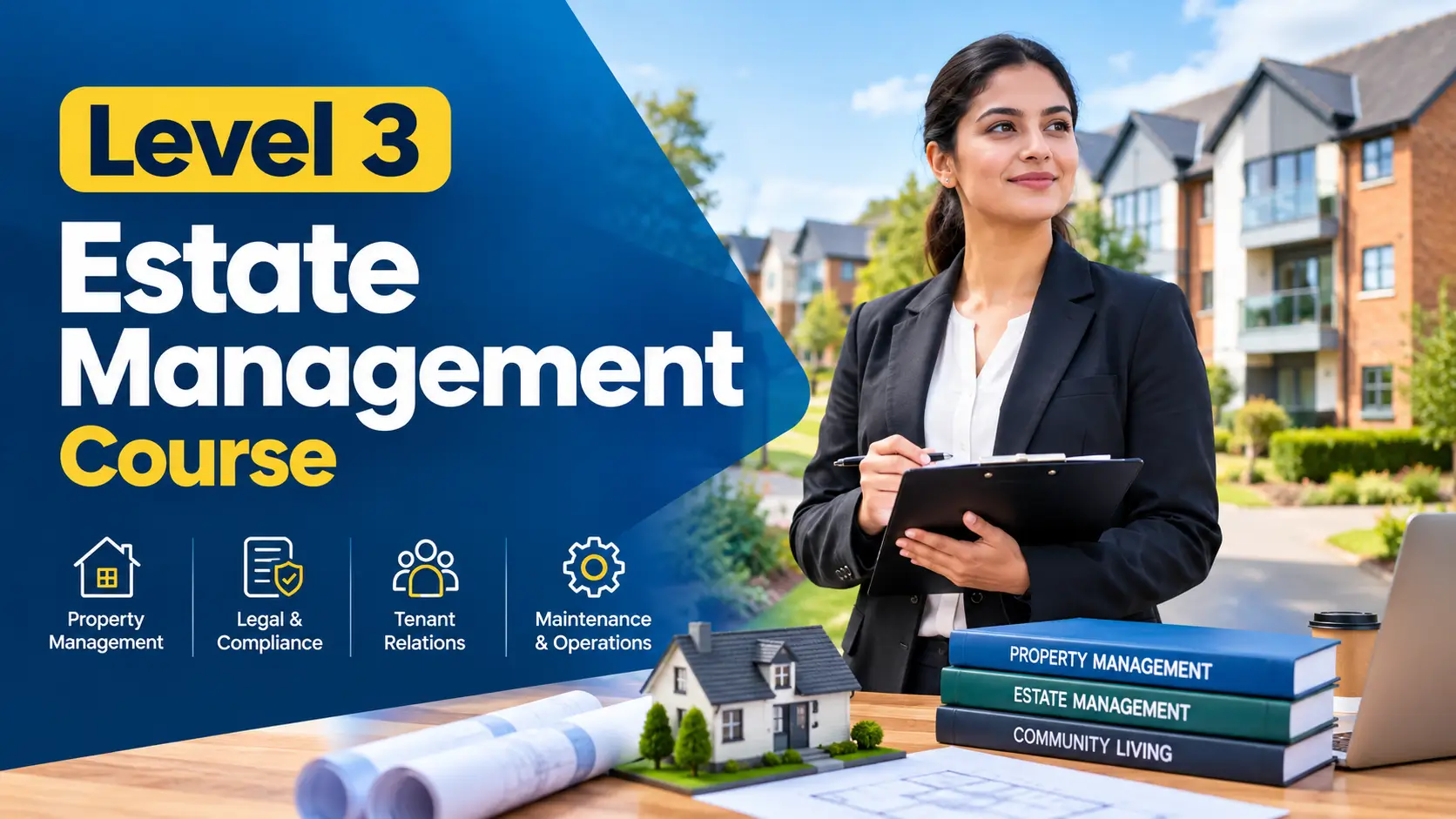
Level 3 Estate Management Course
Level 3 Estate Management Course Ready to Build a Career in Estate & Property Management but Don’t Know Where to...
Official Certification
Recognized by top tech firms
Learn With Confidence






About This Course
Level 3 Estate Management Course
Ready to Build a Career in Estate & Property Management but Don’t Know Where to Start?
No property management experience? New to estate agency and rental processes?
Develop essential estate management skills, understand property letting and management practices, and build a strong foundation for exciting career opportunities in the UK’s property sector!
✅ Master Estate & Property Management Fundamentals — Learn essential property management principles, property listings, and day-to-day estate management practices.
✅ Understand Property Valuation & Rental Processes — Explore how properties are valued, listed, rented, and managed within the property market.
✅ Develop Property Law & Management Knowledge — Understand essential property law principles, property management tools, and the responsibilities involved in managing rental properties.
✅ Explore Career Opportunities — Build industry-relevant knowledge for estate agency, lettings, property management, and rental administration roles across the UK.
COURSE OVERVIEW
Explore the principles of estate agency, property valuation and rental management with this Level 3 Estate Management Course. The programme introduces how properties are listed, marketed and assessed, alongside the responsibilities involved in managing rental properties and property-related administration.
Throughout the course, you will examine approaches to finding sellers, property valuation processes, rental management techniques and the use of property management tools. The curriculum also introduces property law and land law, covering registered and unregistered land, rights and interests in property, and co-ownership.
Designed for learners interested in estate agency, lettings and property management, this course provides foundational knowledge of property operations and the legal concepts relevant to property ownership and management.
Key Topics Covered
-
Property Listing and Finding Sellers: Explore how properties are listed and how estate agents identify prospective sellers.
-
Property Valuation: Understand the principles and considerations involved in assessing property value.
-
Property and Rental Management: Examine rental administration and property management responsibilities.
-
Property Law and Land Law: Explore legal principles relating to property ownership and interests in land.
-
Registered Land and Co-Ownership: Understand concepts relating to registered and unregistered land, property rights and co-ownership.
COURSE CURRICULUM
Module 1: Listing Property – Finding the Sellers
This module introduces the process of listing property and finding sellers. It provides foundational knowledge relevant to property marketing and seller-focused estate agency activities.
Main learning topics:
- Listing property
- Finding sellers
- Property listing activities
Module 2: Valuation Process
This module introduces the property valuation process and its importance within estate management. Learners develop an understanding of valuation as part of property-related decision-making.
Main learning topics:
- Property valuation
- The valuation process
- Valuation within estate management
Module 3: Introduction to Property Management
This module introduces the principles of property management and provides a foundation for understanding how properties are managed within professional environments.
Main learning topics:
- Introduction to property management
- Property management principles
- Property management responsibilities
Module 4: Renting Property
This module explores renting property and introduces the key activities involved in the rental process.
Main learning topics:
- Renting property
- Rental processes
- Property rental activities
Module 5: The Brass Tacks of Managing Rentals
This module focuses on the practical aspects of managing rental properties and develops knowledge of the core activities involved in rental management.
Main learning topics:
- Managing rentals
- Rental property administration
- Practical rental management
Module 6: Techniques and Tools for Managing the Property
This module examines techniques and tools used to manage property effectively. It supports learners in understanding practical approaches to property management.
Main learning topics:
- Property management techniques
- Property management tools
- Managing property effectively
Module 7: The Part of Tens
This module provides a dedicated section within the programme focused on the Part of Tens.
Main learning topics:
- The Part of Tens
- Key property management information
- Supporting estate management knowledge
Module 8: Introduction to Property Law
This module introduces property law and provides foundational legal knowledge relevant to property ownership, management and transactions.
Main learning topics:
- Introduction to property law
- Property law principles
- Legal considerations in property
Module 9: Land Law Principles – Rights and Interests
This module explores fundamental land law principles, with particular attention to rights and interests associated with land and property.
Main learning topics:
- Land law principles
- Property rights
- Interests in land
Module 10: Registered and Unregistered Land
This module introduces the distinction between registered and unregistered land and develops awareness of these two forms of land ownership records.
Main learning topics:
- Registered land
- Unregistered land
- Differences between registered and unregistered land
Module 11: Co-Ownership in Property
This module introduces co-ownership and explores its relevance to property ownership and land interests.
Main learning topics:
- Co-ownership
- Property ownership
- Interests in jointly owned property
WHO IS THIS COURSE FOR?
Aspiring Estate Agents
Suitable for learners interested in estate agency and wanting foundational knowledge of property listing, sellers, valuation and renting.
Aspiring Property Managers
Useful for people exploring property management roles and wanting to understand rental administration, property management techniques and management tools.
Letting Professionals
Relevant to learners interested in residential letting environments, particularly those wanting to understand renting and rental management.
Property Administrators
The programme can support people working in administrative property environments where understanding listings, valuations, rentals and property law is useful.
Aspiring Estate Managers
Learners searching for estate manager training or estate manager courses can use the programme to develop broad foundational knowledge across property management and land law.
Property Entrepreneurs
Those considering property-related business activities may benefit from understanding valuation, rental management, property law and ownership principles.
Career Changers
People moving towards property, estate agency or lettings can use the programme to build subject knowledge before pursuing relevant work experience or further professional development.
REQUIREMENTS
No formal entry requirements were supplied for this programme.
Learners should review any specific entry requirements, professional requirements or additional qualifications requested by an employer or relevant professional body before applying for a particular UK property role.
SKILLS YOU CAN DEVELOP
Property Listing Skills
Develop an understanding of listing property and identifying potential sellers.
Valuation Awareness
Build knowledge of the property valuation process and its role within estate management.
Property Management Knowledge
Understand foundational approaches to managing properties in professional environments.
Rental Management Skills
Develop knowledge relevant to renting properties and managing rental activities.
Property Management Tool Awareness
Understand the techniques and tools introduced for managing property.
Property Law Awareness
Build foundational knowledge of property law and its relevance to property activities.
Land Law Knowledge
Understand principles relating to land, rights and interests.
Registered Land Awareness
Develop knowledge of registered land and its place within property ownership.
Unregistered Land Awareness
Understand the concept of unregistered land and how it differs from registered land.
Co-Ownership Knowledge
Develop an understanding of co-ownership and property interests involving multiple owners.
LEARNING OUTCOMES
By completing the Level 3 Estate Management Course, learners should be able to:
- Explain the fundamentals of listing property and finding sellers.
- Describe the main stages involved in the property valuation process.
- Explain the basic principles of property management.
- Describe key considerations involved in renting property.
- Explain practical aspects of managing rental properties.
- Identify techniques and tools used in property management.
- Summarise the introductory principles of property law.
- Explain fundamental land law principles relating to rights and interests.
- Distinguish between registered and unregistered land.
- Explain the basic concept of co-ownership in property.
CAREER PATHS
Estate Agent
Typical UK Salary: £23,000 to £40,000.
How the course is relevant: The curriculum covers listing property, finding sellers, valuation, renting and property management, all of which are relevant to estate agency activities. The National Careers Service describes estate agents as professionals who sell and let commercial and residential property, with some also managing rental properties.
Additional employer requirements, experience and professional development may apply depending on the role.
Letting Agent
Typical UK Salary: £23,000 to £40,000.
How the course is relevant: Renting Property and The Brass Tacks of Managing Rentals provide foundational knowledge relevant to letting and rental activities.
The National Careers Service lists letting agent as an alternative title for estate agent and notes that estate agents may sell and let property.
Estates Officer
Typical UK Salary: £27,000 to £55,000.
How the course is relevant: Property management, valuation, renting and property law topics can provide useful foundational knowledge for estates-related environments.
Estates officers may manage the upkeep of land and property across settings such as hospitals, council buildings, historical sites and country parks. The National Careers Service lists university, apprenticeships and direct application among possible routes into the role.
Land and Property Valuer
Typical UK Salary: £25,000 to £50,000.
How the course is relevant: The Valuation Process module introduces a core area relevant to property valuation, while the wider curriculum provides context around property management and land law.
The National Careers Service identifies land and property valuers and auctioneers as professionals who advise on buying, selling and renting land, property and other assets.
Additional specialist training, qualifications or professional requirements may apply to particular valuation positions.
Property Management Professional
Typical UK Salary: Varies according to role, employer, location and experience.
How the course is relevant: The programme covers property management, renting, rental management, management techniques and property law, making it relevant to learners exploring property management environments.
Specific job titles and entry requirements vary between employers. Some positions may require additional qualifications or previous industry experience.
Facilities or Estates Management Support
Typical UK Salary: Facilities manager roles are listed at £26,000 to £50,000 by the National Careers Service.
How the course is relevant: Property management, rental knowledge, land principles and property law can provide useful background knowledge for broader estates and facilities environments.
The National Careers Service notes that facilities managers oversee the operation, maintenance and security of buildings and workplaces.
Salary figures are indicative and can vary by location, experience, employer and specific position. Completing this programme does not guarantee employment or appointment to any listed role.
FREQUENTLY ASKED QUESTIONS
What is a Level 3 Estate Management Course?
A Level 3 Estate Management Course is a property-focused programme covering areas such as property listing, valuation, property management, renting and property law.
What does estate management involve?
Estate management can involve activities connected with property, including listings, valuation, rental management, property administration and understanding ownership or land-related matters.
Is this an estate management course for beginners?
The supplied curriculum starts with introductory property management and property law topics, making it suitable for learners seeking foundational knowledge.
What are estates management courses useful for?
Estates management courses can help learners develop knowledge relevant to property management, estate agency, lettings and broader estates-related environments.
What is included in estate manager training?
Estate manager training can cover areas such as property management, valuation, renting, property law and land-related principles. This programme includes all of these areas at an introductory level.
What will I learn about property valuation?
The Valuation Process module introduces the valuation process and its relevance to estate management.
Does the programme cover rental property management?
Yes. It includes Renting Property and The Brass Tacks of Managing Rentals, along with techniques and tools for managing property.
Does the Level 3 Estate Management Course cover property law?
Yes. It includes an Introduction to Property Law module followed by modules covering land law principles, registered and unregistered land, and co-ownership.
Does it cover registered and unregistered land?
Yes. Module 10 specifically focuses on Registered and Unregistered Land.
What is covered in the land law section?
The programme covers land law principles, rights and interests, registered and unregistered land, and co-ownership in property.
Can this programme help me become an estate agent?
It can provide relevant foundational knowledge for someone interested in estate agency, particularly around property listings, sellers, valuation, renting and property management. Employment requirements vary by employer.
Can I use this programme to work as a property manager?
The programme can help develop foundational property management knowledge, but employers may require additional qualifications, experience or other competencies for specific property management positions.
Are estate manager courses the same as professional qualifications?
Not necessarily. Course titles and professional qualifications can differ. Learners should check the exact status of any programme and the requirements for their intended role.
Does completing this programme guarantee a property job?
No. It provides subject knowledge but does not guarantee employment. Career outcomes depend on experience, employer requirements, additional qualifications and the specific role.
Is property law included in the programme?
Yes. The curriculum includes an introduction to property law, land law principles, rights and interests, registered and unregistered land, and co-ownership.
Course Content
Module 1 – Listing Property – Finding the Sellers
-
Listing Property – Finding the Sellers
00:00
Module 2 – Valuation Process
Module 3 – Introduction to Property Management
Module 4 – Renting Property
Module 5 – The Brass Tacks of Managing Rentals
Module 6 – Techniques and Tools for Managing the Property
Module 7 – The Part of Tens
Module 8 – Introduction to Property Law
Module 9 – Land Law Principles- Rights and Interests
Module 10 – Registered and Unregistered Land
Module 11 – Co-Ownership in Property
Frequently Asked Questions
There are many things that you might want to know. Well we have the answers.
