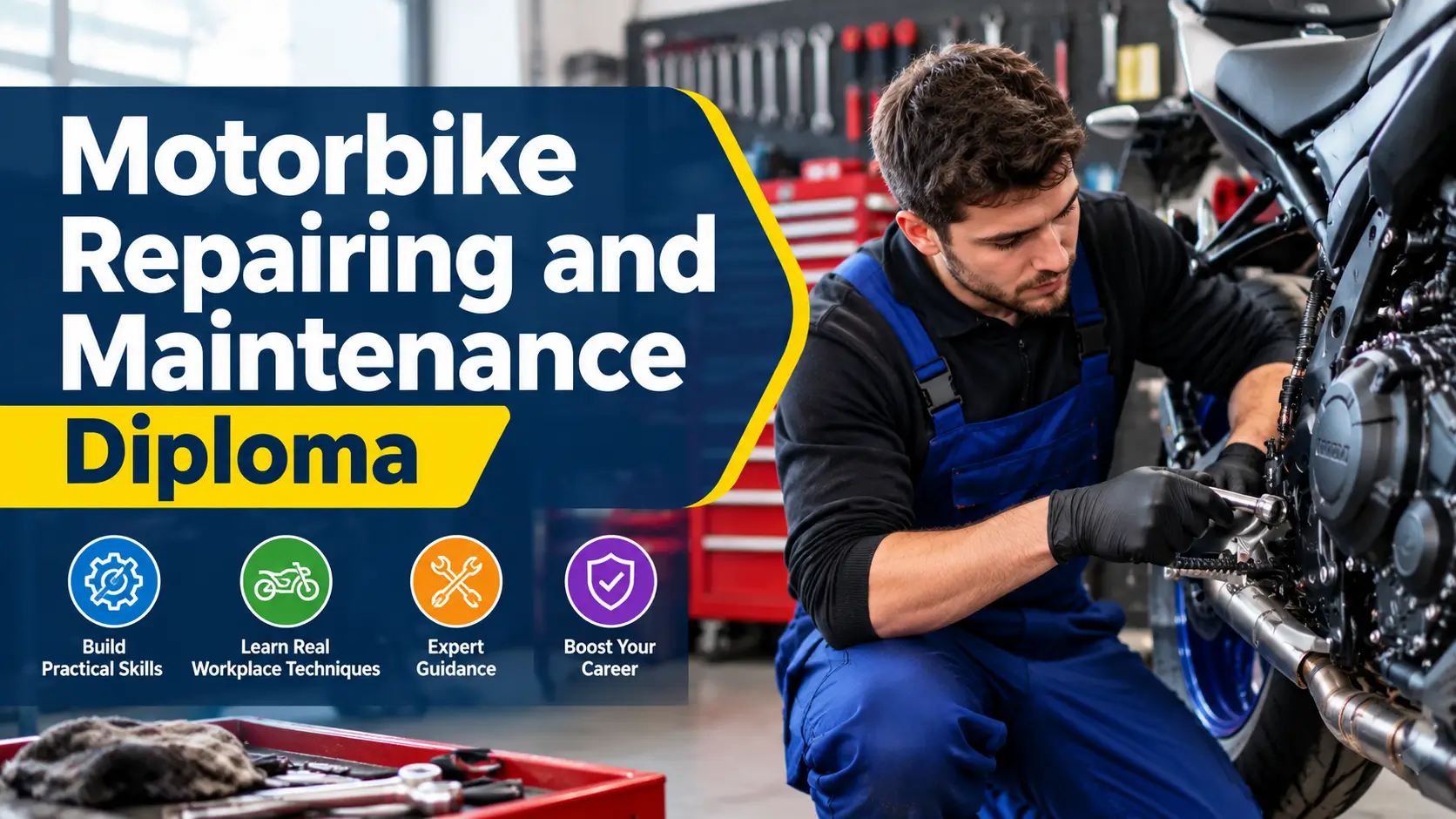
Motorbike Repairing and Maintenance Diploma
Motorbike Repairing and Maintenance Diploma The Motorbike Repairing and Maintenance Diploma introduces learners to essential motorcycle maintenance principles, major mechanical...
Official Certification
Recognized by top tech firms
Learn With Confidence



About This Course
Motorbike Repairing and Maintenance Diploma
The Motorbike Repairing and Maintenance Diploma introduces learners to essential motorcycle maintenance principles, major mechanical systems and routine servicing practices. This course explores motorbike engines, cooling and lubrication, ignition systems, suspension, fuel delivery, exhaust systems and tyre sizing. You will develop an understanding of how these components work together and why regular maintenance matters for motorcycle performance, reliability and safety. Whether you are a motorcycle enthusiast, a beginner interested in basic motorbike maintenance or someone exploring a repair-related career, this course provides foundational knowledge to support further learning. Practical repairs should always follow manufacturer guidance and appropriate safety procedures.
What You Will Learn:
- Essential motorbike maintenance practices and routine checks.
- Motorcycle engine components and operating principles.
- Engine cooling, lubrication and ignition systems.
- Suspension, fuel injection, intake and exhaust systems.
- Motorcycle tyres, sizing and basic inspection principles.
Course Overview
The Motorbike Repairing and Maintenance Diploma introduces the main systems and components involved in motorcycle operation and maintenance. Learners explore the fundamentals of motorbike maintenance, engine types, cooling and lubrication systems, ignition, suspension, fuel delivery and exhaust systems. The course also covers fuel injectors and motorcycle tyre sizing.
Understanding these systems can help learners recognise the importance of regular inspections, preventive maintenance and identifying potential mechanical problems. The curriculum provides a foundation for understanding how individual components contribute to performance, reliability and safe operation.
This course may suit motorcycle enthusiasts, beginners and learners interested in developing their mechanical knowledge. It can also provide a starting point for people considering further technical training in motorcycle servicing or repair. However, theoretical learning does not replace supervised practical experience, manufacturer-specific procedures or professional mechanical training. Check the provider’s current course details, assessment arrangements and certificate information before enrolling.
Course Description
Build your understanding of motorcycle systems with the Motorbike Repairing and Maintenance Diploma. This course introduces essential maintenance principles and explores engines, cooling, lubrication, ignition, suspension, fuel injection, intake and exhaust systems, and motorcycle tyres. You will learn why regular inspections and appropriate maintenance are important for reliability and safe riding. The course is suitable for beginners and motorcycle enthusiasts who want to develop their technical knowledge or explore further training in motorcycle servicing. It provides a foundation for learning rather than a substitute for hands-on workshop experience, specialist tools, manufacturer instructions or professional mechanical qualifications.
Course Curriculum
Module 1 – Introduction to Motorbike Maintenance
Explore the fundamentals of motorcycle maintenance and understand how routine inspections can help maintain performance, reliability and safety.
Key learning topics:
- The importance of regular motorcycle maintenance.
- Routine checks before and after riding.
- Identifying visible wear, leaks and damage.
- Basic workshop safety and maintenance tools.
Module 2 – Know Your Motorbike Engines
Learn about motorcycle engines, their main components and the basic principles behind converting fuel energy into mechanical power.
Key learning topics:
- Main engine components and their functions.
- Basic differences between common engine types.
- The four-stroke engine cycle and its stages.
- Recognising common engine performance symptoms.
Module 3 – Engine Cooling and Lubrication
Understand how cooling and lubrication systems help control engine temperature, reduce friction and protect internal components.
Key learning topics:
- Air-cooled and liquid-cooled engines.
- The role of engine oil and lubrication.
- Coolant checks and cooling system components.
- Recognising signs of overheating or lubrication problems.
Module 4 – Ignition
Explore how motorcycle ignition systems produce the spark needed to ignite the air-fuel mixture in petrol engines.
Key learning topics:
- The purpose of the ignition system.
- Spark plugs and ignition coils.
- Basic ignition timing concepts.
- Common ignition-related symptoms and checks.
Module 5 – Suspension
Learn how motorcycle suspension contributes to stability, handling, comfort and tyre contact with the road.
Key learning topics:
- Front forks and rear suspension components.
- The role of springs and damping.
- Basic suspension inspection principles.
- Recognising leaks, damage and unusual handling.
Module 6 – Intake, Fuel, and Exhaust Systems
Understand how air enters the engine, fuel is supplied and exhaust gases are removed during motorcycle operation.
Key learning topics:
- Air intake systems and air filters.
- The purpose of fuel delivery systems.
- Exhaust components and their functions.
- Recognising common intake and exhaust problems.
Module 7 – Fuel Injectors on a Motorcycle
Explore electronic fuel injection and understand how injectors help deliver controlled quantities of fuel to the engine.
Key learning topics:
- The basic operation of fuel injection.
- Fuel injectors and their role in engine performance.
- Sensors and electronic engine management basics.
- Symptoms of possible fuel injection problems.
Module 8 – Motorcycle Tires and Sizing
Learn how motorcycle tyres support grip, handling and stability, and understand the information provided by tyre size markings.
Key learning topics:
- Understanding motorcycle tyre size markings.
- Tyre pressure and regular inspection.
- Checking tread, wear and visible damage.
- Selecting tyres according to manufacturer specifications.
Who Is This Course For?
The Motorbike Repairing and Maintenance Diploma may be suitable for:
- Motorcycle enthusiasts: People who want to understand how their bikes work.
- Beginners: Learners interested in basic motorbike maintenance.
- Aspiring motorcycle mechanics: People exploring further training in repair and servicing.
- Motorbike owners: Riders who want to understand routine checks and maintenance essentials.
- Automotive learners: Individuals interested in expanding their knowledge of two-wheeled vehicles.
- Career changers: People considering a future in motorcycle servicing or a related technical field.
- Further-study learners: Those preparing to explore practical mechanical training.
Practical repairs and safety-critical work should be undertaken only with suitable training, tools and supervision.
Requirements
No specific entry requirements are confirmed here. Check the provider’s current enrolment details before registering.
Learners may benefit from:
- An interest in motorcycles and mechanical systems.
- Basic reading and numeracy skills.
- Access to a computer, tablet or smartphone.
- An internet connection for online learning.
- A willingness to follow workshop safety guidance.
- Access to appropriate tools and supervision for any practical learning.
Previous mechanical experience may be helpful but is not necessarily required for introductory study. Professional repair work may require additional training, experience and relevant qualifications.
Skills You Can Develop
By studying the course material, you may develop knowledge and understanding of:
- Basic motorbike maintenance.
- Motorcycle engine components and operating principles.
- Cooling and lubrication systems.
- Ignition system fundamentals.
- Suspension components and inspection.
- Intake, fuel and exhaust systems.
- Fuel injection principles.
- Motorcycle tyre sizing and condition.
- Routine maintenance checks.
- Recognising possible mechanical symptoms.
- Workshop safety awareness.
- The importance of following manufacturer recommendations.
These are potential learning outcomes rather than proof of practical repair competence. Hands-on skills require suitable tools, training and supervised practice.
Learning Outcomes
After studying the course material, learners should be able to:
- Explain the importance of routine motorbike maintenance.
- Identify major motorcycle engine components and describe their functions.
- Explain the purpose of engine cooling and lubrication systems.
- Describe the basic operation of a motorcycle ignition system.
- Identify key suspension components and explain their functions.
- Describe the roles of intake, fuel and exhaust systems.
- Explain the basic principles of motorcycle fuel injection.
- Interpret common motorcycle tyre size markings.
- Identify routine maintenance checks that can help reveal visible wear or potential problems.
- Explain why manufacturer guidance, appropriate tools and safe working procedures are essential during maintenance.
Career Paths
This course may help learners explore further training and opportunities related to motorcycles and mechanical maintenance. Depending on practical skills, experience, qualifications and employer requirements, possible areas of interest include:
- Motorcycle mechanic trainee.
- Motorcycle service assistant.
- Motorbike workshop assistant.
- Motorcycle maintenance technician trainee.
- Motorcycle dealership support.
- Motorcycle parts and accessories sales.
- Small-engine maintenance training.
- Further study in vehicle maintenance and repair.
Important: Completing this course does not guarantee employment or establish professional mechanic status. Employers may require practical experience, recognised technical qualifications and demonstrated workshop competence.
Frequently Asked Questions
1. What is the Motorbike Repairing and Maintenance Diploma?
It is a course introducing motorcycle maintenance principles and the main systems found on motorbikes, including engines, cooling, lubrication, ignition, suspension, fuel injection and tyres.
2. Is this motorbike maintenance course suitable for beginners?
It may suit beginners who want to build foundational knowledge of motorcycle systems. Check the provider’s current entry requirements before enrolling.
3. What does basic motorbike maintenance include?
Basic maintenance commonly includes checking tyre condition and pressure, inspecting lights and controls, checking fluid levels where applicable, looking for leaks and following the manufacturer’s servicing schedule.
4. What are the most important motorbike maintenance essentials?
Important essentials include regular inspections, correct tyre pressure, appropriate engine oil and coolant where applicable, chain care where relevant, functional lights and brakes, and following the motorcycle manufacturer’s maintenance schedule.
5. What are some useful motorbike maintenance tips?
Follow the owner’s manual, check the motorcycle before riding, use the correct fluids and replacement parts, monitor tyre condition, address unusual noises or leaks promptly and avoid working on hot or unstable machinery.
6. What should be included in a motorbike maintenance checklist?
A routine checklist may include tyre pressure and condition, brakes, lights, indicators, horn, fluid levels, visible leaks, chain condition and tension where applicable, mirrors and controls. Follow the manufacturer’s instructions for the specific motorcycle.
7. What is included in a motorbike maintenance kit?
A basic kit may contain suitable hand tools, tyre pressure equipment, a tyre tread gauge, cleaning materials, chain lubricant for motorcycles with chains and the correct supplies specified by the manufacturer. The exact kit depends on the motorcycle and the tasks being performed.
8. Will I learn about motorcycle engines?
Yes. The curriculum includes a module on motorcycle engines, covering their main components and basic operating principles.
9. Does the course cover fuel injection?
Yes. Module 7 introduces motorcycle fuel injectors and the basic principles of fuel injection and engine management.
10. Will I learn about motorcycle tyres and sizing?
Yes. The tyre module introduces size markings, pressure checks, wear and damage inspections, and the importance of selecting tyres that meet manufacturer specifications.
11. Can I perform motorcycle repairs after completing the course?
The course may help you understand motorcycle systems, but practical repair competence requires hands-on training and experience. Safety-critical work should be completed by a suitably trained person.
12. Can this course help me become a motorcycle mechanic?
It may provide a foundation for further study. Becoming a competent motorcycle mechanic generally requires practical workshop experience and may require recognised technical qualifications depending on the employer and location.
13. Can I study the course online?
The course may be available online. Confirm the current delivery format, learning materials, assessment arrangements and certificate details with the provider.
14. Will I receive a certificate after completing the course?
Certificate availability and the conditions for receiving one depend on the provider’s current arrangements. Check these details before enrolling.
15. How do I enrol in the course?
Visit the provider’s course page to review the current curriculum, fees, study arrangements, entry requirements and enrolment instructions before registering.
Course Content
Module 1 – Introduction to Motorbike Maintenance
-
Introduction to Motorbike Maintenance
00:00
Module 2 – Know Your Motorbike Engines
Module 3 – Engine Cooling and Lubrication
Module 4 – Ignition
Module 5 – Suspension
Module 6 – Intake, Fuel, and Exhaust Systems
Module 7 – Fuel Injectors on a Motorcycle
Module 8 – Motorcycle Tires and Sizing
Frequently Asked Questions
There are many things that you might want to know. Well we have the answers.
