Motorcycle Servicing, Repair and Maintenance Course
Motorcycle maintenance is essential for vehicle reliability, performance and road safety. Whether a motorcycle is used for daily commuting, leisure...
Official Certification
Recognized by top tech firms
Learn With Confidence





About This Course
Motorcycle maintenance is essential for vehicle reliability, performance and road safety. Whether a motorcycle is used for daily commuting, leisure riding or professional purposes, its engine, transmission, braking system, tyres and electrical components need appropriate attention. Understanding how these systems work can help you recognise maintenance requirements, identify common problems and make more informed decisions about servicing and repairs.
The Motorcycle Servicing, Repair and Maintenance Course introduces the main systems found in motorcycles and the principles involved in maintaining them. You will explore workshop safety, tools, engine fundamentals, engine overhaul concepts, lubrication and cooling systems. The course also examines intake and fuel systems, exhaust and emissions, ignition systems and motorcycle electrical components.
Further modules cover clutch and transmission systems, final drive arrangements, frames, steering, suspension, wheels, tyres and brakes. You will also explore servicing, troubleshooting and storage practices, helping you understand how regular maintenance contributes to motorcycle condition and reliability.
By studying these topics, you can build a foundation in motorcycle engineering terminology and develop a clearer understanding of how different components work together. You will learn to recognise common maintenance areas, understand the purpose of important systems and appreciate the value of a systematic approach to troubleshooting.
This course is suitable for beginners and motorcycle enthusiasts who want to expand their technical knowledge. It may also support further study in vehicle maintenance or motorcycle mechanics. It is an educational introduction, not a practical trade qualification. Hands-on repair work, safety-critical procedures and professional servicing require appropriate practical training, tools, supervision and competence.
What You Will Learn
You will develop an understanding of:
-
Motorcycle workshop safety and commonly used tools.
-
The basic operating principles of motorcycle engines.
-
Engine components and the purpose of an overhaul.
-
Lubrication and cooling systems.
-
Intake, fuel delivery and exhaust systems.
-
Emissions and ignition principles.
-
Motorcycle electrical systems.
-
Clutches, transmissions and final drive arrangements.
-
Frames, steering and suspension.
-
Wheels, tyres and braking systems.
-
Routine servicing and maintenance considerations.
-
Common troubleshooting principles.
-
Appropriate motorcycle storage and preparation.
Course Modules
Module 1: Introduction, Workshop Safety and Tools
Start by exploring the motorcycle workshop environment and the importance of safe working practices. You will become familiar with the types of tools commonly used in motorcycle maintenance, including general hand tools and equipment used for inspection and servicing.
The module introduces workshop organisation, personal protective equipment, safe handling and awareness of potential hazards. You will consider why motorcycles must be supported securely before work begins and why tools should be selected and used appropriately.
You will also explore the importance of following manufacturer instructions and recognising when a repair requires specialist equipment or professional assistance. A safe and organised workshop provides the foundation for effective maintenance.
Module 2: Engine Fundamentals
Develop an understanding of how motorcycle engines produce power. You will explore the purpose of key engine components and the general principles behind the combustion process.
The module introduces concepts such as cylinders, pistons, crankshafts, valves and engine cycles. You will consider how these parts work together to convert energy into mechanical movement and why correct operation depends on suitable lubrication, cooling and fuel delivery.
You will also gain awareness of differences between common engine configurations and why engine design influences performance, maintenance and operating characteristics.
Module 3: Engine Overhaul
Explore the general purpose of an engine overhaul and the types of issues that may make a detailed engine inspection necessary. You will consider the importance of identifying symptoms, consulting technical information and understanding the relationship between engine condition and performance.
The module introduces the broad stages involved in engine assessment, including inspection of components, awareness of wear and consideration of manufacturer tolerances. You will also learn why correct assembly procedures, suitable tools and accurate specifications matter.
Engine overhaul is a specialist practical activity. This module develops theoretical awareness rather than providing the hands-on competence needed to dismantle, inspect and rebuild an engine independently.
Module 4: Lubrication and Cooling
Understand how lubrication and cooling systems help protect motorcycle engines. You will explore the purpose of engine oil, lubrication pathways and the role of oil in reducing friction and managing component wear.
The module also introduces air-cooled and liquid-cooled engine arrangements, including the general purpose of radiators, coolant and temperature regulation. You will consider common symptoms associated with inadequate lubrication or cooling and why maintenance intervals and manufacturer-approved fluids are important.
This knowledge can help you understand why oil condition, coolant levels and system integrity are important considerations during routine maintenance.
Module 5: Intake and Fuel Systems
Explore how air and fuel reach the engine and contribute to combustion. You will learn about the purpose of air filters, intake passages, fuel tanks, pumps, injectors and carburettors, depending on motorcycle design.
The module introduces the importance of correct fuel delivery and air supply. You will consider how blocked filters, contaminated fuel or system faults may affect engine starting, running and efficiency.
You will also develop an understanding of why fuel-system inspection and repair require attention to fire safety, manufacturer guidance and appropriate working procedures.
Module 6: Exhaust and Emissions
Learn about the purpose of motorcycle exhaust systems and how they manage gases produced during combustion. You will explore exhaust components, silencing, emissions-related systems and the importance of maintaining the system in suitable condition.
The module considers how exhaust leaks, damage or restrictions may affect operation. You will also develop awareness of emissions controls and why road-going motorcycles must meet applicable requirements.
Understanding exhaust and emissions systems can help you recognise their contribution to engine operation, environmental performance and legal compliance.
Module 7: Ignition Systems
Explore the role of the ignition system in starting and operating a petrol motorcycle engine. You will learn about the general function of components such as spark plugs, ignition coils, sensors and electronic control arrangements.
The module introduces the importance of producing a correctly timed spark and how ignition faults may contribute to poor starting, misfiring or inconsistent engine performance.
You will also consider why inspection and diagnosis should follow appropriate technical information rather than relying on guesswork or replacing components unnecessarily.
Module 8: Electrical Systems
Develop an understanding of the electrical systems used in motorcycles. You will explore the general purpose of batteries, charging systems, wiring, fuses, switches and electrical connections.
The module considers how electrical faults can affect starting, lighting, instruments and other vehicle functions. You will learn why damaged wiring, poor connections and battery condition should be considered during troubleshooting.
You will also gain awareness of safe inspection principles and the importance of using suitable equipment and following manufacturer guidance when working with electrical components.
Module 9: Clutch, Transmission and Final Drive
Understand how engine power is transferred to the motorcycle’s rear wheel. You will explore the purpose of the clutch, gearbox and final drive, including chain, belt and shaft-drive arrangements.
The module introduces the role of gear selection and the way transmission components work together to deliver power under different riding conditions. You will also consider common maintenance areas, such as chain condition and tension, lubrication and signs of component wear.
This knowledge can help you recognise why transmission maintenance is important for smooth operation and safe vehicle use.
Module 10: Frame, Steering and Suspension
Explore the structural and handling systems that influence motorcycle stability and control. You will learn about the purpose of the frame, steering components and suspension arrangements.
The module considers how suspension helps manage road irregularities and maintain tyre contact with the road. You will also examine why steering condition, alignment and component wear can affect handling.
You will develop an understanding of why damage or faults in these systems require careful assessment, particularly because they can directly influence vehicle safety.
Module 11: Wheels, Tyres and Brakes
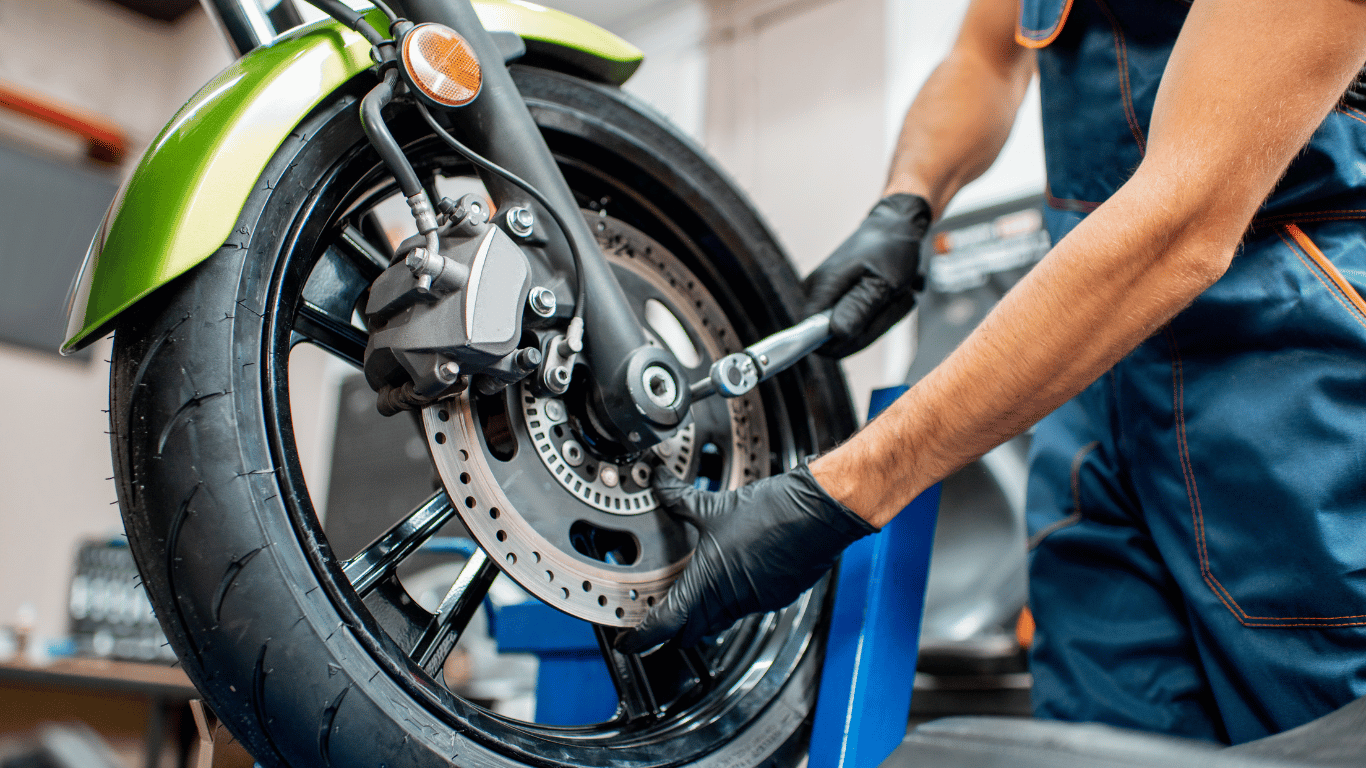
Learn about the importance of wheels, tyres and braking systems in motorcycle safety. You will explore tyre condition, tread, pressure, wheel integrity and the importance of selecting suitable tyres for the motorcycle.
The module also introduces the general principles of braking systems, including disc and drum arrangements and the role of associated components. You will consider why brake condition, fluid condition and correct operation are essential.
You will also recognise why tyre and brake defects should be addressed promptly by someone with the appropriate practical competence.
Module 12: Servicing, Troubleshooting and Storage
Bring together your knowledge by exploring routine motorcycle servicing and basic troubleshooting principles. You will consider why manufacturers specify service intervals and why maintenance records can help track vehicle condition.
The module introduces a systematic approach to investigating common symptoms, including starting difficulties, unusual noises, poor performance and electrical problems. You will learn why observations, maintenance history and technical information can help narrow down possible causes.
You will also explore storage considerations, including protection from moisture, battery care, tyre condition and preparation for periods when a motorcycle is not in regular use. Appropriate storage procedures can help preserve vehicle condition and reduce avoidable deterioration.
Who Is This For?
This course is suitable for people who want to understand motorcycle systems, servicing principles and maintenance requirements.
It may be particularly useful for:
-
Motorcycle enthusiasts: Riders who want to understand how their motorcycles operate and what maintenance involves.
-
Aspiring motorcycle mechanics: Individuals considering further practical training in motorcycle repair.
-
Vehicle maintenance learners: People interested in developing broader knowledge of engines and mechanical systems.
-
Workshop assistants: Individuals who want to become familiar with motorcycle components and technical terminology.
-
Automotive students: Learners looking to broaden their understanding of two-wheeled vehicles.
-
Motorcycle owners: People who want to make more informed decisions about servicing and professional repairs.
-
Career changers: Individuals exploring opportunities in vehicle maintenance and repair.
Requirements / Prerequisites
No previous motorcycle repair experience is required. The course is suitable for beginners and learners with a general interest in mechanics.
Basic literacy and numeracy will be helpful, particularly when understanding technical information and maintenance specifications. An interest in motorcycles, engineering or vehicle maintenance is recommended.
You do not need to own a motorcycle to study the course. However, practical experience in an appropriate workshop environment may help reinforce the concepts.
This course does not qualify you to carry out safety-critical motorcycle repairs independently or provide a recognised motorcycle mechanic trade qualification. Professional work may require practical training, supervised experience, suitable tools and additional recognised qualifications.
Skills and Knowledge You Can Develop
Mechanical awareness: Understand the purpose and operation of major motorcycle systems.
Engine knowledge: Develop familiarity with engine components, combustion, lubrication and cooling.
Electrical awareness: Understand the basic functions of batteries, charging systems and ignition components.
Maintenance knowledge: Recognise common servicing requirements and the importance of maintenance schedules.
Troubleshooting awareness: Understand how a systematic approach can help investigate mechanical and electrical symptoms.
Safety awareness: Recognise workshop hazards and the importance of appropriate procedures.
Technical understanding: Become more familiar with motorcycle terminology and manufacturer information.
Career Path
The knowledge gained may help you explore further training and opportunities in the motorcycle and vehicle maintenance sector. Depending on practical competence, recognised qualifications and experience, possible career directions include:
-
Motorcycle Mechanic Trainee
-
Motorcycle Workshop Assistant
-
Motorcycle Service Assistant
-
Vehicle Maintenance Assistant
-
Motorcycle Parts Assistant
-
Service Department Assistant
-
Motorcycle Sales and Technical Support Assistant
-
Junior Vehicle Technician
Professional motorcycle mechanic roles normally require practical skills, workshop experience and potentially recognised vocational qualifications. This course provides theoretical knowledge and should be combined with appropriate practical development before undertaking professional repair work.
Professional Development and Further Learning
You may wish to progress to practical motorcycle maintenance training, engine repair, motorcycle electrical systems or recognised vehicle maintenance qualifications. Further study in diagnostics, fuel injection, braking systems and modern motorcycle technology can help broaden your knowledge.
Working with real motorcycles should take place in a suitable environment and follow manufacturer instructions, workshop safety procedures and relevant legal requirements.
Learning Outcomes
By the end of this course, you should be able to:
-
Explain the importance of workshop safety and suitable tools.
-
Describe the basic operation of motorcycle engines.
-
Explain the general purpose of engine overhaul procedures.
-
Describe lubrication and cooling systems.
-
Identify the functions of intake and fuel systems.
-
Explain the purpose of exhaust and emissions systems.
-
Describe the role of motorcycle ignition systems.
-
Recognise the main components of motorcycle electrical systems.
-
Explain how clutches, transmissions and final drives transfer power.
-
Describe the functions of frames, steering and suspension.
-
Recognise the importance of wheels, tyres and brakes.
-
Explain the purpose of routine servicing and maintenance.
-
Describe a structured approach to basic troubleshooting.
-
Identify important motorcycle storage considerations.
Take the Next Step
Understanding motorcycle maintenance can help you make more informed decisions about vehicle condition, servicing and repair requirements. Whether you are interested in motorcycles as a hobby or considering further technical training, knowledge of the major systems provides a useful foundation.
This course introduces the main mechanical, electrical and maintenance topics in a structured way, helping you prepare for further learning and practical development in motorcycle servicing and repair.
Course Content
Introduction Workshop Safety And Tools
-
Introduction Workshop Safety And Tools
00:00
Engine Fundamentals
Engine Overhaul
Lubrication And Cooling
Intake And Fuel Systems
Exhaust And Emissions
Ignition Systems
Electrical Systems
Clutch Transmission And Final Drive
Frame Steering And Suspension
Wheels Tyres And Brakes
Servicing Troubleshooting And Storage
Frequently Asked Questions
There are many things that you might want to know. Well we have the answers.
