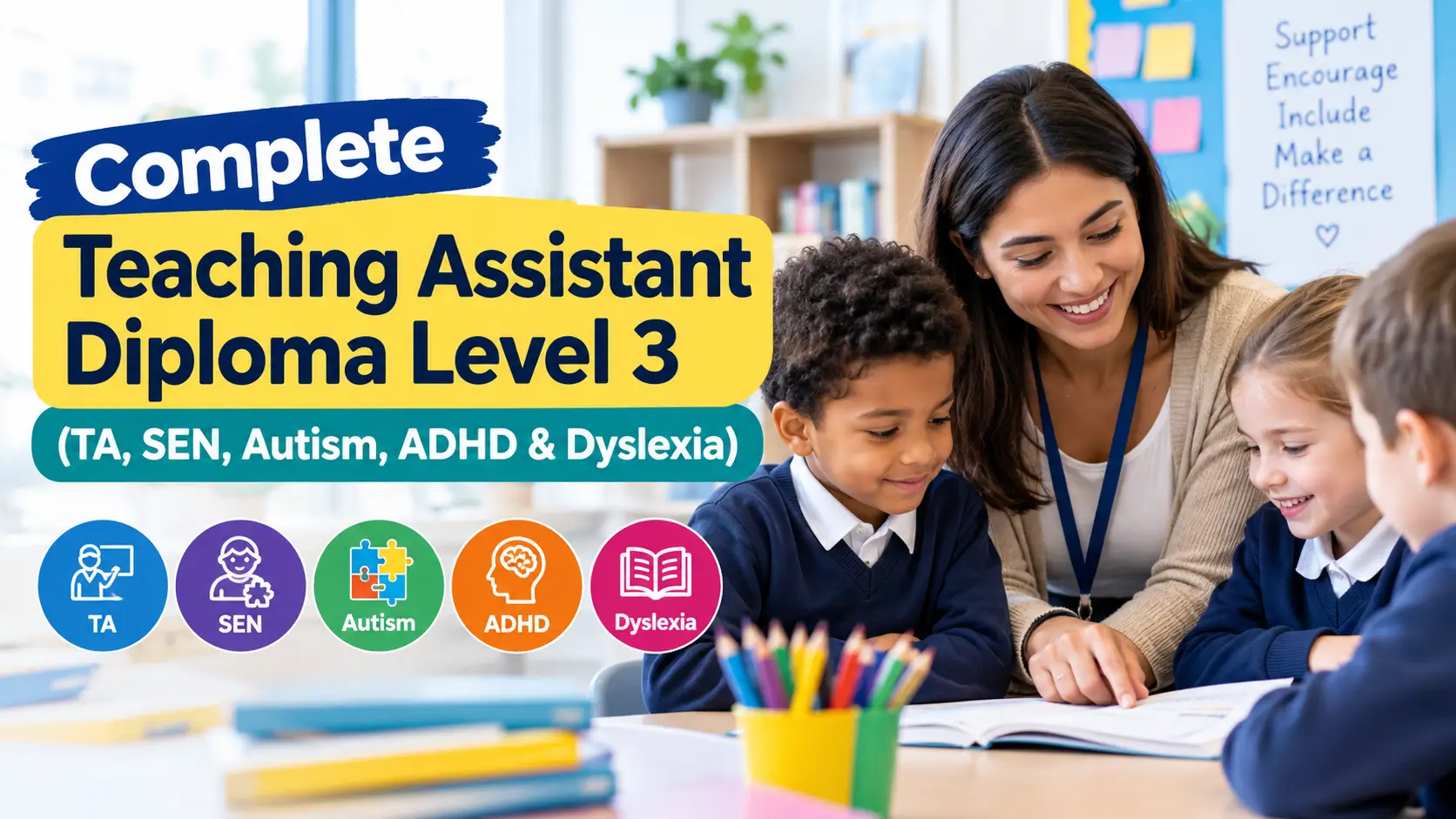
Complete Teaching Assistant Diploma Level 3 (TA, SEN, Autism, ADHD & Dyslexia)
Complete Teaching Assistant Diploma Level 3 (TA, SEN, Autism, ADHD & Dyslexia) The Complete Teaching Assistant Diploma Level 3 (TA,...
Official Certification
Recognized by top tech firms
Learn With Confidence





About This Course
Complete Teaching Assistant Diploma Level 3 (TA, SEN, Autism, ADHD & Dyslexia)
The Complete Teaching Assistant Diploma Level 3 (TA, SEN, Autism, ADHD & Dyslexia) introduces learners to the knowledge and skills associated with supporting teachers and pupils in educational settings. The course explores special educational needs (SEN), SEN support, common types of additional needs and statutory assessment processes. You will also learn about supporting children with autism, dyslexia and ADHD, alongside strategies for creating safe and inclusive learning environments. Designed for aspiring teaching assistants and people interested in additional learning support, this course provides an opportunity to build foundational knowledge and explore further development within education.
What You Will Learn:
- The principles of special needs teaching and SEN support.
- Common types of special educational needs.
- Statutory assessment processes for special educational needs.
- Strategies for supporting pupils with autism, dyslexia and ADHD.
- Ways to promote safety, inclusion and positive learning environments.
Course Overview
The Complete Teaching Assistant Diploma Level 3 provides an introduction to teaching assistant responsibilities, with particular attention to special educational needs and inclusive education. Learners explore the foundations of special needs teaching, SEN support and common types of additional needs. The curriculum also introduces statutory assessment for special educational needs and considers approaches to supporting children with autism, dyslexia and attention deficit hyperactivity disorder (ADHD).
A further module focuses on creating a safe learning environment where pupils can participate, learn and develop with appropriate support. These topics can help learners understand the importance of adapting support to individual strengths, needs and learning preferences. The course may be useful for people exploring teaching assistant careers or seeking knowledge for further study. Its title alone does not confirm regulated qualification status or eligibility for a specific school role. Check the provider’s current information about recognition, assessment, certification and practical experience requirements before enrolling.
Course Description
Develop your understanding of classroom support with the Complete Teaching Assistant Diploma Level 3 (TA, SEN, Autism, ADHD & Dyslexia). This course introduces special needs teaching, SEN support and the assessment processes associated with additional educational needs. You will explore common types of SEN and approaches to supporting children with autism, dyslexia and ADHD. The curriculum also examines how to create safe and inclusive learning environments. Suitable for aspiring teaching assistants and learners interested in educational support, the course provides foundational knowledge that may support further learning and career exploration. Practical school responsibilities require appropriate training and adherence to relevant policies.
Course Curriculum
Module 01: Introduction to Special Needs Teaching
Explore the principles of special needs teaching and understand why inclusive, individualised support matters in education.
Key learning topics:
- Introduction to special educational needs.
- Inclusive teaching and learning principles.
- Understanding individual strengths and learning needs.
- The role of teachers and teaching assistants.
Module 02: SEN Support
Learn how appropriate support can help pupils with special educational needs participate in learning and make progress.
Key learning topics:
- Identifying potential learning and support needs.
- Individualised learning support strategies.
- Working with teachers, families and relevant professionals.
- Monitoring progress and communicating concerns.
Module 03: Common Types of SEN
Develop an introductory understanding of different types of special educational needs and how they may affect learning and participation.
Key learning topics:
- Learning difficulties and learning differences.
- Communication and interaction needs.
- Social, emotional and mental health needs.
- Physical, sensory and developmental needs.
Module 04: Statutory Assessment for Special Educational Needs
Explore the purpose of statutory assessment and how formal processes can help identify the educational support a child may need.
Key learning topics:
- The purpose of statutory assessment.
- Gathering information about a pupil’s needs.
- The roles of schools, families and relevant professionals.
- Understanding education, health and care planning in England.
Module 05: Supporting Children with Autism
Learn about autism and explore ways to support autistic pupils through respectful communication, predictable routines and appropriate classroom adjustments.
Key learning topics:
- Understanding autism as a spectrum.
- Communication and sensory differences.
- Using routines, visual supports and clear instructions.
- Promoting inclusion, autonomy and individual strengths.
Module 06: Supporting Children with Dyslexia
Explore dyslexia and consider strategies that may help pupils with reading, spelling, writing and other learning activities.
Key learning topics:
- Understanding dyslexia and its possible effects on learning.
- Recognising potential literacy-related difficulties.
- Using structured, multisensory learning approaches.
- Building confidence and supporting classroom participation.
Module 07: Supporting Children with ADHD
Develop an understanding of attention deficit hyperactivity disorder (ADHD) and explore supportive approaches for learning and classroom participation.
Key learning topics:
- Understanding common features of ADHD.
- Supporting attention, organisation and task completion.
- Using clear instructions and structured routines.
- Encouraging positive behaviour and emotional regulation.
Module 08: Creating a Safe Learning Environment
Learn about the principles and practices that help create safe, respectful and inclusive spaces for learning.
Key learning topics:
- Safeguarding awareness and reporting concerns.
- Classroom safety and risk awareness.
- Positive behaviour support and respectful relationships.
- Inclusion, accessibility and pupil wellbeing.
Who Is This Course For?
The Complete Teaching Assistant Diploma Level 3 may be suitable for:
- Aspiring teaching assistants: People interested in supporting teachers and pupils in schools.
- Future SEN teaching assistants: Learners who want to understand special educational needs and inclusive support.
- Learning support assistants: Individuals looking to broaden their knowledge of additional learning needs.
- School support staff: People interested in developing their understanding of autism, ADHD and dyslexia.
- Career changers: Individuals considering a move into education or pupil support.
- Parents and carers: People who want to learn more about additional educational needs.
- Further-study learners: Those exploring training related to education, childcare or learning support.
The course does not automatically meet every employer’s teaching assistant qualification requirements. Check the criteria for your preferred school or role.
Requirements
No specific entry requirements are confirmed here. Review the provider’s current enrolment details before registering.
Learners may benefit from:
- An interest in education and child development.
- Basic reading, writing and communication skills.
- Access to a computer, tablet or smartphone.
- An internet connection if the course is delivered online.
- Patience, empathy and respect for individual differences.
- A willingness to follow safeguarding and confidentiality procedures.
Working in a school may also require background checks, practical experience, workplace training or qualifications specified by the employer.
Skills You Can Develop
Through the course material, you may develop knowledge and understanding of:
- Teaching assistant responsibilities.
- Special educational needs and inclusive education.
- SEN support principles.
- Common learning and developmental differences.
- Statutory assessment processes.
- Supporting autistic pupils.
- Understanding dyslexia and literacy support.
- Understanding ADHD and classroom support.
- Safe and accessible learning environments.
- Communication and teamwork in education.
- Safeguarding awareness and professional boundaries.
- Individualised approaches to learning support.
These are potential learning outcomes rather than a guarantee of professional competence. Practical skills develop through appropriate training, experience and guidance from qualified education professionals.
Learning Outcomes
After studying the course material, learners should be able to:
- Explain the basic principles of special needs teaching.
- Describe how SEN support can help pupils participate in learning.
- Identify common categories of special educational needs.
- Explain the purpose of statutory assessment for special educational needs.
- Describe supportive approaches for autistic pupils.
- Identify strategies that may help pupils with dyslexia.
- Explain classroom approaches that may support pupils with ADHD.
- Recognise the importance of individualised and inclusive learning support.
- Describe principles for creating a safe learning environment.
- Explain why communication, collaboration and safeguarding awareness matter in educational settings.
Career Paths
This course may help learners explore roles and further training related to education and pupil support. Depending on employer requirements, qualifications and experience, possible career areas include:
- Teaching assistant.
- SEN teaching assistant.
- Learning support assistant.
- Classroom assistant.
- Special educational needs support worker.
- School support staff.
- Additional learning support roles.
- Further study in education, childcare or special educational needs.
Teaching Assistant Jobs
Teaching assistant jobs vary between schools and education settings. Employers may look for experience with children, relevant qualifications, communication skills, safeguarding awareness and the ability to support pupils with different needs. Some roles require additional training or experience, particularly when supporting pupils with complex needs.
How to Become a Teaching Assistant
A typical route may involve:
- Researching teaching assistant roles and their entry requirements.
- Completing relevant education or teaching assistant training.
- Gaining experience with children, where possible.
- Meeting required safeguarding and background-check procedures.
- Applying for suitable school vacancies.
- Continuing professional development once employed.
Requirements differ by school, employer and location, so check the criteria for the roles you wish to pursue.
Teaching Assistant Salary
Teaching assistant salaries depend on location, employer, experience, working hours, contract length and responsibilities. In the UK, some school roles follow local authority or employer pay scales, while others use different arrangements. Check current vacancies and relevant pay scales for accurate information.
Important: Completing this course does not guarantee a job or salary level. Confirm whether the qualification is recognised by your intended employer before relying on it for career progression.
Frequently Asked Questions
1. What is the Complete Teaching Assistant Diploma Level 3?
It is a course covering teaching assistant knowledge, special educational needs, SEN support, autism, dyslexia, ADHD, statutory assessment and safe learning environments.
2. What does a teaching assistant do?
A teaching assistant helps teachers support pupils’ learning and participation. Depending on the role, duties may include preparing learning resources, providing classroom assistance, supporting individual pupils and helping maintain an inclusive learning environment.
3. Is this course suitable for beginners?
It may be suitable for people who are new to teaching assistance and want to build foundational knowledge. Check the provider’s current entry requirements before enrolling.
4. Can I study a teaching assistant course online?
The course may be available online. Confirm the current study format, course access arrangements, assessments and completion requirements with the provider.
5. What is a SEN teaching assistant?
A special educational needs (SEN) teaching assistant supports pupils who need additional help with learning, communication, behaviour, accessibility or participation. Responsibilities depend on the pupil’s needs, the school and the assistant’s training.
6. What qualifications do I need to become a teaching assistant?
Requirements vary by employer and location. Some employers request relevant qualifications or experience, while others provide training. Always check the requirements in the vacancy you are interested in.
7. Does this diploma qualify me to work as a SEN teaching assistant?
It may help you develop relevant knowledge, but eligibility depends on the qualification’s recognition and the employer’s requirements. Confirm whether the course meets the criteria for your intended role.
8. What will I learn about autism?
The autism module introduces autism and explores support approaches such as clear communication, predictable routines, visual supports and adjustments that respond to individual needs.
9. Does the course cover dyslexia?
Yes. It includes a module on supporting children with dyslexia, covering learning challenges and approaches that may support literacy, confidence and classroom participation.
10. Will I learn how to support pupils with ADHD?
Yes. The curriculum includes ADHD and explores approaches related to attention, organisation, routines, task completion and positive classroom support.
11. What is statutory assessment for special educational needs?
It is a formal process used to gather information about a child’s needs and determine what additional support may be required. In England, an education, health and care needs assessment may lead to an education, health and care plan when the legal criteria are met.
12. What is the typical teaching assistant salary?
There is no single salary for all teaching assistants. Pay varies according to location, employer, experience, hours and responsibilities. Review current vacancies and applicable pay scales for relevant figures.
13. Can this course help me find teaching assistant jobs?
The course may help you build knowledge relevant to teaching assistance. Getting a job depends on employer requirements, experience, recognised qualifications and other recruitment conditions.
14. Is a Level 3 diploma always a regulated qualification?
No. The words “Level 3 Diploma” in a course title do not automatically establish regulated qualification status. Check the awarding organisation and official qualification details if recognition is important to you.
15. Will I receive a certificate after completing the course?
Certificate availability and the conditions for receiving one depend on the provider’s current arrangements. Contact the provider to confirm the details before enrolling.
Course Content
Module 01 Introduction to Special Needs Teaching
-
Introduction to Special Needs Teaching
00:00
Module 02 SEN Support
Module 03 Common Types of SEN
Module 04 Statutory Assessment for Special Educational Needs
Module 05 Supporting Children with Autism
Module 06 Supporting Children with Dyslexia
Module 07 Supporting Children with ADHD
Module 08 Creating a Safe Learning Environment
Frequently Asked Questions
There are many things that you might want to know. Well we have the answers.
