Best Communication Skills for Managers
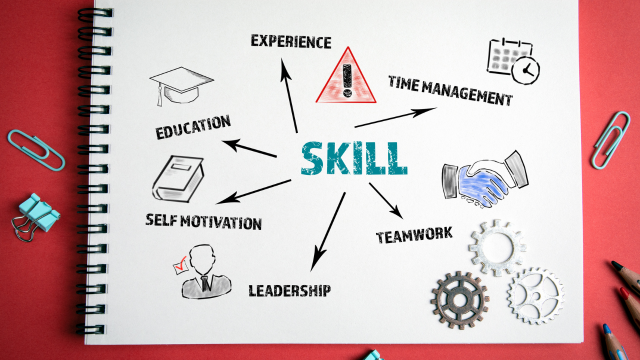

Managers spend a large part of their working day communicating. They explain priorities, delegate responsibilities, listen to concerns, give feedback, run meetings, resolve disagreements and translate wider business decisions into something their teams can act upon.
The best communication skills for managers therefore extend far beyond confident speaking. Effective managers need to listen carefully, write clearly, adapt messages to different audiences and handle uncomfortable conversations without creating unnecessary conflict.
Strong workplace communication also supports wider leadership and team management. When employees understand what is expected, why decisions have been made and where they can raise concerns, teams have a much better foundation for performing effectively.
These skills can be developed. The following sections explain the communication capabilities managers need most and how to practise them in everyday work.
What Are Communication Skills and Why Are They Important?
Communication skills are the abilities used to send, receive and interpret information effectively.
They include speaking and writing, but also listening, questioning, presenting, observing non-verbal signals and choosing the right communication channel.
For managers, communication has another important dimension: responsibility.
An employee might communicate mainly about their own work. A manager may need to communicate information that affects an entire team, coordinate several people and make sure important instructions have actually been understood.
Good communication therefore involves more than delivering a message.
A manager also needs to consider:
- who needs the information;
- what they need to know;
- when they need to know it;
- which channel is appropriate;
- how much detail is necessary;
- whether understanding should be checked.
CMI’s current Professional Standard reflects this distinction by treating audience, purpose, clarity and confirmation of understanding as important elements of managerial communication.
Why Communication Skills Matter for Managers
Managers frequently act as the connection between organisational strategy and everyday work.
Senior leaders may decide that the business needs to reduce costs, introduce new technology or change customer-service processes. Employees then need to understand what that decision means for their own roles.
Poor workplace communication can distort that translation.
A vague instruction such as “we need to improve efficiency” may mean almost anything. Employees cannot reliably act on it unless the manager explains what needs to change, what should remain unchanged and how success will be judged.
Communication also influences trust.
Managers who share relevant information consistently and acknowledge uncertainty can be easier to work with than those who provide contradictory messages or avoid difficult questions.
Strong workplace communication is equally important when performance is below expectations.
If an employee does not know what needs improvement, there is little basis for expecting improvement.
For these reasons workplace communication is not merely a soft skill added to management. It is part of how management actually happens.
Essential Communication Skills Every Manager Needs
The exact demands vary by role, but several capabilities are broadly useful.
Managers should be able to listen actively, explain expectations, ask useful questions and communicate decisions with an appropriate level of detail.
They also need to write clearly because modern management involves substantial communication through email, messaging platforms, project systems and reports.
Feedback skills matter because employees need to know what is working and what needs to change.
Conflict-management communication is another core capability. Managers may need to address disagreement without becoming defensive or allowing discussions to become personal.
Other useful capabilities include presentation, emotional awareness, non-verbal workplace communication and the ability to adjust communication between face-to-face, remote and hybrid environments.
The strongest managers do not use all of these skills in exactly the same way.
They choose the workplace communication approach that suits the situation.
Best Communication Skills for Managers
The best communication skills for managers can be grouped into four practical areas.
Receiving information includes listening, questioning and noticing what is not being said.
Giving information includes verbal explanation, writing, presentation and providing clear instructions.
Managing relationships includes feedback, empathy, difficult conversations and conflict resolution.
Creating alignment includes explaining priorities, communicating change and ensuring individual work connects with wider objectives.
These skills reinforce one another.
A manager cannot give useful feedback if they have not listened to the employee’s explanation.
They cannot resolve a disagreement effectively if they do not understand each person’s position.
They cannot communicate strategy if they do not understand the strategy themselves.
Communication competence is therefore better viewed as a connected set of behaviours than one isolated ability.
How to Improve Active Listening Skills
Active listening means concentrating on what another person is communicating rather than simply waiting for an opportunity to respond.
This sounds simple but can be difficult for managers.
A manager may already believe they understand the issue and begin formulating a solution before the employee finishes speaking.
Instead, allow the person to complete the explanation.
Ask clarifying questions where necessary.
Questions such as “What happened after that?” or “What is the main problem from your perspective?” can reveal information that a quick assumption would miss.
Summarising is also useful.
A manager might say, “So the main issue is not the deadline itself; it is that you received the information two days later than expected.”
This gives the other person an opportunity to confirm or correct the manager’s understanding.
Avoid turning every conversation immediately into advice.
Sometimes an employee is reporting information the manager needs to understand before any solution should be proposed.
Good listening improves both relationships and decision-making because managers are working with better information.
How to Improve Verbal Communication
Good verbal workplace communication is clear, purposeful and adapted to the audience.
Avoid using unnecessary jargon merely because it is familiar within management.
If a manager says, “We need greater cross-functional alignment around strategic deliverables”, employees may still have no idea what they are supposed to do differently.
A clearer version might explain which departments need to cooperate, what outcome is required and when it needs to happen.
Structure longer explanations.
Start with the main point, provide necessary context and finish with the required action.
Tone matters as well.
A manager can communicate a serious expectation firmly without sounding aggressive.
Likewise, being friendly should not make instructions vague.
Check understanding after important conversations.
Instead of asking, “Does that make sense?” — which often produces an automatic yes — ask someone to summarise the agreed next steps.
This is particularly useful where tasks are complex or deadlines are important.
How to Improve Written Communication
Managers increasingly lead through writing.
Emails, instant messages, project updates and remote-work platforms can all become part of daily workplace communication.
Good managerial writing should make the required action easy to identify.
Long messages are not automatically more professional.
Where possible, put the main point early.
For example:
“Please send the revised customer proposal by 3pm Thursday. Three areas need updating: pricing, delivery dates and the implementation section.”
That is easier to act upon than a long introduction before the request appears.
Use subject lines that explain the purpose.
Separate different actions where several people have responsibilities.
Be careful with tone because written workplace communication lacks many of the cues available in conversation.
A short message such as “Why wasn’t this done?” may be interpreted more harshly than the sender intended.
Sensitive performance or relationship matters are often better discussed in conversation first, with written confirmation afterwards where appropriate.
Also remember that important written records may need to remain accurate and professional if reviewed later.
How to Give Clear and Constructive Feedback
Feedback is most useful when employees understand what happened, why it matters and what should happen next.
Avoid vague judgments.
“Your attitude needs improving” provides little practical guidance.
Instead, identify specific behaviour.
For example:
“During yesterday’s client meeting, you interrupted the customer several times before they finished explaining the issue. In future, allow them to complete their explanation before responding.”
This separates behaviour from personality.
Positive feedback should be specific too.
“Good job” may feel encouraging, but explaining what was good helps the employee repeat it.
For example:
“The way you summarised the client’s requirements before proposing the solution helped confirm that we had understood them correctly.”
Feedback should also be timely.
Managers should not save every concern for an annual review.
Current Acas and CIPD guidance supports regular performance conversations and informal feedback alongside more structured review processes.
Finally, allow a response.
Feedback should be a conversation rather than a verdict delivered without discussion.
How to Communicate With Remote and Hybrid Teams

Remote and hybrid working removes many informal workplace communication opportunities.
Managers cannot assume that employees have overheard the same conversations or received the same context as colleagues in the office.
workplace communication therefore needs to become more deliberate.
Agree which channels are used for which purposes.
For example:
- urgent questions may use instant messaging;
- permanent decisions may belong in a shared project system;
- sensitive conversations may require a call;
- complex information may need written documentation.
Avoid forcing employees into unnecessary meetings simply because they are remote.
Asynchronous communication can often be more efficient.
Written project updates allow employees to review information at an appropriate time and create a record that can be searched later.
Managers should also watch for proximity bias.
Employees who are physically present should not automatically receive more information, opportunities or visibility than colleagues working remotely.
CIPD’s current flexible-working guidance emphasises managing different arrangements fairly and productively.
Good team management means designing communication so location does not determine who remains informed.
How to Improve Workplace Presentation Skills
Presentations are useful when managers need to explain information to several people in a structured way.
Begin with the audience.
A senior management team may want decisions, risk and commercial impact.
Employees implementing a change may need practical detail about processes and responsibilities.
Do not put every word on the slides.
Slides should support the explanation rather than become a document the presenter reads aloud.
A simple structure often works:
What is happening?
Why does it matter?
What does the evidence show?
What needs to happen next?
Use examples where concepts are abstract.
If presenting performance data, explain what the numbers mean rather than assuming everyone interprets them identically.
Allow time for questions.
A presentation that transmits information without giving people an opportunity to clarify important points may create only the appearance of workplace communication.
Finally, practise.
Rehearsal reveals sections that are too long, confusing or overly technical.
How to Handle Difficult Conversations
Managers sometimes delay conversations because they expect them to be uncomfortable.
The problem rarely disappears because it has not been discussed.
Performance concerns, inappropriate behaviour, attendance issues and interpersonal tension can become harder to address when left unresolved.
Prepare before the conversation.
Identify the specific issue, relevant evidence and desired outcome.
Choose an appropriate private setting and allow sufficient time.
Start clearly.
Avoid spending ten minutes on unrelated conversation before suddenly introducing a serious problem.
Describe what has happened without exaggeration.
Then listen to the employee’s response.
There may be information the manager does not yet know.
Keep the discussion focused on the issue rather than attacking someone’s character.
For example, “Three agreed deadlines were missed this month” is more useful than “You are unreliable.”
Agree appropriate next steps and follow up where necessary.
Serious matters involving potential misconduct, discrimination, harassment, disciplinary action or grievances may require formal procedures and appropriate HR or legal support rather than being treated merely as an informal workplace communication exercise.
How to Resolve Workplace Conflicts Through Communication
Conflict often becomes harder when people stop communicating directly and begin making assumptions about one another’s motives.
Managers can help by separating facts, interpretations and interests.
Allow each person to explain their view.
Listen for the underlying issue rather than only the position they are defending.
For example, two employees arguing over who should perform a task may actually disagree about workload fairness.
Ask what outcome each person needs and where common ground exists.
Avoid creating a winner-and-loser dynamic unnecessarily.
Acas guidance on consultation and conflict resolution encourages approaches including effective listening, avoiding assumptions, considering different suggestions and avoiding confrontational language.
Early intervention can be particularly valuable.
A small disagreement that could have been resolved through one constructive conversation may become substantially harder once relationships have deteriorated.
However, informal resolution is not appropriate for every situation.
Serious concerns may require formal investigation or established workplace procedures.
Managers need the judgement to recognise the difference.
How Emotional Intelligence Improves Manager Communication
Emotional intelligence can help managers recognise their own reactions and respond appropriately to other people’s emotions.
Suppose an employee strongly criticises a decision.
A defensive manager may immediately argue back.
A more self-aware response is to understand why the criticism triggered that reaction and listen long enough to determine whether the employee has raised a valid concern.
Empathy is part of this skill, but empathy does not mean agreement.
A manager can understand that an employee is disappointed about a promotion decision while still maintaining that decision.
Emotional awareness is particularly useful when giving difficult feedback.
Tone, timing and phrasing can influence whether someone is able to engage constructively with the message.
Managers should also notice their own patterns.
Do they become overly abrupt when busy?
Do they avoid employees who are upset?
Do they communicate differently with people they naturally like?
Self-awareness helps managers correct those behaviours before they become entrenched.
How to Improve Nonverbal Communication
Managers communicate even when they are not speaking.
Posture, facial expression, eye contact, pace, silence and physical orientation can all influence how a message is received.
Imagine a manager telling an employee, “I want to hear your concerns,” while repeatedly checking their phone.
The words and behaviour communicate different messages.
Non-verbal signals should therefore support the intended conversation.
During a one-to-one, remove avoidable distractions.
Maintain an attentive posture and allow pauses rather than rushing to fill every silence.
Be cautious about interpreting other people’s body language too confidently.
Someone avoiding eye contact may be uncomfortable, concentrating, culturally accustomed to different behaviour or simply tired.
Non-verbal cues can provide useful context, but they should not be treated as proof of someone’s thoughts or honesty.
Remote meetings create additional challenges because only part of a person’s body may be visible and connectivity can affect timing.
Do not overinterpret limited signals.
How to Develop Better Communication Skills as a Manager
workplace communication improves through deliberate practice.
Start by identifying specific weaknesses.
“Become a better communicator” is too vague.
A manager might instead aim to:
give clearer instructions;
ask more open questions;
stop interrupting;
improve presentation structure;
or become more confident in difficult conversations.
Ask for feedback.
Employees and colleagues may notice patterns that the manager does not.
A useful question is:
“What is one thing I could do to make my instructions clearer?”
That is more likely to produce actionable feedback than “Am I communicating well?”
Training, mentoring and coaching can provide useful frameworks.
Observation also helps. Managers can watch skilled colleagues handle meetings or difficult discussions and analyse what makes their communication effective.
Most importantly, practise in real situations.
Reading about active listening develops knowledge. Deliberately listening differently during the next five one-to-one meetings develops behaviour.
Good leadership requires both.
Benefits of Strong Communication Skills in Management
Clear communication can reduce avoidable mistakes.
Employees are more likely to complete work correctly when they understand the outcome, standard and deadline.
Good communication also improves coordination between people.
Teams can divide responsibilities more effectively when ownership is visible.
Regular feedback creates opportunities to correct problems earlier rather than waiting until they become serious.
Listening can improve decisions because managers gain access to information held by employees closer to customers, systems or operational work.
Communication can also support trust during change.
Employees may not agree with every decision, but explaining what is known, what remains uncertain and why a decision has been made can reduce unnecessary confusion.
These advantages are closely connected with team management.
Managers cannot coordinate people effectively if the information required for coordination is incomplete, late or unclear.
Common Communication Mistakes Managers Should Avoid

One common mistake is confusing communication with broadcasting information.
Sending an email does not prove that the message was understood.
Another mistake is providing insufficient context.
Employees may know what task they have been given without understanding why it matters, making sensible independent decisions harder.
Managers should also avoid:
- interrupting employees repeatedly;
- relying on jargon;
- giving vague feedback;
- communicating major changes through rumours;
- using messaging apps for sensitive performance discussions;
- assuming silence means agreement;
- withholding information unnecessarily;
- overloading employees with meetings;
- treating every message as urgent;
- avoiding difficult conversations until problems escalate.
Inconsistency is particularly damaging.
If a manager tells one employee that a rule is flexible and another that it is mandatory, confusion and perceptions of unfairness can emerge quickly.
Communication should therefore reflect consistent management decisions.
Future Trends in Workplace Communication
Workplace communication is becoming more asynchronous, distributed and AI-assisted.
Hybrid working means managers increasingly communicate with people who are not in the same location or working identical schedules.
That makes written clarity and documentation more important.
Employees should not need to attend every meeting simply to remain informed.
AI is also changing everyday communication.
Tools can already summarise meetings, draft emails, translate content and extract actions from documents.
This can reduce administrative work, but managers still need to verify important output.
An AI-generated meeting summary may miss nuance or incorrectly attribute a decision.
CMI’s 2026 AI research also highlights a wider management issue. It found a substantial gap between organisational enthusiasm for AI and managers’ preparedness to lead its adoption, reinforcing the need for clear communication, change management and human judgement.
AI may also make authentic human communication more valuable.
If employees receive large volumes of automatically generated messages, a direct conversation with a manager may carry greater significance.
Managers will therefore need to decide not merely whether AI can create a message but whether automation is appropriate.
Sensitive feedback, emotional conversations and major organisational changes still require human judgement.
Clarity is another likely priority.
CMI’s 2026 commentary on leadership communication argues for more precise and transparent language rather than vague corporate terminology.
The technology will change, but the fundamental managerial task remains familiar: help people understand what is happening, what is expected and how they can contribute.
Key Takeaways
The best communication skills for managers combine listening, speaking, writing, feedback and relationship management.
Active listening helps managers understand problems before attempting to solve them.
Clear verbal and written communication turns priorities into actions employees can understand.
Constructive feedback helps people recognise what is working and what needs to improve.
Remote and hybrid workplace communication requires more deliberate choices about channels, documentation and inclusion.
Emotional intelligence can help managers respond constructively when conversations become difficult, while conflict-resolution skills prevent disagreements from escalating unnecessarily.
These capabilities are central to both leadership and effective team management.
Managers do not need to become perfect communicators. They need to keep observing, practising and adjusting how they communicate according to audience, purpose and circumstances.
FAQ
What are the best communication skills for managers?
The most useful skills include active listening, clear verbal communication, concise writing, constructive feedback, questioning, presentation and conflict resolution.
Emotional awareness and the ability to adapt communication to different audiences are also important.
The best communication skills for managers work together rather than independently. Listening improves feedback, while clear writing and speaking support stronger delegation and coordination.
Why are communication skills important for managers?
Managers rely on communication to explain objectives, assign work, give feedback, resolve concerns and lead change.
Poor communication can create unclear expectations and duplicated effort.
Strong workplace communication helps employees understand both what they need to do and how their work connects with wider objectives.
It is therefore a fundamental part of everyday management.
How can managers improve communication skills?
Start with a specific behaviour rather than the broad aim of “communicating better”.
A manager might practise listening without interrupting, provide clearer deadlines or structure written instructions more effectively.
Ask employees and colleagues for feedback.
Training, coaching and mentoring can provide useful techniques, but improvement comes from deliberately applying those techniques during real management situations.
What is active listening in management?
Active listening means giving deliberate attention to another person’s message and checking that it has been understood correctly.
Managers can practise it by avoiding interruptions, asking relevant questions and summarising what they believe they heard.
The purpose is not simply to make employees feel heard.
It helps managers gather more accurate information before making decisions.
How can managers communicate effectively with remote teams?
Set clear expectations about which communication channels should be used for different purposes.
Document important decisions rather than allowing them to exist only inside meetings.
Use video or live calls where discussion genuinely benefits from them, but allow asynchronous communication where employees do not need to be present simultaneously.
Effective remote team management should also ensure that employees working away from the office receive equivalent access to important information.
How should managers give constructive feedback?
Focus on specific behaviour and its impact rather than making vague judgments about personality.
Explain what happened, why it matters and what should happen next.
Allow the employee to respond and ask questions.
Feedback should be provided regularly rather than storing every concern until an annual review.
Positive feedback should also be specific so employees understand what they should continue doing.
How can managers handle difficult conversations?
Prepare the relevant facts and decide what the conversation needs to achieve.
Choose an appropriate private setting and explain the issue clearly rather than approaching it indirectly.
Listen to the employee’s response and remain focused on behaviour or facts rather than personal criticism.
Where the matter involves serious misconduct, grievances, discrimination or other formal workplace concerns, managers should follow appropriate organisational procedures and obtain HR or legal support where necessary.
What makes a manager a good communicator?
A good communicator is clear, adaptable and willing to listen.
They provide enough context for employees to understand decisions and adjust their communication style according to audience and purpose.
They also check understanding instead of assuming that sending a message completed the communication process.
Strong communication supports credible leadership because people generally need clarity about direction before they can act effectively.

Conclusion
The best communication skills for managers are practical behaviours that help people understand one another and coordinate work effectively.
Managers need to listen before reaching conclusions, explain expectations clearly and adapt messages to different audiences. They should provide useful feedback, address difficult issues early and create opportunities for employees to speak as well as listen.
Modern workplace communication also requires thoughtful use of digital tools. Remote working, asynchronous collaboration and AI can make communication faster, but managers still need to decide when a written message is sufficient and when a real conversation is necessary.
These skills sit at the centre of team management and leadership because managers achieve much of their impact through other people.
Skills Pack offers online learning across leadership, management and related business subjects, including courses that cover communication, emotional intelligence, feedback and conflict resolution. Structured learning can introduce useful techniques and frameworks, but communication competence develops through repeated application, reflection and experience in real workplace situations.