Cleaning Chemical Storage: UK Workplace Safety Guide
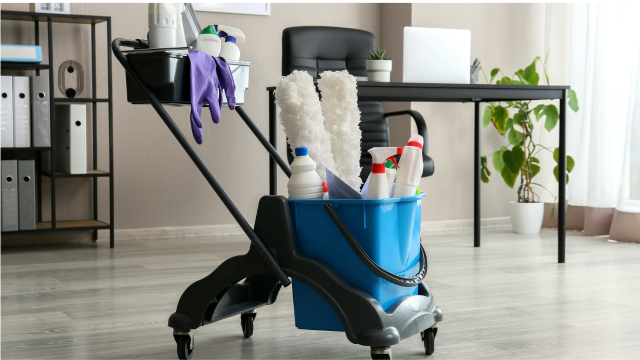

Safe cleaning chemical storage is an essential part of workplace health and safety.
Even everyday products such as disinfectants, bleach, descalers, degreasers and concentrated detergents can cause harm if they are stored incorrectly.
Possible consequences include:
- skin burns;
- eye injuries;
- respiratory irritation;
- chemical reactions;
- fires;
- spills;
- accidental access by unauthorised people.
The correct storage arrangement depends on the actual products involved.
There is no rule saying every workplace must use exactly the same chemical cupboard or store every cleaning product under identical conditions.
Instead, UK employers should identify each product’s hazards, consult its label and Safety Data Sheet, carry out an appropriate COSHH assessment and put proportionate controls in place.
For some workplaces, that may mean a secure ventilated cupboard with spill containment.
For others handling larger quantities, flammable substances or particularly hazardous products, more specialised storage arrangements may be necessary.
This guide explains the main principles of chemical storage safety, including COSHH requirements, segregation, labelling, ventilation, PPE, spill control and employee training.
What Is Cleaning Chemical Storage?
Cleaning chemical storage means the arrangements used to keep cleaning products safely when they are not being used.
It includes more than simply putting bottles inside a cupboard.
A proper storage system considers:
- where products are kept;
- what containers are used;
- which chemicals can be stored together;
- who can access them;
- how spills are contained;
- whether ventilation is adequate;
- how products are labelled;
- what happens during an emergency.
Storage should also consider the quantity being kept.
A workplace that uses two small bottles of ordinary detergent may need very different controls from a large cleaning contractor storing concentrated disinfectants, descalers, solvents and other hazardous products.
The starting point should therefore be the hazard information associated with each product.
A well-designed storage system should allow workers to identify products easily, retrieve them safely and return them without exposing themselves or other people unnecessarily.
Why Safe Chemical Storage Is Important
Many workplace accidents involving chemicals occur because substances are:
- poorly labelled;
- placed in unsuitable containers;
- stored together despite incompatibility;
- left open;
- positioned where they can fall;
- accessible to people who should not handle them.
Storage conditions can also change a product’s risk.
For example, a leaking container may allow vapour to accumulate in an enclosed space.
A corrosive substance placed on a high shelf can cause serious injury if it falls or leaks onto somebody below.
A flammable cleaning chemicals solvent stored close to an ignition source can create a fire risk.
Safe storage therefore protects:
- cleaners;
- maintenance employees;
- other workers;
- visitors;
- members of the public.
It also helps protect the organisation.
Spills can damage:
- flooring;
- equipment;
- stock;
- building materials.
Good storage reduces waste and makes chemical inventories easier to control.
For employers, workplace chemical safety should therefore treat storage as part of the working process rather than something that happens after the cleaning chemicals task is finished.
UK Workplace Rules for Cleaning Chemical Storage
There is no single regulation titled “Cleaning Chemical Storage Regulations”.
Several legal frameworks can apply.
The most important for many cleaning chemicals products is COSHH.
COSHH requires employers to assess the risks created by hazardous substances and prevent or adequately control exposure.
The assessment needs to consider storage as well as use.
Other legal frameworks may also become relevant.
GB CLP
The GB Classification, Labelling and Packaging framework governs classification and hazard communication for chemicals supplied in Great Britain.
UK REACH
Relevant hazardous products are accompanied by Safety Data Sheets under applicable UK REACH requirements.
DSEAR
Where products create fire or explosion hazards, the Dangerous Substances and Explosive Atmospheres Regulations can apply.
General health and safety law
Employers also have broader duties to provide safe systems of work and protect employees and others who could be affected.
Northern Ireland has a separate chemical-regulation and health-and-safety framework in several areas, so businesses operating there should check the corresponding HSENI requirements.
The practical lesson is simple:
Do not choose storage arrangements by habit.
Identify the products and the law relevant to their hazards.
Common Hazards of Cleaning Chemicals
cleaning chemicals products can create several different hazards.
Skin irritation and dermatitis
Frequent exposure to detergents and other chemicals can damage the skin.
Corrosive burns
Strong acids, alkalis and some concentrated cleaners can cause severe chemical burns.
Eye injury
Splashes can cause serious eye damage.
Respiratory effects
Vapours, sprays or aerosols can irritate the respiratory system, and some substances can contribute to occupational asthma.
Fire
Solvent-containing or alcohol-based products may be flammable.
Chemical reaction
Incompatible chemicals can react violently or produce dangerous gases.
Environmental harm
Some products can cause environmental damage if released incorrectly.
The label and SDS should identify relevant hazards.
Do not assume that a familiar product is harmless simply because it is widely available.
A concentrated commercial cleaner may have a significantly different hazard profile from a diluted domestic product.
Similarly, a product can become more dangerous when used incorrectly or mixed with something else.
COSHH and Cleaning Chemical Storage
COSHH storage begins with understanding the substances present.
An employer should identify:
- which cleaning chemicals chemicals are used;
- which are hazardous;
- how much is stored;
- where they are stored;
- who handles them;
- what could go wrong.
The employer should then decide whether exposure can be avoided or reduced.
One option is substitution.
Could a highly corrosive concentrate be replaced by a less hazardous ready-to-use product?
Could a dosing system reduce employee contact?
Where hazardous substances remain necessary, storage controls may include:
- secure access;
- segregation;
- spill containment;
- ventilation;
- suitable containers;
- PPE for handling.
HSE’s current small-scale storage guidance advises businesses to minimise the range and quantities of chemicals held.
That is a useful principle.
A storage room containing old, duplicated and unused products increases complexity without providing operational benefit.
COSHH is therefore not simply about putting hazard symbols on cupboard doors.
It is about actively controlling exposure.
How to Assess Cleaning Chemical Storage Risks
Start with an inventory.
List every cleaning chemicals product being stored.
For each one, identify:
- product name;
- hazard classification;
- container size;
- quantity;
- storage instructions;
- incompatibilities.
Consult the Safety Data Sheet.
Section 7 typically provides handling and storage information, while other sections cover matters such as:
- accidental release;
- PPE;
- stability and reactivity;
- fire-fighting measures.
Then assess the actual workplace.
Ask:
Who can enter the store?
Could a container fall?
Can leaks spread across the floor?
Are incompatible chemicals next to one another?
Could vapour accumulate?
Are there ignition sources?
Is emergency equipment available?
Could children, patients or members of the public gain access?
The assessment should reflect real conditions.
A theoretical document saying chemicals are stored securely is not enough if the cupboard door is normally left open.
Review the assessment when:
- new chemicals are introduced;
- quantities increase;
- storage arrangements change;
- an incident occurs;
- new information becomes available.
Best Practices for Storing Cleaning Chemicals
HSE’s current small-scale storage guidance provides a useful practical model.
Keep quantities low
Store only what the business reasonably needs.
Restrict access
Allow access to authorised and appropriately trained workers.
Keep products closed
Replace caps or lids immediately after use.
Use appropriate storage conditions
Many cleaning chemicals products should be kept in a cool, dry and adequately ventilated area in accordance with manufacturer instructions.
Provide spill containment
Shelving or storage arrangements should prevent a small leak from spreading uncontrolled.
Store heavy containers low
This reduces handling risk and the consequences of falling containers.
Keep corrosives low
A leaking corrosive bottle above head height can cause severe injury.
Face labels forwards
Workers should be able to identify products without unnecessarily handling containers.
Maintain good housekeeping
Do not allow packaging, waste or old chemicals to accumulate.
Follow the SDS
Manufacturer and supplier storage instructions matter.
These measures are principles rather than a substitute for the workplace’s specific risk assessment.
How to Separate Incompatible Cleaning Chemicals

Chemical segregation is one of the most important parts of chemical storage safety.
Some products can react dangerously when mixed.
HSE’s COSHH storage guidance recommends separating substances that may react and specifically identifies categories such as:
- acids and alkalis;
- flammable and non-flammable liquids;
- wastes;
- solid and liquid products.
The exact segregation required should be based on the actual substances and SDS information.
One particularly important example is bleach.
Many bleach products contain sodium hypochlorite.
Hypochlorites should not be mixed with acids.
An acidic toilet descaler combined with bleach can release dangerous chlorine gas.
The safest approach is therefore:
never assume two cleaning products can be mixed.
Follow manufacturer instructions.
Segregation should also account for spill scenarios.
Two incompatible products placed on adjacent shelves could mix if both containers leak.
Consider separate trays, shelves or cabinets where the risk assessment identifies this need.
Do not rely purely on bottle colour.
Product chemistry matters more than packaging.
Cleaning Chemical Containers and Storage Requirements
Cleaning products should normally remain in appropriate containers.
Original manufacturer packaging is often preferable because it is:
- chemically compatible;
- correctly labelled;
- designed for the product.
If workplace procedures require decanting or dilution, suitable containers should be used.
Never put hazardous cleaning chemicals concentrate into:
- drinking bottles;
- food containers;
- unlabelled spray bottles.
That creates an obvious risk of mistaken identity.
HSE’s current SR24 guidance specifically warns against decanting concentrate into an unlabelled container and against storing chemicals in open containers.
Containers should also:
- close properly;
- resist foreseeable damage;
- remain upright;
- be suitable for their contents.
Inspect them for:
- cracks;
- corrosion;
- leaks;
- damaged lids;
- unreadable labels.
Do not keep a deteriorating container in service simply because some chemical remains inside.
Follow the SDS and supplier guidance for safe transfer or disposal.
Cleaning Chemical Labels and Safety Data Sheets
Labels provide the first level of hazard communication.
A hazardous product label may include:
- product identifier;
- hazard pictograms;
- signal word;
- hazard statements;
- precautionary statements.
Workers should be trained to understand the information relevant to their work.
The absence of an obvious red hazard pictogram should not automatically be interpreted as meaning the product requires no controls.
Check the actual product information.
Safety Data Sheets provide more detail.
An SDS can contain information on:
- hazards;
- first aid;
- firefighting;
- spill response;
- handling;
- storage;
- PPE;
- chemical stability;
- disposal.
Employees working with hazardous substances should have appropriate access to relevant safety information.
However, an SDS is not a completed COSHH assessment.
The supplier does not know the exact conditions in your workplace.
The employer must decide how the product’s known hazards interact with:
- quantities;
- tasks;
- employees;
- environment.
Keep SDS information current when products or suppliers change.
Ventilation Requirements for Chemical Storage
Ventilation can reduce the accumulation of hazardous vapours.
HSE’s small-scale chemical-storage guidance recommends a good standard of general ventilation, which may be provided naturally or mechanically depending on the situation.
Do not assume there is one mandatory ventilation rate for every chemical cupboard or storeroom.
The appropriate system depends on:
- substances stored;
- quantities;
- volatility;
- storage-room design;
- foreseeable releases.
The SDS may provide useful information.
Some products produce very little vapour under normal sealed storage.
Others, particularly volatile solvents, require greater attention.
A small enclosed cupboard is not necessarily improved simply by drilling holes into it.
For certain fire-risk substances, storage design and ventilation need to be considered together under the relevant DSEAR risk assessment.
If the assessment indicates that specialist ventilation is required, obtain competent advice.
Ventilation should not spread vapours into:
- offices;
- occupied rooms;
- escape routes.
The goal is effective risk control, not simply airflow for its own sake.
Spill Prevention and Emergency Procedures
Every chemical store should consider what happens if a container leaks.
Prevention begins with:
- sound containers;
- stable shelving;
- sensible quantities;
- spill-retaining trays;
- safe handling.
HSE recommends keeping a suitable spill-clean-up kit nearby for small-scale chemical storage.
The exact contents depend on the products.
A spill kit may include suitable:
- absorbent material;
- disposal containers;
- PPE.
Workers should know what they are expected to deal with themselves.
A small detergent leak may be manageable using routine procedures.
A major release of corrosive or highly flammable material may require:
- evacuation;
- specialist assistance;
- emergency services.
The emergency plan should therefore specify:
- how to raise the alarm;
- who takes control;
- when an area should be isolated;
- what PPE is required;
- how waste is handled.
Do not improvise spill neutralisation unless the approved procedure and product information support it.
Some attempted “clean-ups” can create a more dangerous chemical reaction.
PPE for Handling and Storing Cleaning Chemicals
PPE requirements should be based on the COSHH assessment and SDS.
Possible protection includes:
- chemical-resistant gloves;
- protective goggles;
- face protection;
- apron or protective clothing;
- protective footwear.
HSE’s current small-scale storage guidance advises suitable protective gloves, waterproof slip-resistant footwear and eye protection according to the risk.
The exact specification matters.
Not every glove resists every chemical.
A glove suitable for a diluted detergent may not be appropriate for concentrated acid or solvent.
PPE should also fit the worker.
Employees need training covering:
- when to wear it;
- how to put it on;
- how to remove it;
- how to inspect it;
- when to replace it.
Respiratory protective equipment should not be introduced casually as a substitute for controlling the source of exposure.
If tight-fitting RPE is required, additional fit-testing and maintenance requirements can apply.
PPE is one layer of protection.
Good workplace chemical safety should first minimise unnecessary exposure through safer products, containment and working methods where reasonably practicable.
Safe Storage of Bleach, Disinfectants and Other Chemicals
Different products require different controls.
Bleach
Keep bleach in a suitable labelled container and follow supplier storage instructions.
Most importantly:
do not mix hypochlorite bleach with acids.
This can release chlorine gas.
Acidic toilet cleaners and descalers therefore need careful segregation from hypochlorite products where appropriate.
Disinfectants
Follow the product’s instructions concerning:
- temperature;
- container closure;
- shelf life;
- dilution;
- compatibility.
Some disinfectants may also be flammable, particularly alcohol-containing products.
Acid cleaners
Acidic descalers can be corrosive.
Store them away from incompatible alkalis and hypochlorites based on product information.
Alkalis
Strong alkaline cleaners can also cause serious burns.
Solvent-based products
Check for flammability.
DSEAR may require additional fire-risk controls.
Concentrates
Concentrated products often present greater handling risks than diluted products.
Controlled dosing can help reduce exposure.
Never assume that all products described as “cleaners” belong in the same cabinet.
Cleaning Chemical Storage Areas and Cabinets
A suitable storage area should reflect the products held.
For a modest quantity of routine cleaning chemicals chemicals, this may involve a dedicated cupboard or small store.
Useful features can include:
- controlled access;
- sturdy shelving;
- good lighting;
- spill-retaining trays;
- appropriate ventilation;
- clear identification.
HSE advises storing heavier items and corrosive products on lower shelves.
Do not store chemicals where they can contaminate:
- food;
- drink;
- personal belongings.
Avoid blocking:
- escape routes;
- fire equipment;
- electrical panels.
Does the cupboard have to be locked?
Not automatically in every workplace.
HSE specifically says locking chemicals away is sensible where vulnerable people, such as children or people with learning impairments, could otherwise gain access.
A risk assessment may also justify locked access in many other environments, including:
- schools;
- care settings;
- public premises.
For higher-hazard products, access should be restricted to authorised people.
The key requirement is effective control rather than simply installing a lock without considering the wider risks.
Employee Training for Chemical Storage Safety

Workers who handle hazardous cleaning chemicals need suitable information, instruction and training.
They should understand:
- product hazards;
- labels and pictograms;
- where products belong;
- which chemicals must be separated;
- correct PPE;
- spill procedures;
- emergency arrangements.
They should also know what not to do.
For example:
- never mix products unless specifically authorised;
- never transfer concentrate into an unlabelled bottle;
- never continue using a leaking container;
- never hide a chemical spill.
Training should reflect actual workplace products.
A generic presentation about “chemical safety” is less useful than instruction based on the products employees genuinely use.
Contract cleaners also need appropriate information.
Where a contractor brings its own hazardous products onto a client’s site, both organisations should coordinate relevant risk information.
Keep appropriate training records.
More importantly, supervise work to establish whether the training is being applied.
Cleaning Chemical Inventory and Record Keeping
A simple inventory improves control.
It can record:
- product name;
- supplier;
- quantity;
- storage location;
- SDS reference;
- COSHH assessment;
- review date.
For larger operations, digital inventory systems can help track:
- stock;
- expiry dates;
- discontinued products.
An inventory also makes emergency response easier.
Managers can identify what chemicals might be present in an affected store rather than relying on memory.
Avoid excessive stock.
Old products can create problems when:
- labels fade;
- formulations change;
- SDS versions become outdated;
- nobody remembers why the product was purchased.
Periodically identify products that are no longer required and arrange appropriate disposal.
Do not pour unwanted hazardous chemicals into drains unless the product instructions and relevant waste rules permit that disposal route.
Record keeping should support control, not become a paperwork exercise.
How to Inspect a Chemical Storage Area
Chemical stores should be checked often enough to identify deterioration before it creates harm.
There is no universal statutory rule requiring every ordinary cleaning cupboard to receive an inspection on the same fixed interval.
Set frequency according to risk and usage.
A practical inspection can check:
Containers
Are any leaking, swollen, damaged or corroded?
Labels
Can products still be identified clearly?
Segregation
Are incompatible substances separated appropriately?
Shelves
Are they stable and undamaged?
Spill containment
Are trays or bunds clean and serviceable?
Ventilation
Is the intended ventilation functioning?
Access
Are only authorised people accessing the area?
Stock levels
Are unnecessary quantities accumulating?
PPE and spill equipment
Are required items present and usable?
Housekeeping
Is the store free from waste and unrelated materials?
Problems should result in action.
A checklist that repeatedly records the same leaking shelf without corrective work provides little protection.
Higher-risk storage should receive more formal monitoring.
Common Chemical Storage Mistakes to Avoid
One common mistake is treating every cleaning product as harmless.
Other mistakes include:
Storing incompatible chemicals together
Bleach and acidic products are an important example.
Using unlabelled spray bottles
Nobody should have to guess what is inside.
Storing chemicals in drinks bottles
This creates an obvious poisoning risk.
Keeping containers open
Lids should be replaced promptly.
Placing corrosives high up
Leaks or dropped containers can cause severe injuries.
Over-ordering products
Excess stock creates additional storage risk.
Ignoring old products
Outdated or deteriorating chemicals should not accumulate indefinitely.
Assuming an SDS equals a COSHH assessment
It does not.
Relying entirely on PPE
Exposure should first be prevented or adequately controlled through appropriate systems.
Giving everybody access
Higher-risk stores should be restricted to people who need to enter.
Mixing chemicals to make them “stronger”
This can create toxic gases or violent reactions.
A further mistake is copying another workplace’s storage arrangement without examining your own products.
Two cleaning companies can use different chemicals and therefore require different controls.
Key Takeaways
Safe cleaning chemical storage begins with understanding what products are present and what hazards they create.
COSHH requires employers to assess risks arising from hazardous substances, including their storage, handling and disposal.
Good chemical storage safety generally includes:
- minimising quantities;
- using suitable closed containers;
- maintaining labels;
- restricting access;
- segregating incompatible chemicals;
- providing appropriate ventilation;
- controlling spills.
Safety Data Sheets provide important hazard, handling and storage information but are not themselves COSHH assessments.
HSE recommends keeping reactive products apart and specifically identifies separation of acids and alkalis, flammable and non-flammable liquids, solids and liquids, and waste where applicable.
Bleach products containing hypochlorite should not be mixed with acidic chemicals because chlorine gas can be released.
Some flammable cleaning products may also bring DSEAR requirements into the storage assessment.
A locked cupboard is not universally required for every cleaning product, but secure storage is particularly important where vulnerable or unauthorised people could gain access.
Effective COSHH storage also depends on trained workers, current product information and regular checks.
Frequently Asked Questions
How should cleaning chemicals be stored in the UK?
Store products according to their hazards, Safety Data Sheets and workplace COSHH assessment.
Good practice generally includes:
- keeping containers closed;
- maintaining clear labels;
- restricting unauthorised access;
- segregating incompatible products;
- providing appropriate ventilation;
- using spill containment;
- limiting stored quantities.
Particular products may require additional controls.
What are the main rules for cleaning chemical storage?
The key legal principle is risk control.
Employers should identify hazardous substances, assess how storage could expose people, prevent or adequately control exposure and provide suitable information and training.
Where fire or explosion risks exist, DSEAR can also apply.
Labels, supplier instructions and Safety Data Sheets should be incorporated into the storage system.
What is COSHH and how does it apply to cleaning chemicals?
COSHH stands for the Control of Substances Hazardous to Health Regulations.
It requires employers to control exposure to hazardous substances used at work.
For cleaning products, the assessment should consider:
- normal use;
- storage;
- handling;
- spills;
- disposal.
A Safety Data Sheet helps with assessment but does not replace it.
Should cleaning chemicals be stored in a locked cupboard?
Not every chemical cupboard is legally required to be locked simply because it contains cleaning products.
HSE says locking products away is sensible where children or other vulnerable people might access them.
A COSHH assessment may also identify restricted or locked access as appropriate for other environments.
Higher-risk chemical stores should only be accessible to authorised, appropriately trained people.
Can different cleaning chemicals be stored together?
Only where their properties and storage instructions make this appropriate.
Chemicals that can react dangerously should be segregated.
HSE recommends keeping incompatible materials apart, including acids and alkalis where relevant.
Check individual Safety Data Sheets.
Never assume products are compatible merely because they are both cleaning chemicals.
How should bleach and other chemicals be stored?
Keep bleach in an appropriate, closed and clearly labelled container and follow manufacturer storage instructions.
Hypochlorite bleach should be kept away from incompatible acids and acidic products where necessary because mixing them can release toxic chlorine gas.
Other chemicals should be segregated according to their individual hazards and SDS information.
What information should chemical labels provide?
Hazardous product labels can include:
- product identity;
- hazard pictograms;
- signal words;
- hazard statements;
- precautionary statements.
Workers need to be able to identify the product and understand the relevant precautions.
Do not transfer hazardous concentrate into an unlabelled container.
How often should chemical storage areas be inspected?
There is no single inspection interval suitable for every workplace.
Frequency should reflect:
- product hazards;
- quantities;
- usage;
- likelihood of damage or leaks.
Busy or higher-risk chemical stores should generally be inspected more frequently than a low-use cupboard holding small quantities.
Workers should also report leaks, damage or missing labels immediately rather than waiting for the next planned inspection.

Conclusion
Good cleaning chemical storage is not simply about finding an empty cupboard and putting all the bottles inside it.
A safe system starts by identifying each product.
What are its hazards?
Is it corrosive?
Is it flammable?
Could it react with another chemical?
What does its Safety Data Sheet say about storage?
From there, employers can develop controls suited to the actual risk.
For many workplaces, effective COSHH storage means limiting quantities, keeping containers closed and labelled, restricting access, providing spill containment and ensuring appropriate ventilation.
Segregation is equally important.
HSE’s current storage guidance specifically advises separating substances that might react. This can include acids and alkalis, flammable and non-flammable liquids and other incompatible categories.
Bleach deserves particular attention.
Hypochlorite products can release dangerous chlorine gas when combined with acids. Employees should therefore never improvise by mixing products in the belief that combining two cleaners will make a stronger disinfectant.
Some products also create fire hazards.
Where cleaning products contain flammable substances, employers may need to consider DSEAR as well as COSHH. Suitable fire-resisting storage and minimising the quantity kept in work areas can become important controls depending on the risk assessment.
Labels and Safety Data Sheets support the system.
A worker should not have to open or smell a bottle to discover what it contains.
Likewise, an SDS should be accessible where relevant, but businesses should remember that it is supplier information rather than a substitute for their own COSHH assessment.
Storage areas then need active management.
Check containers for damage.
Remove unnecessary stock.
Maintain spill kits.
Keep incompatible chemicals apart.
Make sure workers understand the emergency procedure.
A well-organised store can quickly become unsafe if nobody checks it.
Skills Pack’s current Level 5 Certificate in Cleaning can provide broader professional-development context around professional cleaning, hygiene, equipment and potentially health-and-safety subjects. However, its public page advises learners to verify the detailed curriculum and qualification status. General online learning should therefore complement rather than replace workplace-specific COSHH instruction, product information and practical training.
The central principle of workplace chemical safety is straightforward:
know what chemicals you have, understand what can go wrong and store them so that an ordinary leak, mistake or unauthorised access does not turn into a serious incident.
When that principle drives purchasing, storage, training and inspection, cleaning chemicals can be managed safely without turning the workplace chemical store into either an uncontrolled cupboard or an unnecessarily complicated compliance exercise.