Daily Cleaning Checklist for Healthcare Facilities


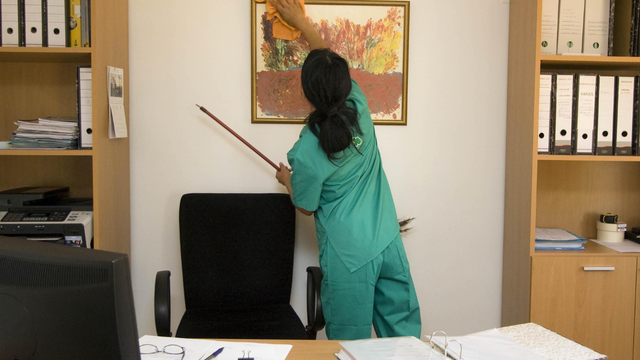
A reliable cleaning checklist for healthcare facilities is one of the simplest tools for turning infection-prevention policies into consistent daily practice.
Hospitals, GP practices, clinics and other healthcare environments contain surfaces that are touched repeatedly by patients, visitors and staff. Beds, chairs, door handles, call bells, taps, examination couches and shared equipment can all become contaminated during normal use.
Effective medical facility cleaning therefore involves much more than making rooms look tidy.
Cleaners need to understand which areas carry the highest risks, what should be cleaned after individual patients, when ordinary detergent is sufficient, when disinfection is required and how to use cleaning chemicals and PPE safely.
Healthcare cleaning also needs clear accountability. Someone should know who cleans the bed frame, who decontaminates clinical equipment, how often toilets are checked and what happens when a blood or body-fluid spill occurs.
A practical housekeeping checklist can support that system, but it should never replace the cleaning checklist for healthcare provider’s local risk assessment, infection-prevention policy or cleaning schedule.
This guide explains the daily tasks, high-touch priorities, documentation and sanitation procedures that support effective healthcare hygiene and cleaning compliance.
Why Healthcare Cleaning Checklists Are Important
A healthcare environment can appear clean, tidy and hygienic while still being cleaned inconsistently. One cleaner may wipe a call bell every shift, while another may assume it belongs to nursing staff. A bedside monitor may be left because neither the domestic team nor clinical staff realise they are responsible for it. NHS England specifically warns that cleaning checklist for healthcare equipment and other items can “fall through the gaps” when responsibilities are unclear. A checklist helps prevent this omission or oversight.
Checklists Establish Responsibility
Good cleaning documentation answers several practical questions:
- What needs cleaning?
- Who is responsible?
- How often should it be cleaned?
- What method should be used?
- How is completion checked?
These questions become particularly important where responsibility is shared or divided between:
- domestic cleaners;
- nursing staff;
- healthcare assistants;
- estates teams;
- housekeepers;
- contractors.
A cleaning schedule should make ownership clear and explicit, rather than leaving duties uncertain or undefined.
Checklists Improve Consistency
Without a structured routine, cleaners may naturally focus on the most visible areas. That can mean polishing floors while overlooking smaller high-touch surfaces. A checklist keeps less obvious items visible and included, improving consistency rather than allowing tasks to be missed.
Checklists Support Infection Control
Environmental cleaning is part of wider infection control and hygiene management. It removes dirt and organic matter and reduces microorganisms from surfaces. In many cleaning checklist for healthcare situations, cleaning is also necessary before disinfection because organic material can reduce the effectiveness of some disinfectants.
Checklists Create Evidence
Healthcare organisations need to demonstrate that their cleaning systems work. This means monitoring both:
- the cleanliness achieved;
- the process used to achieve it.
Completed records, audits and corrective-action logs can provide evidence that cleaning has occurred and that deficiencies have been identified and corrected.
Understanding Healthcare Cleaning Requirements
One of the most important principles in healthcare cleaning is that frequency should be risk-based. There is no sensible rule stating that everything in a cleaning checklist for healthcare facility must be cleaned once every day. Some items need attention much more frequently, while others may require less frequent scheduled cleaning.
Functional Risk Matters
NHS England’s 2025 standards organise cleaning checklist for healthcare areas according to functional risk. A high-risk clinical area needs a more intensive cleaning and monitoring regime than an administrative office.
The principle can be understood simply:
Greater clinical and contamination risk = stronger cleaning controls.
A local cleaning specification should therefore identify:
- the area;
- items requiring cleaning;
- expected cleanliness standard;
- frequency.
Daily Does Not Always Mean Once Daily
A daily checklist can include tasks with different frequencies, such as:
- once each day;
- several times during the day;
- between patients;
- immediately when contaminated;
- at discharge;
- after an isolation episode.
A toilet may require several checks during one day. An examination couch may require cleaning between patients. A blood spill requires a prompt and immediate response, rather than waiting for the evening cleaning round.
Cleaning and Disinfection Are Different
Cleaning generally involves detergent, water and friction to physically remove dirt, organic matter and microorganisms.
Disinfection reduces or eliminates harmful microorganisms on an inanimate surface.
Not every surface needs routine disinfection. NHS England states that effective cleaning alone can be appropriate in lower-risk environments such as offices and corridors, while disinfection becomes more important in relevant cleaning checklist for healthcare environments and contamination situations.
Local Policies Take Priority
A generic online cleaning checklist for healthcare cannot replace the local cleaning specification. cleaning checklist for healthcare organisations may have additional requirements based on:
- patient population;
- service type;
- outbreaks;
- specialist procedures;
- local IPC assessment.
Cleaners should therefore always follow approved clinic cleaning procedures rather than replacing local guidance with a general internet checklist.
Daily Cleaning Tasks for Patient Areas
A useful daily checklist starts with the patient’s immediate environment. The following is a practical example rather than a replacement for local NHS or organisational schedules.
| Area or item | Typical daily cleaning consideration |
| Patient bed space | Bed frame, accessible furniture, bedside surfaces and visible contamination |
| High-touch points | Call bells, handles, rails, switches and frequently handled controls |
| Floors | Remove visible soil and clean according to local frequency |
| Toilets/washrooms | Toilets, taps, sinks, dispensers, handles and floors |
| Waiting areas | Chairs, tables, touchpoints and waste |
| Clinical rooms | Work surfaces and patient-contact surfaces according to use |
| Waste | Remove and segregate according to local waste procedures |
| Shared equipment | Clean/decontaminate according to ownership, risk and manufacturer’s instructions |
Bed Spaces
Depending on the facility, the patient environment may include:
- bed frame;
- bed rails;
- bedside locker;
- overbed table;
- chair;
- call bell.
Responsibilities should be locally assigned. Do not assume that the domestic cleaner is responsible for every object around the bed. Certain patient equipment may belong to clinical staff.
Examination Rooms
Between-patient cleaning may be required for surfaces and equipment that come into direct contact with patients. Examples can include:
- examination couches;
- positioning aids;
- reusable non-invasive equipment.
The precise decontamination method depends on the item, infection risk and manufacturer’s instructions.
Waiting Areas
Waiting rooms often contain high traffic and repeated hand contact. Daily healthcare hygiene and cleanliness routines may include:
- seating;
- tables;
- door handles;
- reception touchpoints;
- floors;
- waste bins.
Frequency should increase where patient volume or infection risk requires it.
Toilets and Washrooms
Healthcare toilets need particularly consistent and thorough attention. Check:
- toilet seat and bowl;
- flush mechanism;
- grab rails;
- taps;
- sink;
- soap dispensers;
- door handles;
- floor.
Consumables such as soap and hand-drying materials should also be replenished through the facility’s agreed system.
Floors
Floors need routine cleaning but should not automatically receive more attention than higher-risk touch surfaces.
Remove:
- visible dirt;
- spills;
- debris.
Use equipment and chemicals appropriate for the flooring.
Wet-floor controls should prevent slips while cleaning is taking place.
Cleaning High-Risk and High-Touch Areas

High-touch surfaces can play an important role in environmental contamination because numerous people handle them throughout the day.
Common High-Touch Points
Depending on the setting, these may include:
- door handles;
- bed rails;
- call bells;
- taps;
- toilet flushes;
- light switches;
- lift buttons;
- chair arms;
- frequently handled controls.
NHS healthcare-cleanliness standards include a specific high-frequency touchpoint framework because these surfaces deserve additional attention.
Clean According to Risk, Not Appearance
A door handle may appear perfectly clean.
That does not mean it has not been touched by dozens of people.
Cleaning schedules should therefore not depend solely on visible dirt.
Isolation Areas
Rooms used for patients requiring isolation can have additional cleaning requirements.
These may involve:
- dedicated or appropriately managed equipment;
- specified PPE;
- additional disinfection;
- enhanced terminal cleaning.
Local IPC guidance should determine the exact method.
Bodily Fluid Contamination
Blood, vomit, urine or other bodily-fluid contamination needs prompt management according to approved procedures.
The National Infection Prevention and Control Manual provides a dedicated process for blood and body-fluid spills.
Workers should know:
- which PPE is required;
- which cleaning/disinfection product is approved;
- how waste is handled;
- who should be informed.
This should be covered during workplace training rather than improvised after a spill occurs.
Patient Equipment
One frequent weakness in cleaning checklist for healthcare is uncertainty about reusable equipment.
Examples can include:
- blood-pressure cuffs;
- mobility aids;
- commodes;
- monitoring equipment.
CQC guidance expects reusable equipment to be cleaned or decontaminated between people where required.
Responsibility should therefore be documented.
Infection Prevention Cleaning Procedures
Good sanitation procedures reduce the risk that cleaning itself becomes a source of contamination.
Work From Clean to Dirty
Where practical, begin with lower-contamination areas and progress towards dirtier ones.
Do not clean the toilet and then use the same cloth on a patient’s bedside table.
Work From High to Low
Clean higher surfaces before floors so that dust or debris does not fall onto an area that has already been completed.
Use Appropriate Cloths
Healthcare environments commonly use colour-coded cleaning systems to reduce cross-contamination.
NHS England’s national cleaning checklist for healthcare colour-coding scheme uses:
- red for bathrooms, washrooms, showers and toilets;
- blue for general areas;
- green for catering and food-service areas;
- yellow for isolation areas.
Staff should follow their organisation’s system consistently.
Change Contaminated Cleaning Materials
A cloth or mop should not be used indefinitely simply because it remains wet.
Cleaning materials should be changed according to:
- local procedure;
- contamination;
- area;
- product system.
Used equipment needs suitable laundering, cleaning or disposal.
Manage Cleaning Solutions Correctly
Cleaning solutions can become contaminated during use.
Follow:
- product instructions;
- correct dilution;
- local change frequencies.
Do not assume that adding more chemical makes a dirty solution safe.
Observe Disinfectant Contact Time
Where disinfection is required, the product needs to be used according to its instructions.
A disinfectant that requires a particular wet contact time may not work as intended if it is sprayed and immediately wiped dry.
Clean Before Disinfecting Where Required
Visible organic material should generally be removed according to procedure before effective disinfection.
This is particularly important because organic matter can interfere with some disinfectants.
Hand Hygiene Still Matters
Gloves do not replace hand hygiene.
Hands should be cleaned at appropriate points, including following removal of contaminated gloves.
Equipment and PPE Checklist for Cleaners
Cleaner safety is a core part of medical facility cleaning.
Workers may be exposed to:
- chemicals;
- microorganisms;
- bodily fluids;
- wet floors;
- waste.
PPE should be selected according to the task and risk assessment.
Protective Gloves
NHS England’s healthcare-cleanliness guidance recommends suitable protective domestic gloves for cleaning tasks.
Gloves should be:
- intact;
- suitable for the task;
- appropriately resistant to chemicals where required.
Gloves should never give workers a false sense of security.
Contaminated gloves can transfer microorganisms between surfaces.
Disposable Aprons
Disposable aprons may be required where:
- clothing could be splashed or contaminated;
- the risk assessment identifies a need for protection;
- local isolation or infection-control procedures specify their use.
Aprons should be changed and disposed of in line with local procedures.
Eye Protection
Eye protection may be necessary where cleaning chemicals or bodily fluids could splash towards the eyes. The risk assessment should determine when protective eyewear is required.
Masks and Respirators
Routine environmental cleaning does not automatically require a respirator. Masks or respiratory protective equipment may be needed where:
- transmission-based precautions require them;
- the infectious agent presents a relevant risk;
- a task-specific risk assessment identifies the need.
Staff should use only PPE for which they have received suitable instruction and, where required, fit testing.
Cleaning Equipment
A daily equipment inspection may include:
- clean colour-coded cloths;
- mop heads;
- buckets;
- cleaning trolley;
- approved detergents;
- approved disinfectants;
- waste materials;
- spill-response equipment;
- wet-floor signage.
Cleaning Trolley
The cleaning trolley should support clear separation between:
- clean supplies;
- used cloths;
- chemicals;
- waste.
A poorly organised trolley can transfer contamination throughout the facility.
COSHH
Hazardous cleaning chemicals require appropriate COSHH controls. Workers should understand:
- product hazards and risks;
- correct dilution;
- safe storage;
- required PPE;
- spill-response procedures.
Safety data sheets can support risk assessment, but employers must still assess how each product is used in practice.
Maintaining Cleaning Records and Standards
Documentation helps turn cleaning from an assumption into a controlled and accountable process.
Cleaning Schedules
The cleaning schedule should identify:
- item or area;
- cleaning frequency;
- responsibility;
- method where appropriate.
Schedules should be reviewed and updated when services or requirements change.
Completion Records
Depending on the healthcare setting, staff may record:
- date;
- time;
- area cleaned;
- cleaner initials or electronic identity;
- exceptional contamination;
- corrective action taken.
The purpose is accountability and traceability, rather than paperwork for its own sake.
Why Records Matter
Cleaning records can help managers establish:
- whether scheduled work was completed;
- whether tasks were repeatedly missed;
- whether staffing levels were sufficient;
- whether enhanced cleaning was carried out.
They can also provide valuable evidence during inspections and audits.
Auditing
NHS England’s 2025 standards require cleaning checklist for healthcare organisations to demonstrate the effectiveness of both:
- the cleaning outcome;
- the cleaning process.
Audit findings should highlight deficiencies, weaknesses and areas for improvement. The national framework includes technical and efficacy audit tools, together with visible cleanliness ratings.
Commitment to Cleanliness
NHS organisations are required to display a Commitment to Cleanliness Charter in appropriate public locations. The charter communicates information such as:
- cleaning tasks;
- cleaning frequencies;
- responsibility;
- cleanliness rating.
This supports transparency and helps patients, visitors and staff understand expected standards.
Cleaning Compliance
Effective cleaning compliance is therefore not demonstrated simply by having a completed or signed checklist. Managers need to establish whether the environment actually meets the required standard. A completed form alongside a visibly dirty clinical area would indicate a weakness or failure in the commercial cleaning system.
Common Healthcare Cleaning Mistakes

Using One Cleaning Frequency Everywhere
A healthcare office and an intensive-care environment do not present the same level of risk. commercial cleaning schedules should reflect the functional purpose and risk profile of each area.
Missing Small High-Touch Items
Large surfaces are easy to notice, while smaller frequently touched items may be overlooked. Call bells, handles, controls and rails should be included where appropriate.
Unclear Responsibility
If cleaners believe nurses clean an item while nurses believe cleaners are responsible, the item may be missed entirely. Clear responsibility frameworks help prevent these gaps.
Cleaning Without Changing Cloths
Using one contaminated cloth throughout a facility can spread microorganisms between surfaces. Follow colour-coding systems and local cloth-changing procedures.
Wearing the Same Gloves Everywhere
Gloves can themselves become contaminated. Change, clean or dispose of them according to the relevant procedure.
Disinfecting Without Proper Cleaning
Applying disinfectant over visible dirt or contamination may reduce its effectiveness. Follow the approved commercial cleaning and disinfection sequence.
Ignoring Contact Time
Chemical disinfection depends on correct application and contact time. Always follow manufacturer instructions and local procedures.
Mixing Chemicals
Cleaning chemicals should never be casually mixed. Certain combinations can create dangerous gases or harmful chemical reactions.
Assuming Stronger Chemicals Are Always Better
Routine cleaning checklist for healthcare cleaning should use appropriate products rather than unnecessarily strong chemicals. Excessive chemical use can:
- expose cleaning staff to avoidable risks;
- damage surfaces and equipment;
- increase unnecessary costs.
Failing to Document Problems
If a cleaner cannot access an isolation room, discovers damaged equipment or runs out of approved disinfectant, the problem should be reported. Staff should not simply mark a checklist as completed when the required task could not be carried out.
How to Improve Healthcare Cleaning Quality
A strong commercial cleaning system depends on people, procedures, equipment and monitoring working together effectively.
Define Responsibilities Clearly
Create a clear responsibility framework covering:
- domestic cleaning;
- clinical equipment;
- estates responsibilities;
- shared or communal items.
Avoid vague descriptions that can create gaps or duplication.
Use Risk-Based Cleaning Frequencies
Review each functional area and consider:
- What patients use this area?
- What procedures take place there?
- How frequently are surfaces touched?
- What infection risks are present?
Then apply the relevant national baseline together with any appropriate local enhancement.
Standardise Procedures
Written clinic cleaning procedures should cover:
- sequence;
- chemicals;
- dilution;
- cloth colours;
- equipment;
- PPE;
- spill response.
This reduces variation between workers.
Train Staff Properly
Professional commercial cleaning experience alone does not guarantee competence in a healthcare environment.
Healthcare cleaners need additional understanding of:
- infection prevention;
- cross-contamination;
- isolation procedures;
- bodily fluids;
- PPE;
- COSHH.
Broader training can support this foundation.
For example, Skills Pack currently offers Health and Safety in the Workplace Training covering chemical and biological hazards, PPE, hazardous-material handling, self-hygiene and equipment maintenance.
This can strengthen general health-and-safety awareness.
However, it remains supplementary.
Healthcare workers still need instruction on the actual products, pathogens, facilities and hygiene standards relevant to their workplace.
Conduct Observational Audits
Do not audit only paperwork.
Observe whether cleaners actually:
- use colour coding;
- change cloths;
- follow dilution instructions;
- clean touchpoints;
- manage PPE correctly.
Process auditing can reveal risks invisible in a completed checklist.
Give Feedback
Audits should lead to improvement.
If the same issue appears repeatedly, ask why.
Possible causes include:
- inadequate training;
- unrealistic workload;
- poor equipment;
- unclear responsibility;
- unsuitable schedules.
Correct the cause rather than merely reminding staff to “clean better”.
Maintain Equipment
Cleaning equipment itself needs maintenance.
Dirty mop heads, damaged trolleys and poorly maintained machines can undermine healthcare hygiene.
Follow manufacturer and organisational requirements.
Key Takeaways
A good cleaning checklist for healthcare facilities should reflect risk rather than assuming every area needs identical cleaning.
NHS England’s National hygiene standards of Healthcare Cleanliness 2025 require clear commercial cleaning responsibilities, local cleaning specifications, safe frequencies and auditing.
Patient areas need routine attention to beds, furniture, floors, washrooms, high-touch points and shared equipment according to local responsibility.
High-risk areas, isolation rooms and bodily-fluid contamination may require enhanced sanitation procedures and disinfection.
Cleaning and disinfection are different processes, and the correct procedure should be followed for each situation.
PPE should be selected according to risk. Gloves are central to healthcare commercial cleaning, while aprons, eye protection and respiratory PPE depend on the task and infection risk.
Cleaning records provide accountability, but signed records alone do not prove that adequate cleaning occurred.
Auditing should assess both the environment and the cleaning process.
FAQ
What should be included in a healthcare cleaning checklist?
A housekeeping checklist should identify areas and items requiring commercial cleaning, frequency, responsibility and any relevant method or PPE. Typical entries include patient areas, high-touch points, toilets, floors, waiting areas, waste and shared equipment.
How often should healthcare areas be cleaned?
Frequency depends on functional risk and use. Some areas are cleaned daily, high-touch items may require more frequent attention and patient-contact equipment may need commercial cleaning between users. NHS England’s hygiene standardsprovide baseline frequencies that organisations use alongside local risk assessments.
What areas require daily cleaning?
Patient spaces, washrooms, waiting areas, floors, waste points and commonly touched surfaces are typical daily priorities, although exact frequency varies. Visible contamination and spills require attention when they occur rather than waiting for the scheduled clean.
Why are cleaning records important?
Records help show what was completed, when and by whom. They can support audits, identify missed tasks and provide evidence of local cleaning compliance. They should be backed by actual cleanliness monitoring.
What PPE do healthcare cleaners need?
Suitable commercial cleaning gloves are a core requirement. Aprons may be necessary where splashing or contamination is expected, and eye protection may be needed for splash risks. Masks or respirators depend on the infection, transmission precautions and local risk assessment rather than being required for all routine cleaning.
How does cleaning prevent infections?
Cleaning physically removes dirt, organic matter and microorganisms from environmental surfaces. Appropriate disinfection can provide additional microbial reduction where required. Environmental commercial cleaning therefore forms part of wider infection control, alongside hand hygiene, PPE and other precautions.
Who checks healthcare cleaning standards?
Responsibility can involve commercial cleaning supervisors, facilities managers, infection-prevention teams, clinical staff and organisational governance teams. NHS organisations use structured technical and efficacy audits, while CQC may assess whether regulated providers maintain clean premises and appropriate hygiene systems.
What makes a good healthcare cleaning routine?
A good routine has clear responsibilities, risk-based frequencies, correct products, trained workers, effective cross-contamination controls, appropriate PPE, documented completion and regular auditing. It should also allow immediate response when contamination or infection risk changes.
Conclusion
A daily cleaning checklist for healthcare facilities is valuable because it turns broad cleanliness expectations into clear tasks that staff can complete, monitor and improve.
However, the best checklist is not simply the longest one.
Healthcare cleaning needs to be risk-based.
An administrative office does not need the same commercial cleaning intensity as an isolation room, and an examination couch used repeatedly by patients may need attention more frequently than once per day.
Effective medical facility cleaning therefore begins with a documented local specification identifying which items need cleaning, who is responsible and how frequently the task must occur.
High-touch surfaces deserve particular attention because appearance alone does not indicate contamination. Door handles, bed rails, call bells, taps and frequently handled equipment can require more frequent cleaning than low-contact surfaces.
Good clinic cleaning procedures should also distinguish cleaning from disinfection. Detergent, water and friction can be enough for many ordinary cleaning tasks, while higher-risk contamination may require an approved disinfectant used with the correct contact time.
PPE and chemical safety are equally important. Cleaners need appropriate gloves, task-specific protective equipment and practical knowledge of COSHH requirements.
A useful housekeeping checklist should therefore cover not only surfaces but also:
- PPE;
- equipment;
- waste;
- cleaning products;
- exceptional contamination;
- completion records.
Documentation supports cleaning compliance, but audits must confirm that expected hygiene standards are genuinely being achieved.
This is especially important where commercial cleaning contractors deliver the service. A healthcare provider can contract out cleaning duties, but it still needs suitable governance and monitoring of the environment.
Finally, training should match the workplace.
General health-and-safety courses can strengthen knowledge of chemicals, PPE and workplace hazards, but healthcare cleaners also need site-specific instruction in infection prevention, cross-contamination, isolation cleaning and local sanitation procedures.
When these elements work together—clear accountability, appropriate cleaning frequencies, trained staff, safe equipment and effective auditing—the checklist becomes more than a sheet of boxes to tick.
It becomes a practical tool for maintaining safer healthcare hygiene every day.