Difference Between Sanitising and Disinfecting Explained
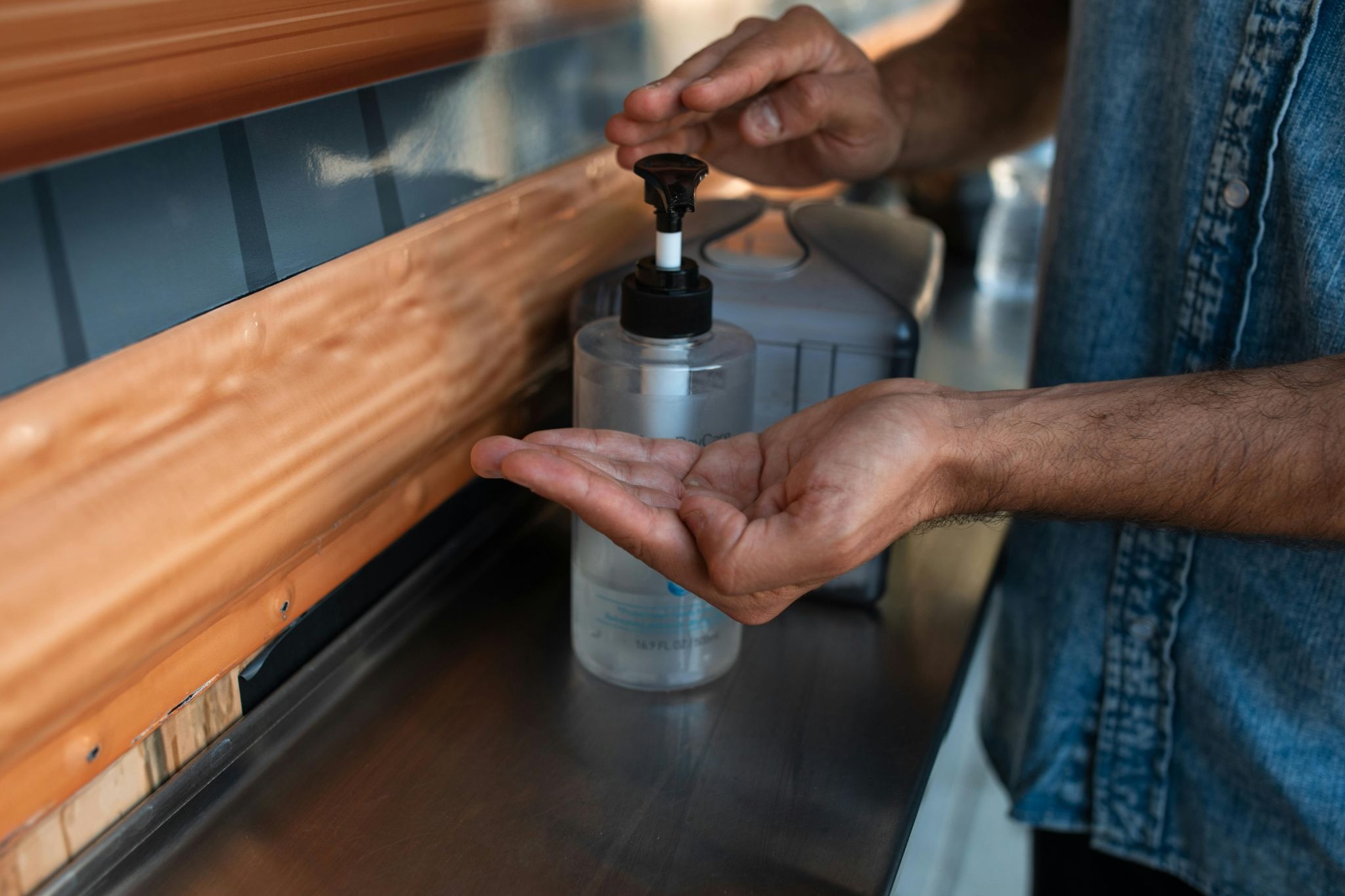

The difference between sanitising and disinfecting is simple: sanitising reduces germs to a safer level, while disinfecting kills or inactivates a wider range of germs on surfaces. Both are important, but they are not the same. In professional cleaning, understanding the difference between sanitising and disinfecting helps staff choose the right method depending on the setting, the surface, the level of risk and the hygiene standard required.
Cleaning, sanitising and disinfecting are often used together, but each step has a different purpose. Cleaning removes visible dirt, grease, dust and some germs. Sanitising reduces the number of germs. Disinfecting goes further by targeting harmful microorganisms more strongly, especially in higher-risk areas.
Understanding the difference between sanitising and disinfecting matters in workplaces such as offices, schools, restaurants, care homes, healthcare settings, hotels and shared facilities. If staff do not understand the difference between sanitising and disinfecting, they may use the wrong product, skip an important stage or assume a surface is safe when it is not.
For anyone working in cleaning, facilities, hospitality, food service or care, understanding workplace hygiene rules is part of working safely and professionally.
Overview
This article explains the difference between sanitising and disinfecting in a clear and practical way for workplace environments. It highlights how cleaning, sanitising and disinfecting each play different roles in maintaining hygiene and safety standards. The article focuses on helping workers in cleaning, hospitality, healthcare and care settings understand when and how each method should be used correctly.
Key Areas Covered:
✅The difference between sanitising and disinfecting.
✅The role of cleaning in workplace hygiene.
✅Cleaning, sanitising, disinfecting and sterilising explained.
✅Why cleaning must happen before disinfecting.
✅When sanitising should be used.
✅When disinfecting is necessary.
Quick Answer: Sanitising vs Disinfecting
The difference between sanitising and disinfecting is that sanitising lowers the number of germs on a surface to a safer level. Disinfecting kills or inactivates many harmful microorganisms, depending on the disinfectant used and the contact time followed.
| Term | What it means | Best used for |
| Cleaning | Removes dirt, grease, dust and some germs | Everyday surfaces before sanitising or disinfecting |
| Sanitising | Reduces germs to a safer level | Food areas, general hygiene, lower-risk surfaces |
| Disinfecting | Kills or inactivates many harmful germs | Toilets, healthcare areas, high-touch points, contamination risks |
| Sterilising | Removes or destroys all microorganisms | Specialist healthcare and laboratory settings |
The Food Standards Agency says cleaning is important because it removes harmful bacteria, viruses and parasites that may be present in food preparation areas. In food businesses, chemicals used to clean and disinfect food contact surfaces must also be suitable for food contact surfaces and used according to the manufacturer’s instructions.
What Does Cleaning Mean?
Cleaning is the first step in any effective cleaning and disinfection guide. It removes visible dirt, grease, dust, food particles, stains and some germs from a surface. Cleaning usually involves water, detergent, cloths, mops, brushes or cleaning equipment.
A surface may look clean after cleaning, but that does not always mean it is fully sanitised or disinfected. Understanding the difference between sanitising and disinfecting a kitchen counter may look shiny, but harmful bacteria may still remain if it has not been sanitised or disinfected correctly.
This is why cleaning normally comes before sanitising or disinfecting. If a surface is covered in dirt or grease, the chemical used afterwards may not work properly. Dirt can act like a barrier between the disinfectant and the germs.
A simple example is a chopping board. If it has food residue on it, you should clean away the residue first. Only then can the sanitiser or disinfectant properly reach the surface.
So, cleaning is not optional. It is the foundation of good hygiene.

What Does Sanitising Mean?
Understanding the difference between sanitising and disinfecting starts with knowing what sanitising actually means. Sanitising means reducing germs on a surface to a safer level. It does not necessarily mean killing every harmful microorganism. The aim is to reduce risk.
Sanitising is commonly used in food preparation areas, kitchens, hospitality settings and general workplaces. It is useful where surfaces need to be hygienic but may not require the stronger level of disinfection used in higher-risk environments.
For example, a table in a café may be cleaned and sanitised between customers. A food preparation surface may be cleaned first and then sanitised using a product suitable for food contact surfaces.
Sanitising can be done using heat, chemicals or approved sanitising products, depending on the environment. In professional settings, workers should always follow the product instructions, including dilution, contact time and whether rinsing is needed.
This is important because a sanitiser will not work properly if it is wiped away too quickly or used at the wrong strength.
What Does Disinfecting Mean?
The difference between sanitising and disinfecting becomes clearer when looking at disinfecting. Disinfecting is a stronger process that targets harmful microorganisms such as bacteria, viruses and fungi. It is used when the risk is higher or when a surface may be contaminated with harmful germs.
Disinfecting is common in toilets, bathrooms, healthcare areas, care settings, high-touch surfaces, shared equipment and areas affected by illness or bodily fluid contamination.
NHS England’s healthcare cleanliness standards explain that disinfectants must remain in contact with a surface for the specified contact time, and the surface needs to stay wet for that time. Staff should know the contact times for the disinfectants used locally.
This point is often missed. Many people spray disinfectant and wipe it away immediately. That may make the surface look clean, but it may not allow the disinfectant enough time to work.
Disinfection depends on correct use. That means using the right product, at the right dilution, on the right surface, for the right contact time.
Sanitising vs Disinfecting: The Main Difference
The main difference between sanitising and disinfecting is the level of germ reduction.
Sanitising reduces germs to a level considered safer for normal use. Disinfecting is designed to kill or inactivate more harmful microorganisms and is used where the risk is greater.
You can think of the difference between sanitising and disinfecting like this:
Sanitising is about reducing germs.
Disinfecting is about stronger germ control.
In many workplaces, sanitising is enough for everyday hygiene. In higher-risk areas, disinfecting is more appropriate.
For example, an office desk may need cleaning and sanitising. A toilet flush handle, clinical surface or area contaminated by bodily fluids may need cleaning and disinfecting. A kitchen food-contact surface may need cleaning followed by a food-safe sanitising or disinfecting product, depending on the procedure.
The important thing is not to guess. Follow workplace procedures, product labels, sanitation procedures and risk assessments.

Why You Must Clean Before Sanitising or Disinfecting
One of the most important sanitation procedures is cleaning first. Sanitising or disinfecting a dirty surface is not good practice because dirt, grease and organic matter can stop the chemical from working properly.
Imagine spraying disinfectant on a greasy worktop. The disinfectant may sit on top of the grease instead of reaching the surface underneath. That means germs may remain.
This is why professional cleaning often follows a two-stage process. First, clean the surface to remove dirt and grease. Then apply the sanitiser or disinfectant correctly.
In food settings, this is especially important. The Food Standards Agency advises businesses to follow manufacturer instructions, pay attention to contact times and make sure rinsing is carried out effectively if required.
A good cleaner does not just spray and wipe. They understand the process behind the task and the difference between sanitising and disinfecting.
Contact Time: The Step Many People Forget
Contact time means the amount of time a sanitiser or disinfectant must stay on the surface to work properly.
If a product says it needs five minutes, it needs to remain wet on the surface for that time. If it is wiped away after ten seconds, it may not do the job properly.
This is one of the most important parts of cleaning chemicals explained. The product label is not just a suggestion. It tells you how the chemical should be used, how long it needs to stay on the surface, whether it needs dilution and whether rinsing is required.
In busy workplaces, people often rush. But rushing can reduce hygiene standards. If the product needs contact time, build that into the cleaning routine.
For example, you might apply disinfectant to a high-touch surface, leave it for the required contact time, then return to wipe or rinse if required by the instructions.
When Should You Sanitise?
Understanding the difference between sanitising and disinfecting also means understanding when sanitising is appropriate.
Sanitising is useful for general hygiene and lower-risk surfaces where the aim is to reduce germs to a safer level.
You may sanitise:
- food preparation surfaces;
- dining tables;
- kitchen counters;
- shared desks;
- reception counters;
- children’s tables in some settings;
- gym equipment;
- shared tools or equipment;
- frequently touched general surfaces.
In food businesses, sanitising or disinfecting must be carried out with products suitable for food contact surfaces where those surfaces come into contact with food. The wrong product can create contamination risks, especially if it leaves residues or is not rinsed properly where rinsing is required.
Sanitising is not a replacement for cleaning. The surface should still be cleaned first if it is visibly dirty or greasy.
When Should You Disinfect?
The difference between sanitising and disinfecting becomes especially important in higher-risk environments.
Disinfecting is used where stronger germ control is needed. This includes higher-risk areas, high-touch surfaces and contamination risks.
You may disinfect:
- toilet seats and flush handles;
- bathroom taps and door handles;
- clinical surfaces;
- care home equipment;
- shared medical or support equipment where instructed;
- surfaces contaminated with bodily fluids;
- areas affected by sickness or infection;
- high-touch points during outbreaks;
- waste handling areas.
In healthcare and care settings, disinfection procedures may be stricter and more detailed. Workers should always follow the local infection prevention and control policy.
Disinfecting may also be required after certain incidents, such as vomiting, blood spillages or suspected infectious illness. These situations should be handled according to workplace procedure, not improvised.
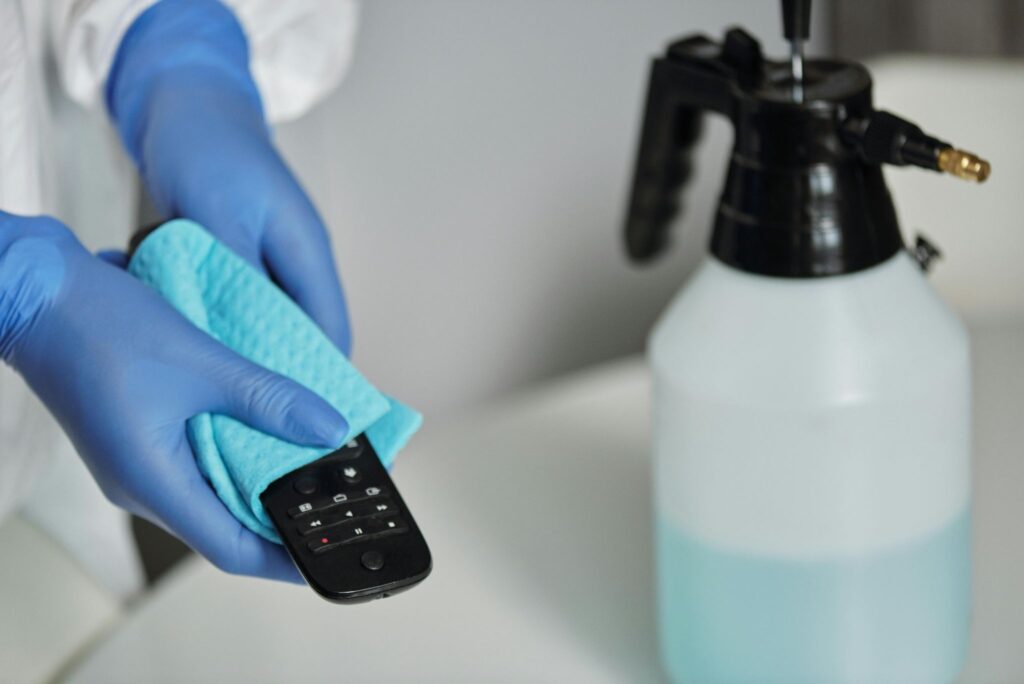
Cleaning Chemicals Explained: Use the Right Product
Understanding the difference between sanitising and disinfecting also requires understanding different cleaning products.
Not every cleaning product does the same job. Some products are detergents, some are sanitisers, some are disinfectants, and some combine cleaning and disinfecting functions.
A detergent removes dirt and grease.
A sanitiser reduces germs.
A disinfectant kills or inactivates many harmful microorganisms.
A degreaser removes grease.
A descaler removes limescale.
Using the wrong product can lead to poor hygiene or surface damage. For example, using a general cleaner where a disinfectant is required may not control germs properly. Using a strong disinfectant on the wrong surface may damage it or create chemical risks.
HSE guidance for cleaning work says cleaners should use good work techniques to avoid or minimise contact with harmful substances, store cleaning products safely, keep workplaces ventilated and use PPE such as gloves, aprons or eye protection where needed.
The safest rule is simple: read the label, follow training and use only approved products for the task.
COSHH and Chemical Safety
In the UK, cleaning chemicals used at work may fall under COSHH, which stands for Control of Substances Hazardous to Health. COSHH is about controlling exposure to substances that could harm health.
HSE explains that COSHH requires employers to control substances that are hazardous to health, and this includes many chemicals used in cleaning and disinfecting.
For cleaners and workplace staff, this means you should know:
where chemicals are stored;
which products are used for which tasks;
what PPE is needed;
how to dilute products safely;
what to do after a spill;
what to do if a chemical contacts skin or eyes;
which products must never be mixed.
One of the most important rules is never to mix cleaning chemicals unless you have been specifically trained and instructed to do so. Some mixtures can release harmful fumes.
COSHH exists to protect workers and maintain safe hygiene standards UK workplaces expect.
Hygiene Standards UK: Different Settings Need Different Rules
There is no single hygiene routine that fits every workplace. A normal office, restaurant kitchen, nursery, hospital ward and care home all have different risks.
In an office, the focus may be on clean desks, bins, kitchens, toilets and shared touchpoints. In a food business, the focus includes preventing food contamination. In a healthcare setting, infection prevention and control standards may be stricter because vulnerable patients may be at higher risk.
NHS England’s National Standards of Healthcare Cleanliness 2025 set out expectations for cleanliness in healthcare environments, including safe use of cleaning and disinfecting products.
This is why cleaners need site-specific training. A product or method suitable for one workplace may not be suitable for another.
Good hygiene means following the correct hygiene standards UK workplaces require for the environment involved.
Common Mistakes to Avoid
One common mistake is using sanitising and disinfecting as if they mean the same thing. Understanding the difference between sanitising and disinfecting tells us that they do not. If a task requires disinfection, sanitising may not be enough.
Another mistake is skipping the cleaning stage. A dirty surface should be cleaned before sanitising or disinfecting. Otherwise, the chemical may not work properly.
A third mistake is ignoring contact time. Spraying and immediately wiping may not allow the product to work.
Some people also use too many chemicals, thinking stronger is better. That can damage surfaces, waste products and increase health risks. Others use too little, which may make the product ineffective.
Another dangerous mistake is mixing chemicals. This should never be done casually.
Finally, some workers forget food safety. In kitchens and food preparation areas, products must be suitable for food contact surfaces and used according to instructions.
Practical Workplace Hygiene Rules
Good workplace hygiene depends on simple workplace hygiene rules done consistently.
Clean before sanitising or disinfecting.
Use the right product for the right surface.
Follow contact time.
Wear required PPE.
Never mix chemicals.
Label bottles clearly.
Store chemicals safely.
Use colour-coded cloths and equipment where required.
Wash hands after cleaning tasks.
Report missing labels, damaged bottles or unsafe products.
These workplace hygiene rules are easy to understand, but they need to become routine. Professional cleaning is not about rushing. It is about doing the job correctly and safely.
How Skills Pack Can Help
Skills Pack can help learners understand practical cleaning, hygiene and workplace safety skills. If you are preparing for cleaning, hospitality, care, facilities or workplace support roles, learning the difference between sanitising and disinfecting can make you more confident and professional.
Training can also help you understand COSHH, PPE, colour coding, chemical labels, contact time and safe working procedures. These are the kinds of details that separate casual cleaning from professional cleaning.
A course will not replace site-specific training from an employer, but it can give you a strong foundation before you enter the workplace.

Conclusion
The difference between sanitising and disinfecting comes down to the level of germ control. Sanitising reduces germs to a safer level, while disinfecting kills or inactivates many harmful microorganisms when used correctly.
Both processes matter, but they must be used in the right place and in the right way. Cleaning should usually come first. Chemicals must be used according to instructions. Contact time must be followed. PPE, COSHH rules and sanitation procedures and workplace procedures should never be ignored.
For cleaners, hospitality staff, care workers and workplace support teams, the difference between sanitising and disinfecting is part of maintaining strong hygiene standards. With the right training through Skills Pack, you can build safer habits and work to more professional cleaning standards.