How to Improve Emotional Intelligence at Work

Learning how to improve emotional intelligence at work can help people communicate more thoughtfully, manage difficult situations and build healthier professional relationships. It is particularly valuable when work involves collaboration, disagreement, pressure, feedback or responsibility for other people.
Emotional intelligence is not about suppressing emotions or trying to remain positive in every situation. It involves recognising emotional responses, understanding how they may influence behaviour and making more deliberate choices about what happens next.
Those abilities can support stronger workplace relationships, clearer communication and more effective leadership. They can help an employee receive criticism without immediately becoming defensive, enable a manager to recognise tension within a team and make difficult conversations more constructive.
Improvement takes practice. The aim is not to become emotionless, endlessly agreeable or capable of reading other people’s minds. It is to become more aware, adaptable and thoughtful in the way emotions influence workplace decisions and interactions.
What Is Emotional Intelligence and Why Is It Important at Work?
Emotional intelligence broadly refers to the ability to recognise, understand and manage emotions while responding appropriately to the emotions and perspectives of other people.
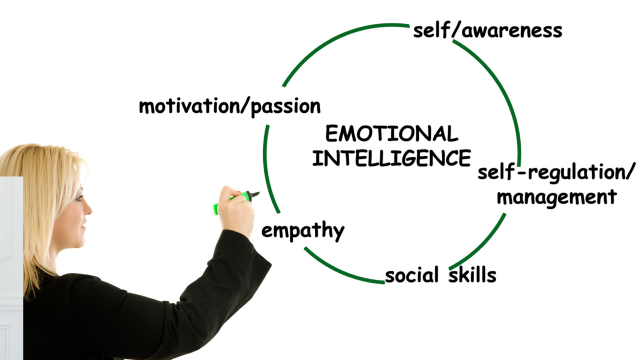
Different models describe emotional intelligence in slightly different ways, but workplace relationshipsworkplace discussions commonly focus on areas such as self-awareness, emotional regulation, empathy, social awareness and relationship management.
Consider a manager who receives an unexpected complaint about a project.
The initial reaction may be frustration. Emotional intelligence does not require the manager to pretend that frustration does not exist. Instead, the manager recognises the reaction, avoids responding impulsively, gathers more information and chooses a response appropriate to the situation.
The same principle applies to everyday interactions.
An employee who notices that they become defensive when their work is questioned can learn to pause and ask for clarification. A team leader who recognises that a colleague has become unusually quiet can check what is happening rather than assuming disengagement.
These small adjustments can affect the quality of decisions and relationships across a workplace relationships.
Why Emotional Intelligence Matters in the Workplace
Work rarely consists of technical tasks alone.
People negotiate deadlines, receive feedback, respond to changes, deal with mistakes and work alongside colleagues with different priorities and personalities.
That creates emotional complexity.
A technically excellent employee may still struggle if disagreement regularly turns into personal conflict. A highly knowledgeable manager may undermine a team if employees are afraid to raise bad news. Conversely, a person who understands how to listen, question and respond calmly may help difficult situations remain manageable.
CMI’s 2026 discussion of emotional intelligence is particularly relevant here. As technology becomes more capable of automating routine tasks, human skills involved in relationships, judgement and ambiguous situations remain significant.
Emotional intelligence also matters because reactions spread.
A leader who remains calm during uncertainty can help a team concentrate on what can actually be controlled. A manager who responds aggressively to every problem can create hesitation and defensive behaviour throughout the team.
Emotions are therefore not separate from workplace relationships performance. They influence how information travels, how decisions are challenged and how people cooperate.
Key Benefits of Emotional Intelligence at Work
Improving emotional intelligence can support several aspects of professional life.
It may help people understand their own reactions before acting on them, listen more carefully, respond to disagreement without escalating it and communicate difficult information more appropriately.
It can also strengthen workplace relationships because colleagues are more likely to trust people who respond consistently and respectfully.
For managers and leaders, emotional intelligence can support better coaching, feedback and conflict handling. It may also make it easier to recognise when a team needs clarification, support or a different approach.
The benefits should not be exaggerated, however.
Emotional intelligence does not solve understaffing, unfair policies or impossible workloads. Nor should organisations use it to suggest that employees must simply become more resilient to unacceptable behaviour.
Individual skills work best when they operate within healthy organisational systems.
Develop Greater Self-Awareness
Improving emotional intelligence begins with noticing your own patterns.
Most people know when they are extremely angry or excited. The more useful skill is recognising earlier signals before the emotion has already shaped behaviour.
Start by examining situations that repeatedly produce strong reactions.
Perhaps criticism immediately feels personal. Tight deadlines create impatience. Being interrupted causes frustration. Presenting to senior colleagues creates anxiety. Receiving vague instructions leads to irritation.
The point is not to judge those reactions. It is to understand them.
After a difficult interaction, ask yourself what you felt, what triggered it and what you did next. Then consider whether that response helped.
Patterns gradually become visible.
You may notice, for example, that when feeling uncertain you speak too much instead of asking questions. Or perhaps frustration makes written messages much more abrupt than intended.
Self-awareness gives you the opportunity to change the next response rather than repeating the same one automatically.
Learn to Recognise Emotional Triggers
A trigger is a situation that produces a particularly strong emotional response.
Common workplace relationships triggers can include being ignored, receiving unexpected criticism, dealing with uncertainty, feeling excluded from a decision or believing somebody has questioned your competence.
Triggers are not necessarily irrational.
If somebody repeatedly misses commitments, frustration may be entirely understandable. Emotional intelligence concerns what you do with that frustration.
When a trigger occurs, separate three things: what actually happened, what you interpreted it to mean and how you felt.
Suppose a manager replies to a proposal with, “We need to rethink this.”
The fact is that the proposal needs further work. The interpretation might become, “My manager thinks I am incapable.” Those are not the same statement.
Distinguishing evidence from interpretation prevents assumptions from becoming facts simply because they feel convincing.
Improve Emotional Self-Regulation
Self-regulation does not mean hiding every emotional response.
It means creating enough space between feeling and action to choose what to do next.
Sometimes that space lasts only a few seconds.
Before replying to a provocative comment, pause. Before sending an angry email, save it as a draft. Before making a decision while frustrated, check whether the matter genuinely requires an immediate answer.
Physical signals can provide useful warnings. Faster speech, tense shoulders or difficulty concentrating may indicate that an emotional response is building.
When possible, change the conditions before continuing.
A difficult conversation may be more productive after a short break. An emotionally charged email may deserve review the following morning rather than at the end of an exhausting day.
Regulation is not avoidance. Important issues still need to be addressed. The difference is that they are addressed deliberately rather than impulsively.
Build Stronger Empathy at Work
Empathy involves making a genuine effort to understand another person’s perspective and emotional experience.
It does not require agreeing with them.
A manager can understand why an employee is disappointed about a decision while still maintaining that decision. A colleague can recognise another person’s frustration without accepting disrespectful behaviour.
One way to develop empathy is to become curious before reaching a conclusion.
Instead of assuming that a colleague missed a deadline because they are careless, ask what happened.
Instead of deciding that an employee resisting change is simply negative, explore what they believe will be lost or what risk they think management has overlooked.
Perspective-taking is particularly useful when disagreement feels personal.
Ask: “If I had the information, responsibilities and pressures this person has, how might the situation look?”
That question does not guarantee agreement. It often improves understanding.
Empathy becomes most useful when it influences behaviour rather than remaining an internal feeling.
Improve Active Listening
Listening is one of the clearest ways emotional intelligence becomes visible.
Many workplace relationships conversations fail because one person is preparing a defence while the other is still speaking.
Active listening requires attention.
Put distractions aside where possible. Avoid interrupting simply because you believe you already know the point being made.
Ask open questions that encourage explanation.
Then summarise what you have understood. Phrases such as “So the main concern is the timing rather than the decision itself?” give the other person an opportunity to correct a misunderstanding.
Listen for emotions as well as facts, but do not pretend to know exactly how somebody feels.
Rather than saying, “You are obviously angry,” a more useful approach may be, “You seem concerned about this. Is that right?”
Good listening supports both emotional intelligence and accurate decision-making because assumptions are replaced with information.
Strengthen Workplace Communication

Better emotional intelligence should improve communication, not merely internal reflection.
Before an important conversation, consider three questions: what needs to be communicated, how is the other person likely to receive it and what outcome is required?
Clarity matters.
People sometimes soften uncomfortable messages so heavily that nobody understands the actual problem. Emotional intelligence does not mean avoiding directness.
A manager discussing missed deadlines should explain the issue clearly while keeping the conversation respectful.
Tone also matters.
The same request can sound collaborative or accusatory depending on how it is expressed.
Written communication requires particular care because tone is easier to misinterpret without facial expression or voice. If an email concerns a sensitive issue, consider whether a conversation would be more appropriate.
Effective communication is neither brutally direct nor endlessly diplomatic. It gives people the information they need without creating unnecessary hostility.
Use Emotional Intelligence to Improve Workplace Relationships
Strong workplace relationships are built through repeated small interactions rather than occasional team-building exercises.
Reliability matters. Follow through on commitments.
Respect boundaries. Do not assume every colleague wants the same level of personal conversation or informal interaction.
Give credit when somebody contributes to good work.
Address small tensions before they become larger conflicts.
HSE’s Management Standards treat positive relationships and early handling of unacceptable behaviour as part of good workplace relationships management. That is an important reminder that relationship quality is not merely a personal preference.
Emotionally intelligent employees also recognise that relationships do not require friendship.
Two colleagues can disagree frequently and still maintain a productive professional relationship if they communicate respectfully and trust one another to behave fairly.
The goal is not universal harmony. It is the ability to work constructively even when personalities and opinions differ.
Improve Emotional Intelligence in Leadership
Emotional intelligence becomes particularly important in leadership because managers influence the environment in which other people work.
Employees pay attention not only to what leaders say but also to how they respond.
If managers claim to welcome questions but become defensive whenever a decision is challenged, employees quickly learn that questioning is risky.
Leaders therefore need awareness of the signals their own behaviour sends.
They should also distinguish empathy from avoiding accountability.
A manager can listen carefully to why performance has declined and still establish clear expectations for improvement.
Emotionally intelligent leadership often combines warmth with boundaries.
It involves acknowledging uncertainty without creating panic, giving honest feedback without humiliating people and remaining open to new evidence without abandoning responsibility for decisions.
Leaders should also create opportunities for information to flow upwards. CIPD’s current employee-voice guidance emphasises environments where people can communicate views and influence matters affecting them.
A leader who cannot hear uncomfortable information will eventually make decisions with incomplete information.
Handle Feedback Without Becoming Defensive
Receiving feedback is one of the quickest tests of emotional self-awareness.
Even constructive feedback can trigger embarrassment, frustration or a desire to explain immediately.
When that happens, listen first.
Ask for examples if the feedback is vague. Separate the substance from the delivery. A poorly delivered comment can still contain information worth considering.
You do not have to agree immediately.
A useful response may simply be: “I want to think about that before I respond.”
Later, ask yourself whether there is a recurring pattern. Have other people raised something similar? What part of the feedback is supported by evidence?
Giving feedback requires the same discipline.
Focus on observable behaviour and impact rather than attacking character.
“Three client emails went unanswered for more than a week” gives somebody information they can act on.
“You don’t care about customers” makes a judgement about motivation and is more likely to create defensiveness.
Manage Conflict More Constructively how to improve emotional intelligence at work
Conflict itself is not evidence of low emotional intelligence.
Teams need disagreement. Different perspectives can expose weak assumptions and improve decisions.
The problem is unmanaged conflict.
CIPD guidance recommends addressing workplace conflict early where possible. Once disagreements become personal, people may start interpreting every new interaction through the history of the dispute.
During conflict, slow the conversation down.
Establish what each person believes happened. Identify areas where the parties agree before concentrating on where they differ.
Avoid exaggerated language such as “always” and “never”.
Do not attribute motives without evidence.
If emotions are high, taking a break can be more productive than forcing immediate agreement.
Some disputes may benefit from mediation. Others, particularly serious harassment, discrimination or misconduct concerns, may require formal procedures rather than informal relationship-building.
Emotional intelligence includes recognising when a situation exceeds what ordinary interpersonal skills can appropriately resolve.
Develop Better Emotional Intelligence in Difficult Conversations
Difficult conversations are often delayed because people anticipate discomfort.
That delay can make the eventual conversation harder.
Prepare before beginning. Identify the facts, desired outcome and issues that should not be confused with one another.
Choose an appropriate private environment.
Begin with the issue rather than a lengthy build-up that creates anxiety.
Then give the other person an opportunity to respond.
If the conversation becomes emotional, acknowledging the reaction can help without abandoning the subject.
For example: “I can see this is difficult to hear. We can take a moment, but we still need to discuss what happened.”
Acas specifically provides guidance for managers on challenging conversations because these situations are a normal part of people management.
Confidence comes partly from accepting that a good conversation may still feel uncomfortable.
The goal is constructive handling, not complete emotional comfort.
Improve Emotional Intelligence in Remote and Hybrid Work
Remote work removes many informal cues.
A manager cannot easily see that someone left a meeting confused. Written messages can appear colder than intended. Short video calls may leave little room for informal conversation.
That makes deliberate emotional intelligence more valuable.
Avoid assuming that silence in a remote meeting means agreement.
Invite views directly, particularly from people who have not spoken.
Pay attention to communication overload. Constant messages can create pressure even when each individual message appears minor.
For sensitive discussions, consider whether a video or voice conversation provides more context than text.
At the same time, respect that individuals communicate differently. Some employees process information more effectively when they have time to think before responding.
CMI’s 2026 material noted the difficulty managers can experience building relationships and conducting conflict conversations at a distance.
Remote emotional intelligence therefore involves making invisible aspects of work more deliberate: check-ins, context, clarification and opportunities to speak.
Use Reflection to Build Emotional Intelligence
Reflection converts experience into learning.
After an important conversation, take a few minutes to review it.
What emotion did you notice first? Did it affect your tone? Did you listen properly? What did the other person seem to need from the conversation? What would you repeat or change?
A short written reflection can help identify patterns over time.
You might notice that difficult conversations go poorly when scheduled at the end of a demanding day. Perhaps you become less patient when instructions are unclear. Maybe you avoid giving feedback until the issue becomes serious.
Reflection is particularly useful after situations that produced regret.
Rather than replaying the conversation simply to criticise yourself, extract something practical.
What signal could you recognise sooner next time?
Improvement comes from turning that answer into a different behaviour.
Ask for Constructive Feedback

Self-awareness has limits because everyone has blind spots.
Ask trusted colleagues how you come across in specific situations.
Broad questions such as “Do I have good emotional intelligence?” are unlikely to produce useful answers.
More specific questions work better:
- Do I listen properly when people disagree with me?
- Do I appear defensive when receiving feedback?
- Do I explain difficult decisions clearly?
- How do I react when a meeting becomes tense?
- Do I give people enough opportunity to contribute?
- Is there anything about my communication style that creates unnecessary pressure?
Choose people who are likely to answer honestly rather than simply reassure you.
If several people identify the same behaviour, pay attention.
The purpose is not to redesign your personality according to everybody else’s preferences. It is to discover whether your intentions and your actual impact are consistently different.
Build Emotional Intelligence Through Daily Habits
Emotional intelligence develops more effectively through regular practice than through occasional intense effort.
Useful habits include pausing before responding when irritated, asking one more question before giving advice and reviewing difficult emails before sending them.
Notice your assumptions.
When you catch yourself thinking, “They don’t care,” ask what evidence supports that conclusion.
Practise naming emotions precisely. “Stressed” may actually mean anxious, disappointed, overloaded or uncertain. More precise identification can lead to a more appropriate response.
Also practise recognising what is outside your responsibility.
Emotionally intelligent people are not responsible for managing everybody else’s emotions. Colleagues remain responsible for their own behaviour.
Healthy boundaries are part of effective emotional regulation.
The objective is steady improvement in awareness and response, not constant emotional analysis of every workplace interaction.
How Organisations Can Support Emotional Intelligence
Businesses should avoid treating emotional intelligence solely as an individual training issue.
Management behaviour, policies and working conditions strongly influence whether employees can apply interpersonal skills effectively.
If workloads are unreasonable, roles conflict and bullying is ignored, telling employees to practise empathy will not solve the problem.
HSE’s Management Standards are useful here because they consider demands, control, support, relationships, role and organisational change rather than reducing workplace stress to individual resilience.
Organisations can support emotionally intelligent behaviour by training managers, encouraging constructive employee voice, providing clear conflict procedures and creating opportunities for feedback.
Senior leaders also need to model the behaviour expected from employees.
A workshop about respectful communication will have limited credibility if senior managers routinely shout, interrupt or dismiss criticism.
Culture is reinforced through what leaders repeatedly tolerate and reward.
Common Emotional Intelligence Mistakes to Avoid
One mistake is assuming emotional intelligence means being nice all the time.
Sometimes the emotionally intelligent response is a firm boundary, an uncomfortable piece of feedback or a clear refusal.
Another mistake is using empathy to make assumptions. Understanding others requires curiosity, not confident guesses about what they feel.
People may also overanalyse body language. Folded arms or limited eye contact do not provide a reliable diagnosis of someone’s emotional state, particularly across different personalities, disabilities and cultural backgrounds.
Another problem is suppressing emotions instead of regulating them. Continually pretending that frustration or disappointment does not exist can make reflection harder.
Managers should also avoid using emotional intelligence language to excuse organisational failures.
An employee struggling with an impossible workload does not necessarily need more resilience. The workload may need to change.
Finally, emotional intelligence should never become a demand that employees tolerate bullying, harassment or discrimination politely. Formal workplace protections and procedures still matter.
How to Measure Improvement in Emotional Intelligence
Emotional intelligence is not best measured by asking whether somebody now “feels more emotionally intelligent”.
Look for behavioural change.
Are difficult conversations happening earlier rather than being avoided? Does the person interrupt less? Can they receive feedback without immediately defending themselves? Do disagreements become less personal?
For leaders, employee feedback can provide additional information.
Do team members feel able to raise concerns? Are decisions explained clearly? Does the manager respond consistently when challenged?
Conflict patterns may also reveal change.
Fewer recurring misunderstandings, more successful resolution and improved quality of discussion can indicate progress.
Self-reflection remains useful, but combine it with feedback and observable behaviour.
If an assessment tool is used, treat the result as one source of information rather than a permanent label.
The purpose of measurement is to identify what to practise next.
Future Emotional Intelligence Skills for the Workplace
Emotional intelligence is likely to remain relevant as AI becomes more capable.
Routine drafting, summarisation, analysis and administrative work can increasingly be assisted by technology. Human work may therefore concentrate more heavily on judgement, collaboration, negotiation and situations where context is ambiguous.
That can increase the value of empathy and interpersonal awareness.
AI-assisted communication creates another challenge.
A system may draft an efficient performance message, but efficiency does not necessarily make automation appropriate for a sensitive conversation.
Employees and managers will increasingly need judgement about when technology should support communication and when human interaction matters.
Hybrid work will continue to demand stronger awareness of missing signals.
Multicultural and international teams also require flexibility because communication norms and emotional expression differ.
Future emotional intelligence is therefore likely to involve both traditional human skills and better judgement about digitally mediated relationships.
Technology may become better at identifying patterns. People will still need to decide what those patterns mean and how to respond responsibly.
Key Takeaways
Improving emotional intelligence at work requires attention to both internal reactions and outward behaviour.
The most useful practices include becoming more aware of emotional triggers, pausing before reacting, listening actively, developing empathy and communicating difficult information clearly.
Strong emotional intelligence can support workplace relationships, particularly when disagreement or pressure is involved. It can also strengthen leadership by helping managers combine empathy with accountability and create environments in which employees can raise concerns.
Better communication is one of the clearest outcomes. People become more capable of expressing what needs to be said without adding unnecessary hostility.
At the same time, emotional intelligence has limits. It cannot compensate for structural problems such as excessive workloads, bullying or unfair organisational practices.
The strongest workplaces combine individual interpersonal skills with responsible management.
FAQ
How can I improve emotional intelligence at work?
Begin by observing your emotional triggers and how they influence behaviour. Practise pausing before reacting, listening without interrupting and asking questions before making assumptions. Seek specific feedback from colleagues and reflect after difficult conversations. Improvement usually comes through repeated practice rather than one-off learning.
Why is emotional intelligence important at work?
Work involves relationships, feedback, change, disagreement and uncertainty. Emotional intelligence can help people respond to these situations more deliberately, communicate more clearly and maintain constructive professional relationships. It is particularly relevant for managers whose reactions can influence an entire team.
What are the main emotional intelligence skills?
Commonly discussed emotional intelligence skills include self-awareness, self-regulation, empathy, social awareness, active listening and relationship management. In workplace settings, these abilities appear through behaviours such as receiving feedback constructively, handling disagreement calmly and adapting communication to the situation.
Can emotional intelligence improve workplace relationships?
It can contribute to stronger workplace relationships by helping people understand their own reactions, listen to different perspectives and deal with tensions earlier. However, relationships also depend on organisational factors such as fairness, workload, policies and management behaviour.
How can leaders improve emotional intelligence?
Leaders can seek feedback about their behaviour, examine how they respond when challenged and practise listening before making decisions. Effective leadership also requires managers to combine empathy with clear expectations and accountability. Leaders should create opportunities for employees to raise concerns without being punished for respectful disagreement.
How does emotional intelligence improve communication?
Emotional awareness can help a person recognise when frustration, anxiety or defensiveness is affecting tone. This creates an opportunity to adjust the response. Empathy and active listening also improve communication because they encourage people to understand the other perspective before deciding what to say.
How can emotional intelligence help with workplace conflict?
It can help people recognise escalating emotions, avoid personal attacks and listen for the underlying issue rather than reacting only to someone’s position. Conflict should still be addressed directly. Serious bullying, harassment or misconduct concerns may require formal workplace procedures rather than informal emotional-intelligence techniques.
Can emotional intelligence be learned?
Emotional intelligence skills can be developed through reflection, practice, feedback, coaching and structured learning. Improvement is usually demonstrated through changed behaviour rather than simply understanding the theory. Individuals may progress at different rates, and practical application is essential.
Conclusion
Understanding how to improve emotional intelligence at work begins with recognising that emotions influence professional behaviour whether people discuss them or not.
Self-awareness allows you to notice what is happening before an automatic reaction takes control. Self-regulation creates space to choose a better response. Empathy and active listening help reveal perspectives that may otherwise be missed.
These skills can improve communication, strengthen workplace relationships and support more thoughtful leadership. They are particularly useful during feedback, conflict, organisational change and other situations where technical knowledge alone is not enough.
Emotional intelligence should nevertheless remain grounded in reality. Employees should not be expected to respond calmly to unhealthy working conditions while organisations ignore the underlying cause. Good workplaces need both emotionally skilled people and responsible systems for managing workload, relationships and unacceptable behaviour.
Skills Pack currently offers learning in leadership and management that includes effective communication, body language, assertiveness, teamwork and performance management, while its leadership-focused curriculum also addresses empathy and emotional intelligence. Structured learning can provide useful concepts and opportunities for reflection, but practical competence develops by applying those ideas to real workplace situations and learning from the results.
The most useful objective is not to control every emotion. It is to understand emotional responses well enough to prevent them from controlling every decision.