Industrial Floor Cleaning Machines: Types, Uses and Safety Guide

Keeping industrial floors clean requires more than removing visible dirt. Warehouses, factories, workshops and distribution centres deal with constant foot traffic, machinery movements, dust, grease and other contaminants. Without suitable cleaning methods, these conditions can affect workplace safety, hygiene and daily operations.
Industrial floor cleaning machines help businesses maintain large floor areas more consistently than manual cleaning alone. However, different machines perform different tasks, and choosing the wrong equipment can damage flooring or introduce unnecessary risks.
This guide explains the main types of industrial floor cleaning machines, their applications, operating procedures, safety requirements and maintenance practices. It also covers how to select suitable equipment and train employees to use it safely.
What Are Industrial Floor Cleaning Machines?
Industrial floor cleaning machines are mechanical devices designed to clean, maintain or restore flooring in commercial and industrial environments.
Unlike ordinary household cleaning appliances, industrial machines are generally built to handle larger working areas, repeated use and more demanding cleaning conditions. Their design, cleaning capacity and operating features vary according to their intended application.
Common functions include removing loose debris, scrubbing stubborn dirt, recovering dirty water and maintaining certain floor finishes.
For example, a warehouse may use a mechanical sweeper to collect dust and packaging debris before using a scrubber dryer to remove tyre marks and surface contamination.
Industrial cleaning equipment can be operated manually, through walk-behind controls or from a seated driving position. Some machines combine several cleaning functions, while others specialise in a particular task.
The equipment must always be appropriate for the flooring, contamination and environment in which it will operate.
Why Industrial Floor Cleaning Machines Are Important
Industrial floors experience different types of wear and contamination throughout the working day. Dust, oil, spilled materials and tracked-in moisture can gradually build up, particularly around entrances, production lines and loading areas.
Regular cleaning helps manage these conditions before they become more difficult to control.
One significant benefit is improved workplace safety. Effective cleaning removes contamination that might otherwise increase the risk of slips. However, the cleaning process itself must be managed carefully to avoid leaving slippery surfaces.
Machines can also improve cleaning consistency. A suitable scrubber dryer, for example, applies a controlled cleaning action while recovering the used solution.
Other practical benefits include reduced reliance on repetitive manual scrubbing, more predictable warehouse cleaning schedules and easier maintenance of large floor areas.
Clean floors can also support workplace presentation and operational efficiency. This is particularly relevant in facilities where debris may interfere with equipment movement or working areas.
Nevertheless, mechanical cleaning is not automatically safer or more effective. Results depend on correct equipment selection, competent operation and regular maintenance.
Types of Industrial Floor Cleaning Machines
Several categories of floor cleaning equipment are available, each designed for particular warehouse cleaning requirements.
The most suitable machine depends on the type of contamination, floor construction, available space and expected warehouse cleaning frequency.
Scrubber Dryers
Scrubber dryers are among the most widely used floor scrubber machines in industrial and commercial buildings.
They combine mechanical scrubbing with the application of water or a suitable warehouse cleaning solution. Most models also use a vacuum recovery system and squeegee assembly to collect dirty liquid from the floor.
This enables washing and water recovery during the same cleaning pass.
Scrubber dryers are commonly used for:
- Removing accumulated dirt from sealed industrial floors.
- Cleaning warehouse aisles and production areas.
- Removing suitable surface residues and some tyre marks.
- Maintaining hard flooring in busy commercial premises.
Machines may use rotating disc brushes, cylindrical brushes or compatible warehouse cleaning pads. The correct configuration depends on the surface texture and cleaning task.
Cylindrical systems can be useful on textured surfaces, while disc systems are often suitable for relatively smooth floors.
A scrubber dryer should not automatically be assumed to leave every floor completely dry. Worn squeegees, unsuitable settings or uneven flooring may leave moisture behind.
Operators must check the results and prevent access to hazardous wet areas.
Floor Sweepers
Floor sweepers are primarily designed to collect loose dirt and debris without wet scrubbing.
They use rotating brushes to gather material into a collection hopper. Many industrial models include vacuum-assisted dust collection and filtration systems.
Sweepers are particularly useful in areas containing packaging fragments, grit, leaves and other loose materials.
In warehouse cleaning, they can remove debris before wet cleaning begins. This reduces the likelihood of larger particles interfering with scrubber brushes or damaging the floor surface.
Walk-behind sweepers are suitable for smaller areas, while ride-on models can cover extensive spaces.
The filtration arrangement must suit the material being collected. Hazardous dust, combustible dust and specialist contamination may require purpose-designed equipment and additional controls.
A standard floor sweeper should not be used to collect hazardous materials unless it is specifically suitable for that purpose.
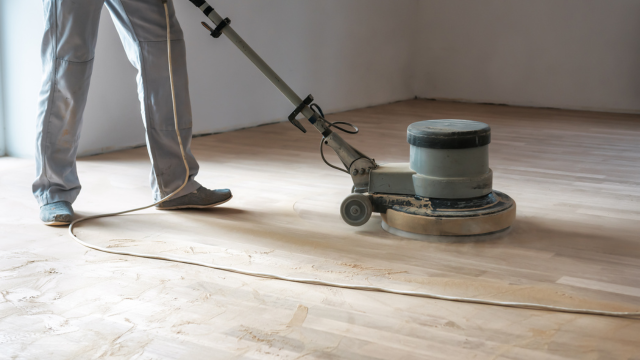
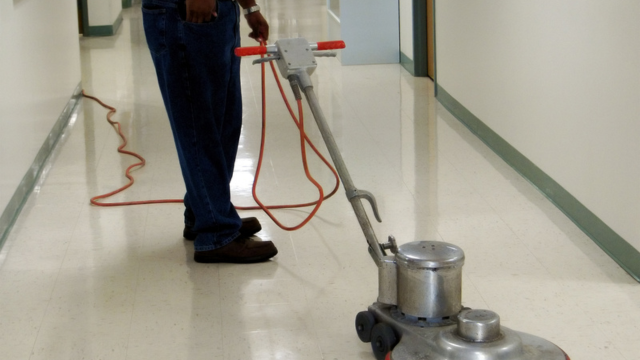
Single-Disc Floor Machines
Single-disc machines use a rotating brush or pad beneath a motor-driven housing.
They are generally operated using a handle that allows the user to guide the machine across the floor.
These machines can perform several tasks, depending on the model, operating speed and attachment.
Typical applications include deep warehouse cleaning, scrubbing, buffing and certain floor maintenance processes.
Single-disc machines are useful for detailed cleaning where a larger scrubber dryer cannot operate effectively.
However, they often require more operator control and physical technique than automated scrubber dryers.
Incorrect handling can cause the machine to move unexpectedly. Excessive pressure or an unsuitable pad can also damage sensitive finishes.
Employees should receive practical instruction before operating these machines independently.
Burnishers and Floor Polishers
Burnishers and polishers are primarily used to maintain or improve the appearance of compatible floor finishes.
Floor polishers may buff or polish a surface using a suitable pad and machine speed. Burnishers typically operate at higher speeds and are often used to produce a high-gloss finish on appropriate coated flooring.
These machines are particularly relevant in commercial premises, corridors and facilities with maintained resilient floor finishes.
However, they are not substitutes for scrubber dryers or sweepers.
A burnisher cannot be relied upon to remove substantial industrial contamination, and polishing is not appropriate for every type of flooring.
Some industrial surfaces are deliberately textured to provide slip resistance. Changing their finish without proper assessment could compromise their intended performance.
Before polishing or burnishing, operators must confirm that the floor manufacturer permits the proposed treatment.
Ride-On vs Walk-Behind Floor Cleaning Machines
Industrial cleaning machines are commonly available in walk-behind and ride-on configurations.
Both can provide effective warehouse cleaning, but they suit different working environments.
Walk-behind machines are generally more appropriate for smaller areas, narrow corridors and spaces containing obstacles. Their compact design can make them easier to manoeuvre around shelving, equipment and doorways.
They also require the operator to walk throughout the warehouse cleaning task, which may influence productivity and physical workload.
Ride-on machines allow operators to remain seated while controlling the equipment. They are often suitable for large warehouses, distribution centres and extensive industrial floors.
Their wider cleaning paths and larger tanks can reduce interruptions, although actual productivity depends on site conditions.
Ride-on equipment also requires more attention to traffic management. Turning circles, visibility, braking, reversing and interaction with pedestrians must all be considered.
The choice should not be based entirely on floor area.
A large but congested facility may benefit from several compact machines, while an open distribution centre may be better suited to a ride-on model.
How to Choose an Industrial Floor Cleaning Machine
Choosing the right industrial floor warehouse cleaning machines requires an assessment of the premises rather than simply selecting the largest available model.
The first consideration is the floor itself. Concrete, resin, ceramic tiles and resilient flooring have different warehouse cleaning requirements. A machine suitable for sealed concrete may be too aggressive for a softer or coated surface.
The second consideration is contamination.
Loose dust and packaging fragments are usually better addressed through sweeping or suitable vacuum warehouse cleaning. Grease, tracked-in dirt and certain residues may require wet scrubbing with an appropriate detergent.
Cleaning area and layout also affect the decision. Consider the usable floor space, aisle width, doorway dimensions, turning areas and the presence of fixed equipment.
An oversized machine may become difficult to operate safely around obstacles.
Other important selection factors include:
- Cleaning width: Whether the machine can cover the working area efficiently.
- Tank capacity: How frequently the operator will need to refill or empty the machine.
- Battery runtime: Whether the equipment can complete the intended warehouse cleaningshift.
- Brush compatibility: Whether suitable brushes and pads are available for the flooring.
- Water recovery: How effectively the machine removes used cleaning solution.
- Maintenance support: Availability of servicing, replacement parts and technical assistance.
Consider storage, charging arrangements, operator training and ongoing consumable costs alongside the purchase price.
A practical demonstration on the actual floor can reveal limitations that product specifications alone may not show.
Where possible, compare equipment using realistic cleaning tasks rather than relying exclusively on theoretical productivity figures.
Industrial Floor Cleaning Machine Uses
Industrial floor cleaning machines are used across many sectors, although their precise applications depend on the working environment.
In warehouses and distribution centres, sweepers and scrubber dryers help manage dust, packaging debris and contamination associated with goods handling. warehouse cleaningarrangements must account for forklifts, pallet trucks and delivery movements.
Manufacturing facilities may require cleaning around machinery and production lines. Particular attention is needed where oil, lubricants or process residues reach the floor.
Food production premises often have additional hygiene requirements. Cleaning equipment, detergents and procedures must be suitable for the site’s hygiene arrangements, including any controls against cross-contamination.
Automotive workshops may use machines to clean compatible hard floors affected by tyre marks and general workshop dirt. Oil or chemical spillages may require specialist procedures rather than routine machine warehouse cleaning.
Commercial buildings, hospitals and educational facilities also use mechanical floor cleaning equipment. These environments may prioritise quieter operation, smaller machines and careful separation of cleaning activities from building users.
There is no single machine suitable for every industrial application. Equipment must match the actual warehouse cleaning problem.
Floor Cleaning Machine Operating Procedures
Safe and effective cleaning begins before the machine is switched on.
Operators should follow the manufacturer’s instructions and their employer’s approved warehouse cleaning procedures. A general operating sequence can help establish consistent working practices.
Before Starting the Machine
Inspect the equipment for visible damage, leaks, worn brushes and loose components.
Check the power supply or battery condition, relevant controls, recovery tank and squeegee assembly.
The cleaning area should also be inspected. Remove loose obstructions and identify hazards such as damaged flooring, electrical cables, pedestrians and moving vehicles.
Select the correct brush or pad for the surface. Where chemicals are required, use only approved products at the specified dilution.
Make sure the work area can be safely separated from other activities where necessary.
During Machine Operation
A typical scrubber dryer warehouse cleaning procedure follows these stages:
- Prepare and inspect the work area, including any necessary barriers.
- Complete machine safety checks and fill the solution tank correctly.
- Select the appropriate operating settings for the floor.
- Begin cleaning using a controlled speed and planned route.
- Maintain suitable overlap between cleaning passes.
- Check that dirty water is being recovered effectively.
- Stop and investigate unusual noises, leaks or changes in performance.
- Inspect the completed area and keep people away until it is safe.
Operators should avoid excessive speed, abrupt turning and collisions with fixtures.
They should never place hands near moving brushes while the machine is operating.
After Cleaning
Stop the machine using the recommended shutdown procedure.
Empty the recovery tank at an authorised location and clean accessible components according to the manufacturer’s instructions.
Inspect the floor for remaining contamination, wet patches or damage.
Any faults discovered during warehouse cleaning should be reported before the machine is returned to service.
Cleaning Different Industrial Floor Types
Different floor materials respond differently to brushes, detergents and mechanical pressure.
Understanding these differences helps prevent avoidable damage.
Concrete Floors
Industrial concrete is durable but varies considerably in surface condition.
Unsealed concrete may absorb moisture and contamination, while polished or treated concrete can have specific maintenance requirements.
Suitable sweeping or vacuum warehouse cleaning may remove dry debris. Wet scrubbing can be appropriate where the floor condition and treatment permit it.
Aggressive brushes and unsuitable chemicals may damage coatings or alter the surface.
Epoxy and Resin Floors
Resin flooring is commonly found in industrial environments because particular systems can offer resistance to wear and chemicals.
However, different resin products have different limitations.
Cleaning should follow the flooring manufacturer’s guidance concerning chemical compatibility, pad selection and mechanical pressure.
Abrasive pads can scratch or dull some resin finishes.
Ceramic and Textured Tiles
Textured tiles can retain dirt within surface irregularities and grout lines.
Appropriate mechanical scrubbing may improve warehouse cleaning effectiveness, although the brush must be compatible with the surface.
Grout condition and drainage should be checked before wet cleaning.
Vinyl and Other Resilient Floors
Some resilient floor coverings can be damaged by excessive abrasion, inappropriate temperatures or unsuitable cleaning chemicals.
Use approved pads, detergents and operating settings.
Polishing or burnishing should only be undertaken where the particular floor finish supports it.
The key principle is to match the warehouse cleaning process to the floor specification rather than using the same settings throughout a building.
Cleaning Chemicals and Detergents
Cleaning chemicals can improve the removal of grease, dirt and certain industrial residues, but they must be selected carefully.
Not every industrial floor requires a strong detergent.
The correct product depends on the contamination, flooring material and warehouse cleaning machine.
Neutral detergents may be suitable for some routine applications, while particular types of grease or heavy soiling may require specialist formulations.
The suitability of any chemical must be confirmed before use.
Under the Control of Substances Hazardous to Health Regulations, employers must assess relevant hazardous substances and establish appropriate exposure controls.
A chemical safety data sheet provides important information about hazards, handling, storage and emergency measures. However, it does not replace a workplace COSHH assessment.
Operators should understand the required dilution, contact time and safe handling arrangements.
Excessive detergent concentrations can leave residues and may interfere with machine performance.
Different cleaning chemicals should never be mixed unless the manufacturer explicitly confirms that doing so is safe.
Wastewater also needs appropriate handling. Where it contains oils, chemicals or other controlled contaminants, it may require special collection or disposal arrangements rather than discharge into an ordinary drain.
Industrial Floor Cleaning Machine Safety
Industrial floor warehouse cleaning machine safety involves more than preventing accidents during machine operation.
The cleaning process can introduce hazards affecting operators, nearby employees and visitors.
Slips and Trips
Wet floors are a major concern, particularly where cleaning takes place during normal working hours.
Scrubber dryers should recover water effectively, and any remaining moisture must be managed.
Warning signs are useful, but they should not be treated as a substitute for physical access control where a significant slip risk remains.
Cleaning during quieter periods or restricting access to affected areas can provide better protection.
Electrical and Mechanical Hazards
Damaged cables, plugs and electrical connections can present serious risks.
Corded equipment should be inspected before use, with cables routed to minimise damage and trips.
Operators must not attempt repairs beyond their training and authorisation.
Moving brushes, drive components and other mechanisms can also cause injury.
Machine guards and safety devices must remain in place and functional.
Collision and Vehicle Risks
Ride-on machines introduce risks associated with movement, particularly in busy warehouse environments.
Pedestrians and vehicles should be separated wherever reasonably practicable.
Operators must follow site speed limits, traffic routes and reversing procedures.
Machines should never be driven into areas with inadequate clearance or visibility without suitable controls.
Battery Charging
Battery-powered machines require appropriate charging and storage arrangements.
Charging risks vary between battery technologies. Lead-acid systems may present acid and hydrogen hazards, while lithium-ion systems have different electrical and thermal risks.
Use only compatible charging equipment and follow the manufacturer’s requirements for ventilation, inspection and fire precautions.
Damaged or overheating batteries should not be charged or used until they have been assessed by a competent person.
Personal Protective Equipment for Machine Operators
Personal protective equipment should be selected according to the risks identified for the warehouse cleaning task.
It is not appropriate to assume that every operator requires an identical PPE set.
Suitable slip-resistant footwear may be necessary where floors are wet or contaminated.
Chemical-resistant gloves can protect against particular cleaning solutions, provided the glove material is compatible with the substance involved.
Eye protection may be required when preparing chemicals or carrying out tasks involving a splash risk.
High-visibility clothing may also be appropriate where operators work near workplace vehicles.
Hearing protection or respiratory protective equipment may be required for specific risks, but should be determined through assessment rather than issued automatically.
Where PPE is required under workplace safety legislation, employers must provide suitable equipment without charging workers for it.
PPE should complement safe working methods, effective supervision and appropriate machine safeguards. It cannot replace them.
Machine Maintenance and Safety Checks
Industrial floor cleaning equipment should be inspected and maintained throughout its working life.
Routine checks help identify damage before it affects cleaning performance or safety.
Before each use, operators should examine accessible components, including brushes, pads, squeegees, wheels, hoses and relevant controls.
The machine should be removed from service if a defect could make operation unsafe.
Periodic checks should also address electrical components, batteries, steering, braking and safety devices where fitted.
Maintenance intervals should reflect manufacturer instructions, operating conditions and the results of risk assessments.
For equipment used intensively, some components may need attention more frequently than the normal service schedule suggests.
Records should identify reported faults, inspections, repairs and outstanding maintenance requirements.
Repairs involving electrical systems, safety devices or complex mechanical components should be completed by appropriately competent personnel.
Staff Training and Operator Competency
Providing cleaning machinery does not automatically mean employees know how to use it correctly.
Operators need adequate information, instruction and training appropriate to the equipment and their responsibilities.
In Great Britain, PUWER requires employers to ensure that workers using equipment receive adequate training concerning safe operating methods, risks and precautions. Northern Ireland has corresponding requirements under its own work equipment regulations.
Training should cover the particular machine, not simply industrial cleaning in general.
What Should Operator Training Include?
A suitable programme may address machine controls, pre-use inspection, brush selection, detergent handling and safe operating techniques.
Operators should also understand pedestrian segregation, wet-floor precautions, emergency stopping and fault reporting.
Practical instruction is especially valuable for ride-on machines and single-disc equipment.
Employees should be able to demonstrate that they can prepare, operate and shut down the machine safely.
Why Practical Competency Matters
Understanding instructions is different from demonstrating safe performance.
An online course or knowledge assessment can support awareness of cleaning principles, chemical hazards and workplace safety responsibilities.
However, it cannot by itself demonstrate that a learner can safely manoeuvre a specific ride-on scrubber dryer around warehouse obstacles.
Employers should assess practical competency through suitable observation or other reliable evidence.
Refresher training may be necessary when equipment changes, unsafe practices are identified or employees return to unfamiliar tasks.
Skills Pack provides online learning across several professional and workplace-related subject areas. Relevant theoretical learning can complement workplace development, but machine-specific instruction and practical competency assessment remain essential.
Industrial Floor Cleaning Schedules
An effective cleaning schedule considers how the building is used rather than relying on a fixed routine for every area.
Busy entrance routes and loading bays may require more frequent attention than low-traffic storage spaces.
Cleaning frequency should reflect contamination, foot traffic, vehicle movements and the consequences of allowing dirt to accumulate.
A practical schedule may distinguish between:
- Daily cleaning: Removing loose debris, dealing with spillages and cleaning heavily used routes.
- Weekly cleaning: More detailed cleaning of designated areas and machinery-accessible corners.
- Periodic deep cleaning: Addressing accumulated contamination using appropriate equipment and methods.
- Condition-based cleaning: Responding promptly to unexpected spills, dirt or changing operational conditions.
These intervals are examples, not universal requirements.
Where hazardous contamination is possible, cleaning procedures must follow the site’s specific risk controls.
Schedules should also allow enough time for preparation, safe access restrictions, equipment cleaning and maintenance.
Supervisors should review results and adjust cleaning frequency when conditions change.
Common Floor Cleaning Machine Mistakes
Even effective industrial cleaning equipment can produce poor results when used incorrectly.
One frequent mistake is selecting a machine based on size rather than the actual cleaning task.
A large scrubber dryer may be inefficient in narrow aisles, while a sweeper will not remove most bonded grease or stubborn surface residues.
Another common problem is using an unsuitable brush or pad. Excessively abrasive attachments can damage protective coatings and sensitive finishes.
Incorrect detergent dilution may leave residue, reduce cleaning effectiveness or increase exposure to chemicals.
Operators may also overlook squeegee wear and continue cleaning despite poor water recovery.
Other avoidable mistakes include rushing through pre-use checks, operating too quickly, leaving machines unattended in unsafe locations and failing to report defects.
Cleaning while forklifts or pedestrians continue moving through the same area without adequate controls is particularly concerning.
Poor maintenance is another source of recurring problems. Blocked filters, dirty tanks and worn components can gradually reduce performance.
These mistakes are best addressed through suitable procedures, supervision and consistent operator training.
How to Maintain Industrial Floor Cleaning Machines
A structured maintenance programme helps keep equipment safe and reliable.
The most basic requirement is to clean the machine after use.
Recovery tanks should be emptied and cleaned according to manufacturer instructions. This helps prevent accumulated dirt, odours and blockages.
Brushes and pads should be inspected for damage or excessive wear. Replacement intervals depend on the material, frequency of use and working conditions.
Squeegee blades are especially important on scrubber dryers because poor contact with the floor can leave water behind.
Filters, hoses and suction passages should also be checked for blockages.
Battery maintenance must follow the requirements of the particular technology. Procedures suitable for vented lead-acid batteries may be inappropriate or dangerous for sealed or lithium-ion batteries.
Machines should be stored in designated areas that protect them from damage and unauthorised use.
A maintenance register can help organisations monitor servicing, repairs and recurring faults.
For larger cleaning fleets, reviewing downtime and replacement-part consumption may help identify machines that require additional attention.
Routine cleaning by operators and technical servicing by competent maintenance personnel should remain clearly distinguished.
Key Takeaways
Industrial floor cleaning machines can improve cleaning efficiency and help maintain safer, more manageable working environments when they are correctly selected and operated.
The most important principles are straightforward:
- Match the machine to the floor type, contamination and building layout.
- Use sweepers for suitable loose debris and scrubber dryers for appropriate wet-cleaning tasks.
- Follow manufacturer instructions and site-specific operating procedures.
- Control wet-floor, electrical, chemical and workplace traffic risks.
- Provide adequate operator training and assess practical competence.
- Maintain equipment regularly and remove defective machines from service.
The most effective cleaning arrangements combine suitable equipment, competent employees and realistic maintenance schedules.
Frequently Asked Questions (FAQ)
What are industrial floor cleaning machines?
Industrial floor cleaning machines are mechanical devices used to clean and maintain flooring in warehouses, factories, workshops and other commercial or industrial environments.
Depending on the machine, they may sweep loose debris, scrub contaminated surfaces, recover dirty water or maintain suitable floor finishes.
They are generally designed for more demanding cleaning applications than ordinary household equipment.
What types of industrial floor cleaning machines are available?
Common types include scrubber dryers, mechanical sweepers, single-disc floor machines, burnishers and polishers.
Some combination machines can sweep and scrub in one operation.
Equipment is available in walk-behind and ride-on configurations, with different cleaning widths, power arrangements and operating capacities.
The correct choice depends on the cleaning task and working environment.
What is a scrubber dryer used for?
A scrubber dryer is used to wash suitable hard floors through mechanical scrubbing while recovering dirty cleaning solution.
It is commonly used in warehouses, factories, shopping centres and other large premises.
The machine can reduce the amount of water remaining after cleaning, but operators must still check that the floor is safe before reopening the area.
What is the difference between a floor sweeper and scrubber dryer?
A floor sweeper removes loose material such as dust, grit and packaging debris using brushes and a collection system.
A scrubber dryer uses mechanical scrubbing and water or cleaning solution to remove suitable surface contamination.
Sweepers are generally better suited to dry debris, while scrubber dryers address many wet-cleaning requirements.
Some facilities use both machines as part of the same cleaning process.
How do you choose an industrial floor cleaning machine?
Start by identifying the floor material, contamination type, cleaning area and building layout.
Consider machine width, manoeuvrability, battery runtime, tank capacity and compatible cleaning attachments.
Maintenance requirements and operator training should also influence the decision.
Where possible, test the proposed machine on the actual flooring before making a final selection.
What PPE is needed when operating floor cleaning machines?
PPE requirements depend on the machine, chemicals and workplace hazards.
Suitable footwear, protective gloves, eye protection or high-visibility clothing may be necessary for particular tasks.
Employers should identify appropriate PPE through risk assessment and ensure workers understand how to use it.
PPE does not replace safe operating procedures or machine safeguards.
What training is required to operate industrial floor cleaning machines?
Operators need adequate training for the particular equipment and associated risks.
Training should cover preparation, controls, safe manoeuvring, chemical handling, emergency procedures and routine maintenance.
Practical instruction and competency assessment are especially relevant for ride-on and single-disc machines.
There is no single universal statutory floor-cleaning machine operator licence covering every industrial machine in the UK. Employers must meet the applicable work equipment training requirements and ensure operators are competent.
How should industrial floor cleaning machines be maintained?
Maintenance should follow manufacturer instructions and a suitable planned maintenance programme.
Operators should complete pre-use checks, clean accessible components and report faults.
Brushes, squeegees, filters, hoses, batteries and safety controls require appropriate inspection and servicing.
Machines with safety-critical defects should be removed from use until properly repaired.

Conclusion
Industrial floor cleaning machines are valuable tools for maintaining warehouses, factories and other demanding workplaces. Their effectiveness depends on selecting the right equipment, using suitable cleaning methods and ensuring operators understand the risks involved.
Scrubber dryers, sweepers, single-disc machines and burnishers each serve different purposes. No single machine can meet every cleaning requirement.
Businesses should assess floor conditions, select compatible industrial cleaning equipment, establish safe operating procedures and maintain clear cleaning schedules.
Effective floor cleaning equipment also requires regular maintenance, appropriate chemical controls and adequately trained employees.
By combining suitable machinery with practical training and effective supervision, organisations can develop safer, more consistent and sustainable industrial floor cleaning practices.