Manual Handling Safety Guide for Cleaners


Cleaning work can be physically demanding. A cleaner may push a loaded trolley, carry waste bags, move buckets, handle cleaning machines, reach under furniture and repeat mopping or vacuuming movements throughout a shift.
These activities make manual handling safety an important part of professional cleaning.
Manual handling is not limited to lifting heavy objects. UK health and safety guidance includes lifting, lowering, carrying, pushing, pulling and moving loads using bodily force. For cleaners, that means risks can arise from everyday tasks that may initially appear routine.
Safe working is also about more than remembering to “bend your knees”. Employers should first consider whether hazardous handling can be avoided, whether equipment can reduce the physical load and whether the working environment can be improved.
This guide explains relevant health and safety regulations, practical workplace lifting techniques, equipment use, ergonomics, training responsibilities and the steps employers and cleaners can take to strengthen cleaning staff safety.
What Is Manual Handling and Why Is It Important for Cleaners?
manual handling safety means transporting or supporting a load using the hands or bodily force. In cleaning work, this may include:
- carrying cleaning products or supplies;
- moving waste bags;
- pushing housekeeping trolleys;
- pulling equipment;
- lifting buckets;
- handling vacuum cleaners or floor machines; and
- moving furniture where required.
The load does not have to be extremely heavy for a risk to exist.
Manual handling injuries can develop gradually
Some injuries happen suddenly, such as losing control of a load. Others develop gradually because of repeated movements, poor posture or excessive physical effort. Cleaners may face both types of risk because cleaning often involves repetitive work.
A mop may be relatively light, for example, but repeated movement combined with reaching, twisting or excessive force may contribute to musculoskeletal problems.
Back injuries are not the only concern
Manual handling problems can affect the back, shoulders, neck, arms, wrists and other parts of the body. HSE groups many of these conditions under musculoskeletal disorders.
Good injury prevention UK practice should therefore consider the complete task rather than focusing only on how heavy an object is.
Cleaning work varies substantially
A cleaner working in an office may face different risks from someone working in a hotel, hospital, school, warehouse or industrial site. Therefore, a generic manual handling course cannot replace a task-specific risk assessment.
Training should reflect what employees actually lift, push, pull and move.
Common Manual Handling Risks in Cleaning Jobs
Several aspects of cleaning work can increase physical strain.
Heavy or awkward loads
Waste bags, chemical containers and supplies can be difficult to grip or unevenly weighted. An awkward object may create more risk than a compact object of similar weight because it can be harder to keep close to the body.
Repetitive mopping and vacuuming
manual handling safety risk is not limited to carrying objects. Repetitive and forceful cleaning movements can also create musculoskeletal risks.
A cleaner who repeatedly stretches a vacuum cleaner forward or uses excessive force with a mop may experience discomfort even when the equipment is not particularly heavy.
Pushing housekeeping trolleys
A loaded cleaning trolley may reduce the need to carry supplies and can often be a safer option. However, pushing and pulling still involve manual handling safety.
Risk may increase when:
- the trolley is overloaded;
- wheels are damaged;
- the floor is uneven;
- the route contains slopes;
- the worker cannot see clearly over the load; or
- the handle height creates an awkward posture.
Good workplace ergonomics means considering the equipment, worker and environment together.
Moving cleaning machines
Floor polishers, scrubber dryers and other machinery can be physically demanding, especially when starting, stopping or manoeuvring them in confined spaces.
Staff should be trained to use the particular equipment and should not operate machinery that is defective or unsuitable.
Lifting from floor level
Items stored directly on the floor can require repeated bending. Frequently used supplies should, where reasonably practicable, be stored at suitable heights.
Changing the storage arrangement may be more effective than repeatedly reminding workers about lifting posture. This is an important part of workplace ergonomics because the workplace lifting techniques should support safer working methods.
Time pressure
Lack of time to work safely can increase risk for cleaning staff. Unrealistic workloads may encourage workers to rush, overload trolleys or attempt loads without assistance.
Work organisation is therefore an important part of manual-handling safety and injury prevention UK practice.
Understanding UK Manual Handling Regulations
For workplaces in England, Scotland and Wales, the main specific legislation is the Manual Handling Operations Regulations 1992 (MHOR). The regulations establish three key steps.
1. Avoid hazardous manual handling where reasonably practicable
The first question should be:
“Does the worker need to lift this manually at all?”
Employers may be able to reduce handling through layout changes, mechanical aids, smaller containers or alternative working methods.
2. Assess hazardous handling that cannot be avoided
Where manual handling safety remains necessary and creates a risk of injury, the employer should assess it.
Important factors include:
Task – Is the movement repetitive, awkward or prolonged?
Individual – Does the task take account of the worker’s capabilities?
Load – Is it heavy, bulky, unstable, sharp, hot or difficult to grip?
Environment – Is there enough space, suitable lighting and a safe floor?
These factors are often remembered through the acronym TILE.
3. Reduce the risk so far as reasonably practicable
The assessment should lead to practical improvements. These may include reducing load sizes, shortening carrying distances, using trolleys, improving storage or providing suitable equipment.
Training can then support these controls.
There is no universal maximum lifting weight
A common misunderstanding about health and safety regulations is that UK law provides one maximum weight that every worker can safely lift.
In reality, risk depends on factors such as the position of the load, frequency, distance, posture and working environment. A 10 kg item held close to the body may create a different risk from the same weight handled overhead, repeatedly or while twisting.
Northern Ireland
Northern Ireland has its own legal framework, including the manual handling safety Operations Regulations (Northern Ireland) 1992.
The general principles of avoiding, assessing and controlling risk are similar, but employers should use appropriate HSENI guidance for Northern Ireland rather than assuming that every Great Britain reference applies unchanged.
Safe Lifting Techniques for Cleaning Staff
Good lifting technique can reduce risk where manual lifting remains necessary. However, technique should support—not replace—proper risk assessment and safer task design.
Plan before lifting
Before moving an object, consider where it needs to go and whether the route is clear.
Check whether:
- you can control the load;
- a trolley or lifting aid is available;
- assistance is needed; and
- the destination is ready.
Planning can prevent problems such as carrying a heavy object towards a closed door or blocked route.
Keep the load reasonably close
Where practical, keep the load close to the waist and body. The further a load is held away from the body, the greater the physical demand can become.
Use a stable position
Feet should provide a stable base. Position them apart, with one foot slightly forward where appropriate, and be prepared to move your feet as the load moves.
Good technique, suitable equipment and effective workplace lifting techniques ergonomics can all contribute to better injury prevention UK practice.
Get a secure hold
A poor grip can make an otherwise manageable object difficult to control.
Where possible, hold the load securely and keep it close.
Cleaning supplies should ideally be packaged and stored in ways that make them easier to handle.
Avoid twisting while carrying
Turning the feet is generally preferable to twisting the back while holding a load.
This is especially important when moving objects from shelves or around confined storage areas.
Move smoothly
Jerking or snatching a load increases the difficulty of controlling it.
Raise and move the object smoothly.
If something feels unexpectedly heavy or unstable, stop rather than attempting to overpower it.
Put the load down before adjusting it
Where precise positioning is needed, HSE recommends putting the load down first and then adjusting it.
Trying to hold a heavy object in mid-air while making several small movements can unnecessarily increase strain.
Ask for help when necessary
Being able to lift something does not mean lifting it alone is sensible.
Where a load cannot be comfortably controlled, obtain assistance or use a suitable mechanical aid.
A workplace lifting techniques culture that treats asking for help as weakness can actively undermine housekeeping safety.
Using Cleaning Equipment Safely

Appropriate equipment can reduce manual-handling risk considerably.
Poorly selected or poorly maintained equipment can create new problems.
Cleaning trolleys
Trolleys can reduce the need to carry multiple products manually.
They should not, however, be overloaded.
The load should remain stable and the worker should have adequate visibility along the route.
Wheels and castors are particularly important. Damaged wheels can substantially increase the force needed to start or maintain movement.
Pushing rather than carrying
Where practical, placing an appropriate load on a suitable trolley can reduce the need for repeated carrying.
However, employers should still assess pushing and pulling.
HSE’s Risk Assessment of Pushing and Pulling tool—known as RAPP—is specifically designed for tasks involving trolleys and other whole-body pushing or pulling.
Handle height
Handle design affects posture.
If a trolley handle is too low for a tall employee, the employee may bend forward throughout the movement.
If it is too high, a shorter worker may struggle to apply force effectively.
HSE advises considering whether handles allow comfortable hand positions between approximately hip and shoulder height where practicable.
Floor condition
Even a well-designed trolley can become difficult to move across damaged or uneven flooring.
Carpets, thresholds, debris, slopes and wet surfaces can increase the effort required.
This demonstrates why workplace lifting techniques ergonomics includes the surrounding environment as well as equipment design.
Vacuum cleaners
Staff should use equipment suitable for the area being cleaned.
Where possible, avoid repeatedly reaching the vacuum cleaner far away from the body.
Cables and hoses should also be managed to reduce trip hazards while allowing comfortable movement.
Mops and other long-handled tools
Tools should allow staff to work without unnecessary bending or overreaching.
Where adjustable handles are provided, employees should understand how to set them appropriately.
Small ergonomic improvements can reduce repeated awkward posture over an entire shift.
Maintain equipment
A trolley with defective castors or a floor machine that requires excessive force should be reported.
Workers should not be expected to compensate physically for poorly maintained equipment.
Effective cleaning staff safety therefore depends partly on a clear fault-reporting and maintenance system.
Preventing Back Injuries and Workplace Accidents
Back injury prevention begins long before the worker attempts a lift.
The best approach is to reduce unnecessary physical demand across the whole job.
Improve storage
Frequently used supplies should ideally be stored in accessible positions.
Repeated lifting from floor level or reaching above shoulder height should be reduced where reasonably practicable.
Reduce load sizes
Large containers can sometimes be replaced with smaller ones, or supplies can be divided into more manageable quantities.
HSE specifically identifies making loads smaller or lighter as a potential control.
Reduce carrying distance
Poor storage layouts can force cleaners to carry supplies much farther than necessary.
Locating stores more appropriately or using trolleys can reduce cumulative physical demand.
Consider workload and recovery
Repetitive physical activity without suitable variation or recovery can contribute to musculoskeletal problems.
Where practical, work organisation may allow workers to vary tasks rather than performing the same demanding movement continuously.
Encourage early reporting
Workers should report pain, discomfort or problems with equipment early.
A cleaner who repeatedly experiences shoulder pain when using one particular machine may be identifying an ergonomic problem that affects others as well.
Early reporting allows employers to review the task before the issue becomes more serious.
Do not normalise pain
Physical work can be tiring, but persistent pain should not simply be accepted as part of cleaning.
Employees should follow workplace lifting techniques reporting procedures and seek appropriate medical advice where symptoms require it.
Good injury prevention UK practice aims to prevent work from creating avoidable musculoskeletal harm.
Manual Handling Training Requirements for Cleaners
Manual-handling training can be valuable, but its purpose is sometimes misunderstood.
Training does not make an unsafe task safe.
If a cleaner is required to move an excessively heavy trolley with damaged wheels across an uneven floor, showing that person a lifting video will not solve the underlying problem.
What useful training should cover
HSE says training should relate to the actual work and cover areas such as manual-handling risk factors, how injuries can happen, use of handling aids and good handling techniques.
For cleaning workers, useful cleaning safety training might therefore include practical instruction using the trolleys, machines, stores and loads they actually encounter.
Employees should understand both the physical technique and the agreed safe system of work.
Training should include practical learning
A purely online course may explain general principles.
For some tasks, practical observation is also useful so incorrect technique or unsafe equipment use can be identified and corrected.
Training should be proportionate to the risks.
Is a manual handling course legally required?
Employers have duties to provide appropriate health and safety information and training, and HSE identifies specific manual-handling training as one possible component of risk reduction.
However, the law does not simply say that every cleaner must obtain a particular commercial manual handling safety course certificate.
What matters is that workers receive suitable information and training for the risks and tasks involved.
A certificate alone is not evidence that workplace lifting techniques risks are properly controlled.
Manual Handling Safety for Cleaners
How often should refresher training happen?
There is no universal legal rule requiring manual-handling training to be repeated every 12 months. HSE guidance supports planned training and updates when necessary. Refresher training may be appropriate when:
- work processes or equipment change;
- an employee changes tasks;
- unsafe practice is noticed;
- an incident or near miss occurs; or
- workers no longer follow the agreed safe method.
Employers may also set periodic refresher schedules as part of their risk-management system. The key is that refresher frequency should be based on actual need, not presented as a mandatory annual legal deadline.
Common Manual Handling Mistakes to Avoid
A common mistake is focusing only on how a cleaner lifts instead of asking whether the hazardous lift can be avoided. A lighter load is not automatically safe either, because repetition, posture, distance and grip can increase risk.
Cleaners should avoid overloading trolleys, twisting while carrying loads, excessive reaching and rushing in restricted spaces. Damaged trolley wheels or faulty equipment should also be reported rather than ignored, as they can increase physical effort throughout a shift.
Training certificates should not be treated as the end of safety management. Controls must continue to work effectively in everyday cleaning activities.
Best Practices for Cleaner Workplace Safety
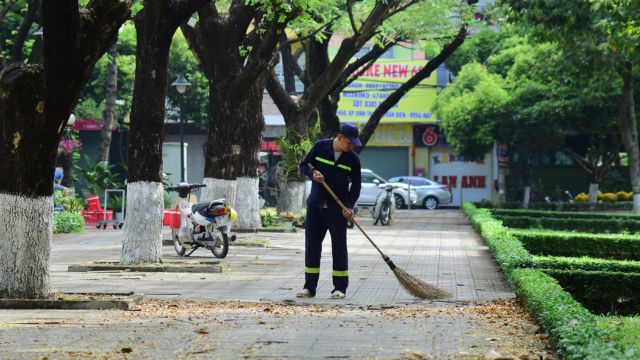
Good housekeeping safety combines risk assessment, suitable equipment and safe working habits. Cleaning staff should be involved in identifying difficult tasks because they often understand the practical problems involved.
Good workplace lifting techniques ergonomics can include improving storage height, reducing carrying distances, choosing lighter equipment and maintaining trolley wheels. Workers should use handling aids where provided and follow the agreed safe system.
Managers should review incidents and near misses. If several workers experience the same difficulty, improving the task or equipment may be more effective than repeatedly retraining individuals.
The aim is to make safe working the easiest and most practical way to complete the job. This is the foundation of effective manual handling safety.
Key Takeaways
Manual handling in professional cleaning involves much more than lifting. Cleaners may lift, carry, push, pull and repeatedly move equipment during their working day.
Under the manual handling safety Operations Regulations in Great Britain, employers should first avoid hazardous handling where reasonably practicable, then assess unavoidable risks and reduce them.
Important controls include better task design, suitable trolleys, manageable loads, accessible storage, maintained floors and realistic workloads.
Good workplace lifting techniques remain useful, but they should support—not replace—effective risk reduction. Training should be practical and task-specific, with refresher training provided when circumstances or performance indicate a need.
Ultimately, manual handling safety depends on treating cleaning work as an ergonomic and organisational issue, not simply a test of physical strength.
FAQ
What is manual handling in cleaning?
manual handling safetymeans transporting or supporting a load using bodily force.
For cleaners, it can include lifting buckets, carrying supplies, pushing housekeeping trolleys, pulling equipment, moving waste and handling cleaning machines.
Pushing and pulling are manual-handling activities even when the load itself is supported on wheels.
Why is manual handling training important?
Training helps workers understand risk factors, safer handling techniques, mechanical aids and the system of work that applies to their tasks.
However, training works only as part of a wider risk-control approach.
Employers should first avoid unnecessary hazardous handling and improve the task, equipment or environment where reasonably practicable.
How can cleaners prevent lifting injuries?
The best approach is to reduce hazardous lifting in the first place.
Where lifting remains necessary, workers should plan the movement, keep the load reasonably close, maintain a stable position, get a secure hold, avoid twisting and move smoothly.
They should not attempt a load they cannot comfortably control.
Using a trolley or getting assistance may be safer.
What equipment helps reduce manual handling risks?
Depending on the task, useful equipment can include appropriately designed cleaning trolleys, lifting aids, wheeled bins, lighter cleaning machines and adjustable tools.
Equipment needs to be suitable and properly maintained.
A trolley with poor wheels can actually increase pushing and pulling risk.
Who needs manual handling training?
Workers exposed to relevant manual-handling risks should receive information and training appropriate to their work.
The content should reflect the actual task.
For cleaners, that may include moving waste, handling chemicals and supplies, pushing trolleys and using cleaning machinery.
A generic training certificate may not cover all of those workplace-specific risks.
What are common manual handling hazards?
Common hazards include heavy or awkward loads, repetitive movement, twisting, excessive reaching, poor grip, restricted spaces, uneven floors and poorly maintained equipment.
High work rates and insufficient time can also increase risk.
For cleaners, repetitive mopping, pushing heavy trolleys and manoeuvring machinery can be just as relevant as conventional lifting.
How often should training be completed?
There is no universal UK legal requirement stating that manual-handling training must be repeated annually.
HSE guidance recommends planned training and updates where necessary.
Retraining may be appropriate following changes to tasks or equipment, incidents, unsafe practice or evidence that staff no longer understand the correct procedure.
Employers may choose their own proportionate refresher schedule based on risk.
What are safe lifting techniques?
HSE’s general guidance includes planning the lift, keeping the load close where possible, maintaining a stable stance, obtaining a good hold, avoiding twisting and moving smoothly.
The worker should not lift more than they can easily manage and should seek assistance where necessary.
These workplace lifting techniques support risk control but should not be used as a substitute for better equipment, lighter loads or improved task design.

Conclusion
Effective manual handling safety for cleaners starts with recognising how physically varied cleaning work can be.
Carrying supplies, pushing trolleys, moving cleaning machines and performing repetitive cleaning movements can all contribute to musculoskeletal risk. Employers should therefore assess the real work rather than focus only on occasional heavy lifting.
Good cleaning staff safety follows the legal hierarchy: avoid hazardous handling where possible, assess what cannot be avoided and reduce the remaining risk. Improvements in workplace ergonomics, equipment maintenance, storage and workload can often achieve more than technique training alone.
Safe workplace lifting techniques remain important, and well-designed cleaning safety training can help workers understand them. However, neither a certificate nor a generic manual handling safety course removes the employer’s responsibility to manage the actual workplace risks.
For Skills Pack learners studying housekeeping safety, injury prevention UK principles and relevant health and safety regulations, the central lesson is practical: make the job safer first, then train workers to perform the remaining handling tasks correctly. That combination provides a much stronger foundation for preventing injuries than simply telling cleaners to lift carefully.