School Floor Cleaning: Methods, Equipment and Safety Guide
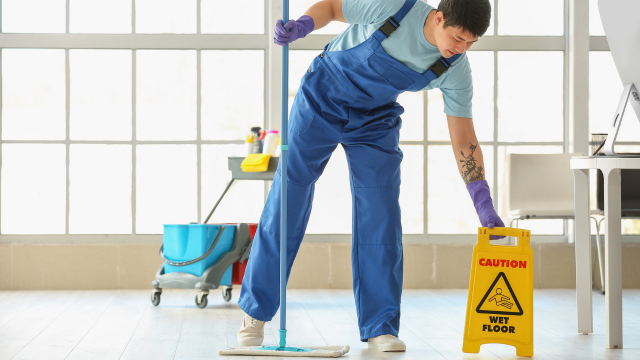

School floors experience constant use throughout the academic year. From busy corridors and classrooms to dining halls, toilets and sports facilities, flooring is exposed to muddy footwear, food spillages, dust, moisture and everyday wear.
Maintaining these surfaces requires more than occasional sweeping or mopping. Different flooring materials need appropriate cleaning methods, and every task must be carried out without creating unnecessary risks for pupils, teachers or cleaning staff.
Professional school floor cleaning helps educational establishments maintain hygienic, presentable and safer environments while protecting flooring from avoidable damage.
However, effective floor care involves several considerations. Cleaners must select suitable equipment, understand when disinfection is necessary, handle chemicals responsibly and ensure that wet surfaces are safe before allowing people to return.
For UK schools, cleaning arrangements should reflect relevant public health guidance, workplace safety requirements and flooring manufacturers’ instructions.
This guide explains practical school floor cleaning procedures, including daily maintenance, deep cleaning, mopping, machine scrubbing and carpet care. It also covers cleaning frequency, health and safety, professional equipment and the training needed to maintain consistent standards.
What Is School Floor Cleaning?
School floor cleaning involves removing dirt, debris, spillages and contamination from flooring throughout an educational establishment.
It includes routine activities such as vacuuming, sweeping and damp mopping, alongside more intensive treatments such as machine scrubbing and carpet extraction.
For example, a primary school classroom may require daily removal of dust, crumbs and dirt brought in from outside.
A secondary school corridor may need additional cleaning because hundreds of pupils use it between lessons.
Meanwhile, a sports hall could require specialist maintenance to protect its particular floor surface.
School flooring may include:
- Vinyl and linoleum.
- Ceramic and porcelain tiles.
- Rubber flooring.
- Sealed timber.
- Carpet and carpet tiles.
- Specialist sports flooring.
Each material has different maintenance requirements.
The purpose of professional cleaning is to maintain cleanliness, preserve flooring condition and manage contamination without damaging surfaces or compromising safety.
Why School Floor Cleaning Is Important
Clean floors contribute to the overall condition and usability of school premises.
However, the benefits extend beyond appearance.
Supporting Hygiene
School floors can collect dirt, food residue and potentially contaminated materials.
Appropriate cleaning helps remove these substances.
The UK Health Security Agency (UKHSA) identifies environmental cleaning as part of infection prevention in educational settings.
Preventing Slips and Trips
Wet floors, loose debris and damaged flooring can create hazards.
The Health and Safety Executive (HSE) explains that effective cleaning is important for reducing contamination-related slips.
Protecting Flooring
Dirt and grit can contribute to surface wear.
Suitable maintenance may help preserve flooring appearance and condition.
Creating Comfortable Learning Spaces
Well-maintained classrooms and shared facilities provide a more pleasant environment for pupils and staff.
Effective school floor maintenance requires consistent attention rather than relying entirely on occasional intensive cleaning.
School Floor Cleaning Standards and Hygiene Requirements
School floor cleaning standards establish the methods, frequencies and quality expectations used to maintain flooring.
There is no single UK-wide statutory cleaning schedule requiring every school floor to be cleaned at identical intervals.
Requirements depend on the flooring, its use and the risks involved.
Public Health Guidance
The UKHSA’s infection prevention guidance for educational settings, updated in September 2026, recommends written cleaning schedules.
These should identify the cleaning activities, frequency and responsible personnel.
Workplace Safety
The HSE requires relevant workplace risks, including slips and trips, to be assessed and controlled.
Cleaning Specifications
The Department for Education’s guidance on buying school cleaning services distinguishes routine cleaning from periodic and emergency cleaning.
Flooring Requirements
Manufacturers may specify appropriate detergents, maintenance products and machine settings.
Schools should establish measurable cleaning standards while recognising that legal requirements and guidance differ across the UK’s four nations.
Key School Floor Cleaning Responsibilities
School cleaners are responsible for completing assigned cleaning activities and reporting problems that require attention.
Typical responsibilities include:
- Removing loose dirt and debris.
- Vacuuming carpeted floors.
- Sweeping and damp mopping suitable hard floors.
- Responding promptly to spillages.
- Using appropriate cleaning chemicals and equipment.
- Cleaning high-traffic areas.
- Following infection prevention procedures.
- Managing wet-floor hazards.
- Inspecting flooring for damage.
- Recording completed work and outstanding concerns.
Some tasks may require specialist contractors.
For example, damaged sports flooring or extensive stripping and recoating should not be undertaken without suitable expertise.
Cleaning staff should also know when a task requires maintenance rather than further cleaning.
Loose tiles, leaks and damaged flooring must be reported to the appropriate facilities personnel.
A Typical School Floor Cleaning Routine
A typical school cleaning routine begins with an inspection of the areas requiring attention.
The cleaner checks for spillages, litter, loose debris and damaged flooring.
After preparing the appropriate equipment, they remove dry dirt from the floor.
Carpeted areas may be vacuumed, while hard floors may require dust mopping or another suitable dry-cleaning method.
The cleaner then treats any ordinary stains or contamination using an appropriate product.
Where necessary, suitable hard floors are damp mopped or machine cleaned.
Throughout the process, access must be managed to prevent pupils and employees entering hazardous areas.
Before reopening the space, the cleaner checks that the floor is clean, dry and free from equipment.
Finally, the completed work and any outstanding issues are recorded.
The precise routine varies according to the room, flooring and time available.
School Floor Cleaning Methods
Different flooring materials and contamination levels require different approaches.
Dry Cleaning
Vacuuming and suitable dust mopping remove loose debris without introducing water.
These methods are useful for everyday maintenance.
Damp Mopping
A controlled amount of cleaning solution removes dirt from compatible hard floors.
The objective is to clean effectively without leaving excessive moisture.
Machine Scrubbing
Suitable machines can help clean larger hard-floor areas.
Some scrubber-dryers also recover dirty liquid during operation.
Carpet Extraction
Extraction equipment removes embedded dirt from compatible textile flooring.
Spot Cleaning
Small spills or localised marks can often be treated without cleaning an entire room.
Disinfection
Disinfection may be required after particular contamination events or under enhanced infection prevention arrangements.
The correct method depends on the surface, the type of contamination and the school’s risk assessment.
Daily School Floor Cleaning Procedures
Daily cleaning should follow an organised sequence that reduces contamination and unnecessary disruption.
Step 1: Inspect the Area
Identify visible dirt, wet patches, hazards and damaged surfaces.
Step 2: Prepare Equipment
Select the tools and products suitable for the flooring.
Step 3: Control Access
Where necessary, restrict entry before beginning wet cleaning.
Step 4: Remove Loose Debris
Vacuum or use an appropriate dry-cleaning method.
Step 5: Treat Localised Contamination
Remove ordinary spills using suitable spot-cleaning procedures.
Step 6: Clean the Floor
Damp mop or machine clean compatible surfaces where required.
Step 7: Recover Moisture
Remove remaining cleaning solution and prevent access until the surface is safe.
Step 8: Inspect and Record
Check the result, return equipment to storage and report outstanding problems.
These steps should be adapted to individual flooring materials and the school’s cleaning specification.
Deep Cleaning School Floors
Deep cleaning involves more intensive treatment than everyday maintenance.
It aims to remove accumulated contamination and address areas that routine cleaning cannot adequately maintain.
Preparing for Deep Cleaning
The cleaner or contractor should inspect the flooring and establish the appropriate method.
Furniture may need moving, subject to safe manual handling procedures.
Choosing Equipment
Different surfaces may require machine scrubbing, extraction or specialist treatment.
Applying Suitable Products
Products must be compatible with the flooring and any existing protective finish.
Removing Residues
Dirty cleaning solutions should be recovered rather than redistributed.
Inspecting Results
After cleaning, the floor should be examined for remaining contamination, damage and moisture.
Scheduling Work
Schools often arrange intensive cleaning during holidays or inset days.
However, the appropriate interval depends on flooring condition and use.
Deep cleaning should complement regular maintenance rather than replace it.
Hard Floor Cleaning Procedures
Hard floors are common in corridors, classrooms, dining areas and washrooms.
However, hard flooring materials are not all maintained in the same way.
Vinyl and Linoleum
These surfaces commonly require regular dust removal and damp cleaning with suitable products.
Excessive water and incompatible chemicals should be avoided.
Ceramic and Porcelain Tiles
Tiles may tolerate wet cleaning, but grout and surface finishes require consideration.
Certain acidic products can damage cement-based grout or unsuitable surfaces.
Rubber Flooring
Rubber floors require compatible detergents and maintenance methods.
Aggressive chemicals or abrasive equipment may cause damage.
Sealed Timber
Wooden flooring should generally be cleaned using controlled moisture and manufacturer-approved products.
Standing water can damage timber and its finish.
Specialist Sports Floors
Sports flooring may have particular requirements for slip resistance and surface performance.
Schools should follow the manufacturer’s maintenance specification.
A product suitable for one hard floor may be unsuitable for another.
Carpeted Floor Cleaning Procedures
Carpeted floors require different methods from hard surfaces.
Routine classroom floor cleaning should take account of carpet construction and the level of use.
Regular Vacuuming
Vacuuming removes loose dust, crumbs and dirt.
High-traffic areas may require more frequent attention.
Spot Treatment
Ordinary spills should be addressed promptly using products compatible with the carpet fibres.
Blotting is generally preferable to aggressive rubbing.
Periodic Extraction
Hot water extraction can remove accumulated soil from suitable carpets.
However, not every carpet or backing system tolerates the same moisture levels.
Low-Moisture Cleaning
Some carpets may benefit from encapsulation or other approved low-moisture methods.
Drying
Carpets must be sufficiently dry before normal access resumes.
The choice of method should follow the carpet manufacturer’s guidance.
Wet cleaning should not be assumed to sterilise a carpet.
School Floor Mopping and Disinfection
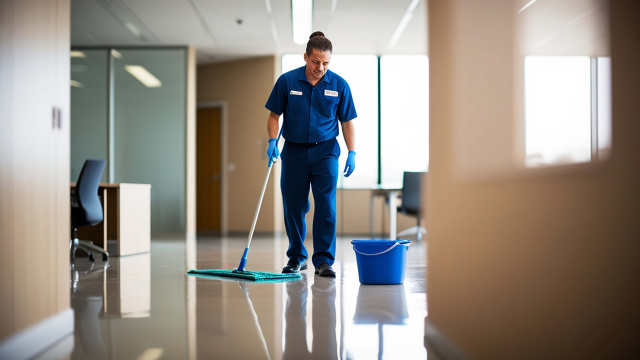
Mopping is a common method for cleaning suitable hard flooring.
However, cleaning and disinfection are different activities.
Routine Mopping
A suitable detergent and controlled amount of water will normally remove everyday dirt.
UKHSA guidance explains that detergent and water are generally sufficient for many routine environmental cleaning tasks.
Correct Mopping Technique
Use clean equipment and work systematically.
Avoid repeatedly dipping dirty equipment into the same educational cleaning solution without appropriate controls.
When Disinfection Is Necessary
Additional disinfection may be required following bodily fluid contamination or during particular infectious disease outbreaks.
Selecting Disinfectants
Products must be effective for the intended purpose and compatible with the surface.
Follow the manufacturer’s dilution and contact-time requirements.
Avoiding Unnecessary Disinfection
Routine use of strong disinfectants on every floor is not automatically necessary or beneficial.
The correct approach depends on actual infection risks and the school’s approved cleaning procedures.
Removing Stains and Spills from School Floors
Spillages are common in classrooms, corridors and dining areas.
Prompt response can prevent staining and reduce slip risks.
Ordinary Water Spills
Restrict access where necessary, absorb the liquid and leave the floor dry.
Food and Drink
Remove suitable solid debris before applying an appropriate educational cleaning method.
Greasy residue may require a compatible detergent.
Paint and Craft Materials
Identify the material before choosing a cleaning product.
Some solvents can damage flooring.
Mud and Dirt
Remove excess material using an appropriate method before cleaning the surface.
Bodily Fluid Spills
Blood, vomit, faeces and similar contamination require separate infection prevention procedures.
UKHSA recommends appropriate PPE and disposable materials, followed by suitable educational cleaning and disinfection.
Reusable mops should not be used to collect bodily fluid spills.
Unknown Substances
Potentially hazardous materials should be isolated and referred to appropriately trained personnel.
The priority is safe removal, not simply eliminating visible marks.
School Floor Cleaning Equipment
The choice of equipment affects cleaning effectiveness, efficiency and safety.
Vacuum Cleaners
Commercial vacuums remove loose debris from carpets and compatible hard floors.
Dust Mops
Suitable dust mops help collect dry contamination from hard surfaces.
Microfibre Mops
Microfibre systems can support controlled damp cleaning and may reduce unnecessary water use.
Buckets and Trolleys
Cleaning trolleys help organise equipment and transport supplies.
Scrubber-Dryers
These machines scrub suitable hard floors and recover dirty liquid.
Carpet Extractors
Extractors are used for periodic carpet educational cleaning.
Spill Kits
Schools should maintain appropriate equipment for responding to bodily fluid spills.
Protective Equipment
Gloves, aprons and other PPE may be required according to the task.
Equipment should be maintained, inspected and stored securely away from pupils.
School Floor Cleaning Products and Chemicals
Cleaning products should be selected according to the flooring, contamination and intended method.
Neutral Detergents
Suitable neutral educational cleaning products are commonly used for routine maintenance of compatible flooring.
Specialist Floor Cleaners
Some surfaces require products designed for particular materials or finishes.
Degreasers
Greasy contamination may require a suitable degreasing product.
Disinfectants
Approved disinfectants may be necessary for particular contamination risks.
They should not automatically replace normal detergents.
Carpet Cleaning Solutions
Carpet products must be compatible with the fibres and backing.
Surface Compatibility
Aggressive alkaline products, acids and solvents can damage certain floor finishes.
Correct Concentration
Using excessive cleaning product can leave residues and potentially increase slip risks.
Always follow manufacturer instructions and the relevant chemical risk assessment.
Floor Scrubbing and Machine Cleaning
Machine cleaning can improve efficiency when maintaining larger floor areas.
However, machines must be suitable for the flooring and used by trained employees.
Preparing the Area
Remove obstacles and inspect for damaged surfaces.
Control pedestrian access before educational cleaning begins.
Selecting the Machine
The appropriate machine depends on the floor material, size and contamination level.
Choosing Brushes or Pads
Incorrect pads or excessive pressure can damage flooring.
Applying Cleaning Solution
Use a compatible product at the recommended concentration.
Recovering Dirty Water
Scrubber-dryers can help remove educational cleaning solution during operation.
Inspecting the Floor
Check for remaining moisture, detergent residue and missed areas.
Maintaining the Machine
Clean recovery tanks and maintain brushes, filters and other components.
Machine cleaning is not automatically preferable for every room.
Small classrooms and cluttered areas may be more suitable for controlled manual methods.
School Floor Drying and Maintenance
Drying is a critical part of safe floor cleaning.
Even a thin film of water can make smooth flooring slippery.
The HSE’s floor-cleaning guidance recommends leaving smooth floors dry after educational cleaning or restricting access until drying is complete.
Remove Excess Moisture
Use appropriate extraction, a dry mop or a suitable squeegee where compatible.
Manage Access
Barriers or temporary closure may be required.
Maintain Safe Routes
Where appropriate, clean in sections so that an unaffected route remains available.
Emergency exits must not be obstructed.
Check Before Reopening
A floor should not be reopened merely because the cleaner has finished mopping.
The responsible person should confirm that the surface is safe.
Maintain Flooring Condition
Cleaning staff should report damaged tiles, loose edges and deteriorating finishes.
Proper drying and maintenance protect both floor users and the building.
School Floor Cleaning Safety Procedures
School floor cleaning presents hazards that require careful management.
The HSE’s guidance on slips and trips in education highlights the importance of controlling wet surfaces, obstructions and cleaning-related risks.
Plan Cleaning Times
Where practical, schedule extensive wet educational cleaning outside busy periods.
Restrict Access to Wet Floors
Physical barriers are more effective than warning signs alone.
Signs provide information but do not prevent entry.
Manage Cables and Hoses
educational cleaning equipment should not create unnecessary trip hazards.
Inspect Electrical Equipment
Machines should be used according to their instructions and appropriate electrical safety arrangements.
Control Manual Handling
Heavy machines and furniture may require suitable handling equipment or assistance.
Maintain Emergency Access
Cleaning operations must not block evacuation routes.
Report Hazards
Damaged flooring and persistent spillages should be reported promptly.
Safety procedures should be documented, understood and regularly reviewed.
Safe Handling of Cleaning Chemicals
Cleaning chemicals can create risks involving skin contact, eye exposure and respiratory irritation.
COSHH Requirements
In Great Britain, the Control of Substances Hazardous to Health Regulations 2002 require employers to assess and control relevant hazardous-substance exposure.
Northern Ireland has corresponding legislation and enforcement arrangements.
The HSE’s cleaning-sector COSHH guidance explains employers’ responsibilities.
Follow Instructions
Use products at the specified concentration and by approved methods.
Never Mix Chemicals
Bleach must not be mixed with acidic cleaners or ammonia-containing products.
Dangerous gases may be released.
Use Secure Storage
Store chemicals in labelled containers inaccessible to pupils.
Check Safety Information
Safety data sheets support risk assessments but are not themselves complete COSHH assessments.
Train Staff
Employees need to know how to handle products, respond to accidental exposure and report incidents.
Using fewer hazardous products where practicable can also reduce unnecessary exposure.
Personal Protective Equipment for Floor Cleaning
The appropriate PPE depends on the educational cleaning activity and identified risks.
There is no single universal PPE combination for all school floor cleaning.
Protective Gloves
Suitable gloves help protect against relevant chemical and contamination hazards.
The material should be compatible with the products used.
Protective Footwear
Slip-resistant footwear may be necessary where risk assessments identify significant slip hazards.
Aprons
Protective aprons can reduce contamination of clothing during particular tasks.
Eye Protection
Splash-prone activities may require safety glasses or goggles.
Bodily Fluid Spill Response
UKHSA recommends disposable gloves and aprons where exposure to bodily fluids is anticipated.
Additional face and eye protection may be needed if splashing is possible.
Hand Hygiene
Employees should wash their hands after removing gloves and completing contaminated tasks.
PPE should be provided and used according to the risk assessment.
It must not replace other necessary safety controls.
School Floor Cleaning Schedule and Frequency
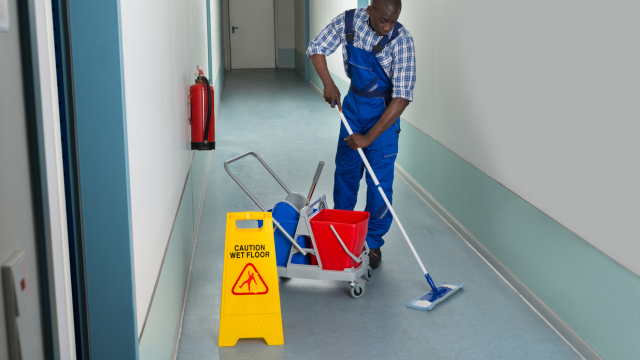
Cleaning schedules should reflect floor use, contamination and safety requirements.
A busy entrance may need more attention than a rarely used meeting room.
The following example provides a practical starting point.
| Area | Routine cleaning | Additional attention |
| Classrooms | Daily inspection and suitable cleaning | Prompt treatment of spills |
| Corridors and entrances | Daily cleaning, with additional checks as needed | Extra attention during wet weather |
| Toilets and washrooms | Daily cleaning and risk-based daytime checks | Immediate contamination response |
| Dining areas | Cleaning after relevant use | Removal of food and grease |
| Carpeted rooms | Regular vacuuming | Periodic extraction or low-moisture cleaning |
| Sports halls | Manufacturer-approved routine care | Specialist periodic maintenance |
These are illustrative arrangements rather than statutory educational cleaning frequencies.
Periodic Cleaning
Schools may schedule intensive floor cleaning during holidays or inset days.
Emergency Cleaning
Hazardous spillages require prompt attention regardless of the normal schedule.
Outbreak Management
Additional cleaning may be necessary following UKHSA guidance or advice from the relevant public health authority.
Schedules should be reviewed when floor usage or conditions change.
Professional School Floor Cleaning Services
Some schools employ external contractors for routine or specialist floor care.
Professional services may be useful for large buildings, deep educational cleaning and specialist flooring.
Selecting a Contractor
Schools should assess the provider’s relevant experience and proposed methods.
Floor Compatibility
The contractor should understand the materials being cleaned.
Equipment and Chemicals
Products and machines must be suitable for the surfaces and tasks.
Risk Assessments
The educational cleaning plan should address wet floors, chemicals, machinery and pupil access.
Safeguarding and Site Access
Contractors must follow the school’s safeguarding and access arrangements.
Cleaning Specifications
The Department for Education’s buying guidance recommends defining the tasks, frequency and periodic cleaning requirements.
Quality Monitoring
Schools should inspect completed work and address problems promptly.
Professional services can support maintenance, but they do not remove the school’s need for appropriate oversight.
School Cleaner Training and Best Practices
School cleaners require practical instruction in educational cleaning methods, equipment, chemicals and workplace safety.
Understanding Floor Materials
Employees should know why vinyl, timber, tiles and carpet require different treatments.
Equipment Training
Staff need instruction before operating unfamiliar scrubber-dryers, extractors or other machines.
Infection Prevention
Cleaners should understand cross-contamination risks and when enhanced disinfection is required.
Chemical Safety
Relevant COSHH assessments and product instructions must be explained.
Slip Prevention
Employees should understand safe working times, barriers and drying procedures.
Training with Skills Pack
Skills Pack offers online courses relevant toeducational cleaning and general workplace safety.
Its Level 5 Certificate in Cleaning introduces professional cleaning as a subject. However, the published page does not provide a fully verified detailed syllabus or establish the regulated status of the Level 5 designation.
The Level 1, 2, 3 Health and Safety in the Workplace course includes workplace hazards, PPE, equipment safety, chemical exposure and incident reporting.
These programmes may support general awareness.
However, online courses cannot replace school-specific instruction, practical machine training or demonstrated competence.
How to Maintain Clean School Floors
Maintaining school floors requires a consistent programme rather than occasional intensive cleaning.
Establish Clear Responsibilities
Assign educational cleaning areas and explain expected standards.
Provide Suitable Equipment
Employees need appropriate tools, products and sufficient time.
Inspect Cleaning Results
Supervisors should check visible cleanliness, moisture and potential hazards.
Maintain Entrance Matting
Suitable mats can reduce the amount of dirt and moisture carried indoors.
Respond to Damage
Loose tiles, worn carpet and damaged floor finishes should be reported for repair.
Keep Cleaning Records
Records help identify completed tasks and recurring concerns.
Review Cleaning Methods
Changes in floor condition, pupil numbers or building use may require different arrangements.
Effective educational cleaning depends on communication between school management, educational cleaning staff, caretakers and contractors.
The goal is to maintain consistently safe and suitable flooring throughout the school year.
Key Takeaways
Professional school floor cleaning combines appropriate techniques, reliable equipment and effective safety procedures.
The main principles are:
- Identify the flooring material before selecting a cleaning method.
- Remove loose debris before damp cleaning.
- Use suitable products and follow manufacturer instructions.
- Distinguish routine cleaning from disinfection.
- Respond promptly to hazardous spillages.
- Prevent cross-contamination between different school areas.
- Control access to wet floors until they are safe.
- Follow COSHH requirements and use suitable PPE.
- Arrange periodic deep cleaning according to floor condition.
- Train employees and monitor cleaning standards.
Effective floor care helps schools maintain flooring appearance, hygiene and safe access.
Frequently Asked Questions (FAQ)
How often should school floors be cleaned?
School floors should be cleaned according to their use, contamination and risk level.
Busy classrooms, corridors and dining areas generally require daily cleaning.
High-traffic locations may need additional inspections during the school day.
Spillages should be addressed promptly.
There is no universal statutory frequency for every school floor in the UK.
What is the best method for cleaning school floors?
The best method depends on the flooring material.
Suitable hard floors may be cleaned using damp mopping or machine scrubbing.
Carpeted areas generally require vacuuming and periodic specialist cleaning.
The cleaning method should remove contamination without damaging the surface or creating slip hazards.
Manufacturer guidance should always be considered.
What equipment is used for school floor cleaning?
Common equipment includes commercial vacuum cleaners, dust mops, microfibre mops, buckets and cleaning trolleys.
Larger areas may benefit from scrubber-dryers.
Carpet extraction machines are useful for suitable textile flooring.
Spill kits and appropriate PPE are also important.
Equipment must be suitable for the task and maintained properly.
What cleaning products are suitable for school floors?
Suitable products depend on the flooring material and contamination.
Compatible neutral detergents are commonly used for routine hard-floor maintenance.
Specialist products may be required for grease, stains or particular surfaces.
Disinfectants should be used where appropriate.
All chemicals must be handled according to manufacturer instructions and relevant safety assessments.
How should school floors be disinfected?
Where disinfection is required, visible contamination should first be removed unless an approved combined cleaning and disinfecting procedure is used.
Apply a suitable disinfectant according to the product’s instructions.
Observe the required concentration and contact time.
The product must be compatible with the flooring.
Routine disinfection of every school floor is not automatically necessary.
How should spills be cleaned from school floors?
Restrict access where needed and identify the substance.
Ordinary liquid spills can often be absorbed and removed using an appropriate cleaning method.
The floor should then be made safe and dry.
Blood, vomit and other bodily fluids require the school’s approved infection prevention procedures, suitable PPE and disposable materials.
Unknown hazardous substances should be escalated.
What PPE should school cleaners use?
PPE should reflect the cleaning activity and risk assessment.
Suitable gloves, protective footwear, aprons and eye protection may be required.
Bodily fluid contamination may require additional disposable PPE.
Employees must receive instruction on correct use.
Gloves do not replace handwashing or other necessary safety measures.
How often should school floors be deep cleaned?
Deep cleaning frequency depends on floor condition, material and usage.
Many schools schedule intensive cleaning during holidays or quieter periods.
High-traffic areas may require additional periodic treatment.
There is no universal requirement to deep clean every school floor at the same interval.
Regular inspections and manufacturer guidance should inform the schedule.
How can schools prevent slips and falls during floor cleaning?
Schedule extensive wet cleaning when pedestrian traffic is low.
Use appropriate cleaning methods and remove excess moisture.
Restrict access using effective barriers rather than relying only on warning signs.
Keep cables and equipment clear of walkways.
Inspect floors before reopening them.
Damaged flooring and recurring hazards should be reported promptly.

Conclusion
Effective school floor cleaning is an important part of maintaining hygienic, comfortable and safer educational environments.
School floors experience constant use and require appropriate cleaning methods to remove dirt, manage contamination and preserve their condition.
However, successful floor care depends on more than regular mopping.
Cleaning teams must understand flooring materials, select suitable equipment, handle chemicals responsibly and prevent slips during and after cleaning.
A structured school floor maintenance programme should combine everyday cleaning, prompt spill response and periodic deep cleaning according to the needs of each area.
For schools, practical training and regular supervision are essential to maintaining consistent standards.
Professional contractors may provide specialist support, but effective routine maintenance remains the foundation of long-term floor care.
By combining appropriate classroom floor cleaning, reliable safety procedures and consistent educational cleaning practices, schools can maintain floors that support everyday learning and movement.
The most effective approach is preventative, practical and tailored to the flooring and activities within each school.