Warehouse Cleaning Checklist: Daily, Weekly and Monthly Tasks
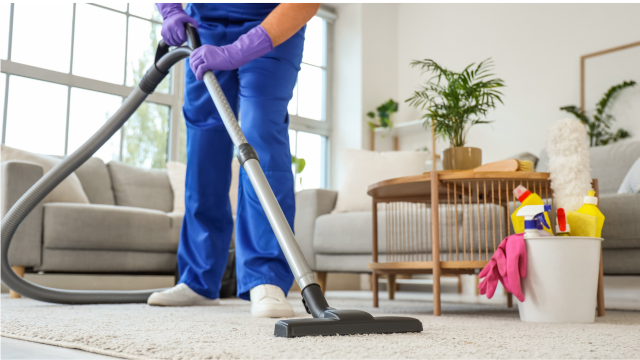

A practical warehouse cleaning checklist helps turn good housekeeping from an occasional deep-cleaning exercise into a repeatable part of everyday warehouse operations.
Warehouses continuously generate dust, packaging waste, pallet fragments, spill risks and dirt from vehicle and pedestrian traffic. Without a structured system, small problems can quickly become slip, trip, hygiene, pest or equipment issues.
The challenge is not simply deciding that a warehouse should be “clean”. Employers need to identify what should be cleaned, how often, by whom, with which equipment and to what standard.
A good cleaning schedule therefore combines daily housekeeping with weekly and monthly tasks, while allowing immediate action whenever a spill or safety hazard appears. It should also connect cleaning with warehouse maintenance, because recurring leaks, damaged flooring or defective equipment cannot be solved permanently with another mop or scrubber.
This guide provides a practical framework for building a daily, weekly and monthly warehouse hygiene checklist, while explaining COSHH, PPE, loading-bay safety, pest prevention and inspection.
What Is a Warehouse Cleaning Checklist?
A warehouse cleaning checklist is a structured list of cleaning and housekeeping tasks assigned to defined areas and frequencies.
It can identify:
- what needs cleaning;
- how often;
- who is responsible;
- which equipment is required;
- which chemicals are authorised;
- what safety controls apply; and
- how completion is checked.
The checklist might be divided into daily, weekly and monthly activities.
However, it should not become so rigid that employees ignore contamination simply because a task is “not due until Friday”.
Some actions are event-driven rather than calendar-driven.
A liquid spill should be dealt with promptly.
Loose stretch wrap in a forklift route should be removed immediately.
Damaged chemical packaging should be managed through the relevant spill or hazardous-substance procedure.
The schedule therefore sets minimum routine frequencies, while risk determines when additional cleaning is required.
Why Warehouses Need a Regular Cleaning Schedule
warehouse maintenance contamination develops continuously.
Common examples include:
cardboard, pallet wood, labels, plastic film, straps, dust, mud, oil and damaged products.
These can affect much more than appearance.
Loose plastic can become a slip hazard.
Packaging can obstruct pedestrian routes.
Oil may affect forklift and pedestrian safety.
Dust and waste can attract pests.
Accumulated contamination around equipment can also make defects harder to identify.
A regular cleaning schedule provides consistency.
Instead of relying on employees to notice everything informally, tasks are assigned and reviewed.
This can also help identify patterns.
If the same loading-bay corner needs oil removed every morning, the problem may not be insufficient cleaning. It may indicate a leaking vehicle or equipment defect.
Good cleaning systems therefore support both safety and maintenance.
Warehouse Cleaning Risk Assessment
Before building the checklist, assess the warehouse maintenance.
Consider the building layout, traffic, products, machinery and cleaning methods.
Important areas include:
- forklift routes;
- pedestrian routes;
- loading bays;
- goods-in;
- racking;
- waste areas;
- chemical storage;
- staff facilities;
- high-level surfaces; and
- machinery zones.
Then consider the cleaning hazards themselves.
A scrubber dryer moving through an active vehicle route can introduce a collision risk.
Wet mopping can create a slippery surface.
A vacuum cable can create a trip hazard.
Chemical dilution can expose workers to splashes.
High-level dust removal can create work-at-height risks.
The assessment should also identify substances generated by warehouse maintenance operations.
For example, hazardous dust may require vacuum cleaning rather than ordinary dry sweeping.
Frequency should then reflect the risk.
A heavily used loading bay may require several inspections per shift, while a rarely accessed storage area may only require periodic cleaning.
Daily Warehouse Cleaning Checklist
Daily tasks should focus on contamination and hazards that develop quickly.
A practical daily checklist may include:
- remove loose packaging, film and straps;
- clear pallet fragments and broken packaging;
- inspect pedestrian walkways;
- remove obvious floor contamination;
- respond to spills immediately;
- empty overflowing waste containers;
- keep emergency exits and fire routes clear;
- check goods-in and loading zones;
- inspect entrances for rainwater or mud;
- remove accessible dust and debris around workstations;
- check cleaning equipment after use; and
- report leaks, broken flooring or equipment defects.
High-traffic areas may need more than one daily check.
A warehouse maintenance receiving deliveries continuously cannot assume a single 7 am sweep will keep the building safe until closing.
Responsibility should also be defined.
“Warehouse team” is often too vague.
A stronger system might assign one employee to first-shift housekeeping and a supervisor to verify completion.
Weekly Warehouse Cleaning Checklist
Weekly tasks can go beyond immediate housekeeping and address slower accumulation.
Suitable activities may include:
- deeper machine cleaning of selected floors;
- detailed cleaning of floor edges;
- cleaning beneath accessible storage locations;
- wiping lower-level racking;
- cleaning doors, barriers and bollards;
- inspecting cleaning-equipment condition;
- cleaning waste-container areas;
- checking drainage channels;
- reviewing spill-kit contents;
- cleaning staff lockers or welfare areas; and
- checking for signs of pest activity.
Weekly inspections should also assess whether daily cleaning is working.
If waste repeatedly accumulates beside one packing station, simply adding another weekly clean may not solve the problem.
The packaging workflow or bin positioning may need changing.
A good industrial cleaning checklist therefore asks both:
Has the area been cleaned?
and:
Why does the contamination keep appearing?
Monthly Warehouse Cleaning Checklist
Monthly or periodic cleaning can focus on areas that gradually accumulate dust or are harder to reach.
Examples include:
- high-level surfaces where safe access is planned;
- overhead pipes or accessible structural surfaces;
- less frequently used storage zones;
- detailed racking cleaning;
- wall and door surfaces;
- deep-cleaning beneath movable equipment;
- detailed inspection of floor condition;
- cleaning behind fixed workstations where accessible;
- review of chemical-storage cleanliness;
- deep-cleaning waste zones; and
- inspection of cleaning machines and accessories.
Not every task needs to occur monthly.
Some may be quarterly or six-monthly depending on risk.
High-level cleaning, for example, should not be scheduled merely because the calendar says “monthly” if it unnecessarily introduces work-at-height risk.
Frequency should be justified by contamination and site conditions.
Warehouse Floor Cleaning Tasks
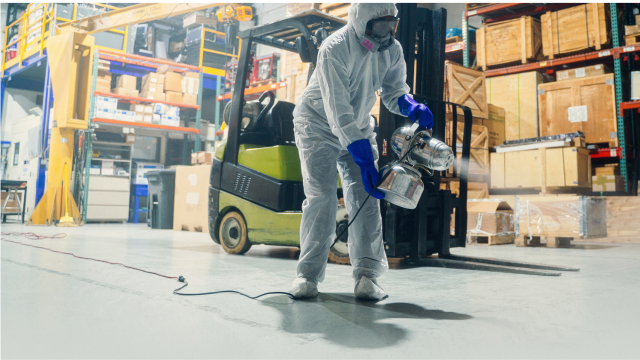
Floors are one of the most important parts of a warehouse maintenance checklist because pedestrians and vehicles depend on them.
Routine tasks may include:
- removing loose debris;
- sweeping or vacuuming;
- spot-cleaning spills;
- machine scrubbing;
- removing tyre or oil contamination;
- cleaning entrance zones; and
- inspecting cracks or damaged surfaces.
Select the method according to contamination.
Fine dust may be better vacuumed than swept.
Greasy contamination may require an appropriate detergent and mechanical action.
Small isolated spills should normally be spot-cleaned rather than unnecessarily wetting a large aisle.
Where wet cleaning is used, HSE principles are particularly relevant.
Clean during quieter periods where possible, work in sections and prevent people entering slippery areas until the surface is safe.
A warehouse maintenance floor should not simply look clean. It should be safely usable afterwards.
Warehouse Racking and Shelving Cleaning
Racking and shelving can accumulate dust, fragments of packaging and damaged stock.
Low-level accessible areas can be included in routine weekly cleaning.
Higher levels need more careful planning.
Cleaning staff should never climb on racking or use stored pallets as makeshift platforms.
Where dust can be removed using long-reach equipment from ground level, that may eliminate the need for work at height.
Cleaning also creates an opportunity to identify defects.
Workers may notice:
- damaged packaging;
- product leaks;
- loose materials;
- evidence of pests; or
- visible racking damage.
However, cleaners should not attempt to repair structural racking unless competent and authorised.
Report damage through the warehouse maintenance safety or maintenance process.
The checklist should therefore include a reporting box rather than only “cleaned/not cleaned”.
Loading Bay and Goods-In Cleaning
Loading bays combine dirt, weather exposure, delivery traffic and moving vehicles.
They require close coordination with warehouse maintenance operations.
Daily tasks may include removing:
- stretch wrap;
- straps;
- pallet fragments;
- mud;
- standing water;
- packaging waste; and
- non-hazardous spills.
Oil or chemical contamination requires the appropriate spill procedure.
Cleaning should not take place casually around active vehicle movements.
HSE advises keeping people who are not involved in loading or unloading away from loading areas.
Where cleaners need access, the task should be coordinated with supervisors and traffic controls.
The area should also be inspected for:
damaged floor markings, drainage issues, loose dock debris and defects around dock equipment.
Goods-in zones may need additional cleaning during high-volume delivery periods rather than only at the end of the shift.
Warehouse Office and Staff Area Cleaning
Warehouse cleaning should not stop at the storage floor.
Offices, break rooms, toilets and staff facilities also need planned cleaning.
Daily tasks can include:
- emptying bins;
- cleaning kitchen surfaces;
- wiping frequently touched areas;
- cleaning toilets and washbasins;
- managing food waste; and
- vacuuming or cleaning office floors.
Weekly tasks may include:
deeper floor cleaning, appliance exteriors, cupboard fronts and less frequently touched surfaces.
Food should be stored and disposed of appropriately.
A poorly maintained break room can attract pests that later move into warehouse areas.
Cleaning equipment used in toilets should also be managed so contamination is not transferred into office kitchens or warehouse maintenance workspaces.
Colour coding can be one management method, although there is no single statutory colour system that every warehouse maintenance must use.
High-Level and Hard-to-Reach Area Cleaning
Dust can gradually build up on:
beams, pipework, lighting structures, ducts and high-level racking.
The first control is to ask whether the cleaning can be completed from ground level.
Suitable long-reach vacuum or dust-removal equipment may remove the need for people to work at height.
Where access at height is unavoidable, the task needs to be properly planned.
Appropriate equipment may include:
a suitable mobile elevated work platform or other authorised access equipment depending on the environment.
The person using it must be competent.
Never improvise using:
- pallets;
- shelving;
- forklift forks;
- ordinary furniture; or
- unstable platforms.
High-level cleaning should also consider what happens to dislodged dust.
Cleaning above uncovered products may simply move contamination from one surface to another.
Warehouse Equipment and Machinery Cleaning
Warehouse machinery can include:
conveyors, forklifts, wrapping equipment, packing lines, dock systems and charging equipment.
Cleaning should follow manufacturer instructions and the site’s safe working procedure.
Never reach into moving machinery to remove debris.
Where access to dangerous moving parts is necessary, isolation may be required.
The checklist should distinguish:
external routine cleaning
from:
maintenance requiring authorised technical work.
For example, cleaning dust from the accessible exterior of a packing machine may be a normal task.
Removing a guard to clean internal moving components may require formal isolation and a competent person.
The same principle applies to lift trucks.
External cleaning does not replace inspection or mechanical servicing.
Fluid appearing beneath equipment should be reported as a possible defect rather than simply added to the cleaner’s routine.
Spill Response and Waste Removal
Spills cannot always wait for the next cleaning round.
The response depends on the substance.
Ordinary water or non-hazardous liquid
Control access and remove the liquid promptly using suitable equipment.
Oil
Use an appropriate absorbent or recovery method and remove residual contamination so the floor does not remain slippery.
Hazardous chemical
Follow the COSHH assessment, Safety Data Sheet and site emergency procedure.
Some spills require trained responders or specialist waste arrangements.
Unknown substance
Do not guess.
Isolate the area and obtain appropriate information before attempting cleaning.
Waste produced during spill response may itself require special disposal.
An absorbent pad contaminated with hazardous material should not automatically go into ordinary general waste.
Routine waste removal also needs to prevent overflowing bins, loose packaging and blocked walkways.
Warehouse Cleaning Chemicals and COSHH
Cleaning chemicals should be included in the warehouse maintenances COSHH arrangements where they are hazardous to health.
A checklist might confirm that:
- products are correctly labelled;
- chemicals are in suitable containers;
- dilution instructions are available;
- incompatible substances are segregated where necessary;
- spill arrangements are in place;
- employees have received appropriate instruction;
- Safety Data Sheets are accessible; and
- damaged containers are reported.
Avoid transferring cleaning chemicals into anonymous bottles.
HSE specifically advises against storing chemicals in unmarked containers or bottles originally designed for food or drink.
Do not automatically lock every cleaning product simply because it is a chemical.
Security measures should reflect risk and who could access the area.
Where hazardous concentrates are involved, controlled storage may be appropriate.
Most importantly, cleaners should understand the difference between an SDS and a workplace COSHH assessment.
The SDS provides hazard information.
The employer still needs to determine how the product will actually be used safely at that workplace.
PPE and Cleaning Equipment Requirements
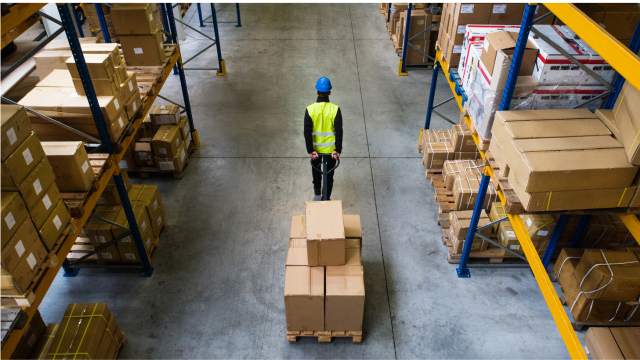
There is no universal PPE kit for all warehouse maintenance cleaning.
Requirements should follow the risk assessment.
Possible PPE includes:
- suitable gloves;
- protective footwear;
- high-visibility clothing;
- eye protection;
- protective clothing;
- hearing protection; and
- respiratory protective equipment where justified.
Chemical gloves need to be suitable for the actual substance.
Respiratory protection also requires proper selection and, for tight-fitting equipment, may require face-fit testing.
Cleaning machines can include:
- industrial vacuums;
- scrubber dryers;
- sweepers;
- wet vacuums;
- mops;
- squeegees;
- spill kits; and
- long-reach systems.
Equipment condition should form part of the checklist.
A scrubber dryer with worn squeegee blades may leave dangerous water behind.
A damaged electrical cable can create another hazard.
Inspection and maintenance therefore matter as much as availability.
Warehouse Hygiene and Pest Prevention
A good warehouse hygiene checklist should include basic pest-prevention factors.
Pests are attracted by:
food, standing water, waste and shelter.
Cleaning teams should look for:
- damaged food or organic stock;
- overflowing bins;
- water leaks;
- droppings;
- gnaw marks;
- insects;
- damaged doors; and
- hidden waste.
Cleaning is only one part of pest prevention.
A recurring gap beneath a warehouse maintenance door requires building maintenance.
Standing water may require drainage repair.
Persistent pest evidence may require professional pest management.
Warehouses storing food or other sensitive goods may also operate under more demanding sector-specific hygiene requirements.
A general warehouse checklist should therefore be adapted to the products stored.
Good warehouse maintenance and cleaning reinforce one another.
Warehouse Cleaning Inspection Checklist
Completion should be verified rather than assumed.
A supervisor inspection can ask:
- Are floors free from avoidable contamination?
- Are walkways clear?
- Are emergency routes unobstructed?
- Are loading bays free from unnecessary waste?
- Are spill kits complete?
- Are chemicals stored correctly?
- Is cleaning equipment serviceable?
- Is waste contained appropriately?
- Is pest evidence present?
- Are damaged floor areas reported?
- Are racking defects visible?
- Are high-level areas developing excessive dust?
- Are staff facilities clean?
- Have recurring problems been escalated?
The standard should be defined clearly.
“Looks clean” can mean different things to different people.
Where appropriate, identify a measurable or observable standard such as:
No loose packaging in traffic routes or No visible standing liquid after floor cleaning.
That makes audits more consistent.
How to Assign Cleaning Responsibilities
Every checklist item should have a clear owner.
Possible responsibility groups include:
Warehouse operatives
Immediate housekeeping at their workstations and prompt reporting of spills.
Cleaning team
Scheduled floor, welfare and general-area cleaning.
Supervisors
Inspection, escalation and coordination with warehouse operations.
Facilities or maintenance
Repairing leaks, floor damage and building defects.
Specialist contractors
High-level work, certain machinery cleaning or specialist hazardous-material tasks where required.
Avoid assigning tasks according to vague assumptions.
For example, a cleaner may be capable of wiping the outside of a machine but not authorised to isolate it or remove its guard.
Responsibility should match training and competence.
Cleaning contractors also need relevant site information, especially regarding vehicle routes, chemicals, restricted areas and emergency procedures.
Common Warehouse Cleaning Checklist Mistakes
Making the checklist too generic
“Clean warehouse” does not tell anyone what standard is expected.
Treating frequency as absolute
Daily, weekly and monthly tasks are minimum controls. Spills and obstructions require immediate response.
Using one method everywhere
Different contaminants need different methods.
Ignoring forklift movements
Cleaning needs to be coordinated with workplace traffic.
Relying on wet-floor signs alone
Signs do not prevent access to a slippery floor.
Treating PPE as the first solution
Safer products and cleaning methods should be considered before relying primarily on protective equipment.
Cleaning around defects forever
Leaks, damaged floors and drainage problems should be repaired.
Using unlabelled chemical bottles
This creates unnecessary chemical risk.
Allowing cleaners to improvise at height
High-level work requires planned and suitable access.
Measuring only completion
A signed checklist does not prove that the area is actually clean or safe.
Making the list unnecessarily long
A checklist with hundreds of low-value items can encourage box-ticking.
Prioritise meaningful controls.
Key Takeaways
A useful warehouse cleaning checklist should organise daily, weekly and monthly cleaning without preventing immediate response to unexpected hazards.
Daily tasks should concentrate on spills, loose packaging, traffic routes, waste and other rapidly developing contamination.
Weekly cleaning can address deeper floor care, shelving, equipment surroundings, staff areas and waste zones.
Monthly or periodic work can focus on high-level dust, detailed storage cleaning and broader condition inspections.
A good industrial cleaning checklist should also connect with risk assessment, COSHH, work at height and workplace transport controls.
Chemicals need appropriate storage, labelling, assessment and employee training.
PPE should match the task rather than be applied as one standard kit.
Most importantly, cleaning should connect with warehouse maintenance. Repeated contamination should trigger investigation of its cause.
Frequently Asked Questions
What should be included in a warehouse cleaning checklist?
A checklist should cover floors, pedestrian routes, racking, loading bays, waste areas, staff facilities, machinery surroundings, spill control, chemical storage and cleaning equipment.
It should identify frequency, responsibility and the required standard.
Higher-risk tasks such as chemical spills or work at height should have separate, more detailed procedures where necessary.
What warehouse cleaning tasks should be done daily?
Daily tasks commonly include removing loose packaging and debris, inspecting walkways, dealing with spills, emptying waste where necessary, cleaning high-traffic floor areas and checking loading and goods-in zones.
The exact frequency depends on activity.
Busy warehouses may need several housekeeping inspections during each shift.
What should be cleaned weekly in a warehouse?
Weekly tasks can include deeper floor cleaning, lower-level racking, floor edges, doors, barriers, staff areas, waste zones and accessible areas beneath equipment.
Spill kits and cleaning equipment can also be inspected.
Weekly cleaning should supplement rather than replace immediate daily housekeeping.
What warehouse cleaning tasks should be done monthly?
Periodic tasks may include high-level dust removal, deeper storage-area cleaning, detailed floor-condition inspection, cleaning less accessible surfaces and reviewing chemical or waste-storage areas.
Some tasks may be required more or less frequently than monthly depending on site conditions.
Use risk and inspection findings rather than the calendar alone.
How often should warehouse floors be cleaned?
There is no universal frequency.
Spills and loose debris should be removed promptly.
Main traffic routes may require daily or repeated cleaning, while deeper machine scrubbing may occur weekly or periodically.
The schedule should be increased if inspections show contamination accumulating before the next planned clean.
How should warehouse spills be handled?
Identify the substance first.
Non-hazardous spills may be controlled through normal site procedures.
Oil may require absorbent material and additional degreasing.
Hazardous chemicals should be handled according to the COSHH assessment, Safety Data Sheet and emergency arrangements.
Unknown spills should be isolated and assessed before cleaning.
What PPE is required for warehouse cleaning?
PPE depends on the task.
Possible requirements include gloves, protective footwear, high-visibility clothing, eye protection and protective clothing.
Certain dust or chemical tasks may require respiratory protection.
Employers should select PPE through risk assessment rather than issuing one standard set for every activity.
How can businesses maintain warehouse cleaning standards?
Define clear responsibilities and observable standards.
Use inspections rather than relying solely on signed checklists.
Train employees, maintain cleaning equipment and investigate recurring contamination.
Cleaning frequency should be changed when conditions change.
Maintenance teams should also address leaks, damaged floors, drainage issues and other underlying causes.

Conclusion
A reliable warehouse cleaning checklist gives businesses a practical way to organise housekeeping without reducing cleaning to a tick-box exercise.
Daily tasks should focus on contamination and obstructions that create immediate operational risks. Weekly work can address deeper floor care, shelving and staff areas, while monthly or periodic cleaning can cover less accessible surfaces and wider condition checks.
The most effective cleaning schedule remains flexible. A chemical spill does not wait until the scheduled Friday clean, and a damaged pallet should not remain in a pedestrian route because the checklist has already been signed for the morning.
Cleaning must also fit around the warehouse operation. Active loading bays, forklifts, machinery and high-level structures introduce risks that ordinary office cleaning does not. That is why a strong warehouse hygiene checklist should link directly with workplace transport controls, safe machinery procedures and work-at-height planning.
Skills Pack’s COSHH training can support warehouse and cleaning workers by developing understanding of hazardous substances, exposure risks, control measures, storage, PPE and emergency procedures. The course itself advises learners to check whether their employer or occupation requires additional practical training or specialist qualifications. Site-specific instruction therefore remains essential.
Finally, cleaning and warehouse maintenance should work as one system. If the same leak, damaged surface or waste problem appears on every industrial cleaning checklist, the next action should be to correct the underlying cause rather than simply add another cleaning task.
A checklist works best when it helps employees notice problems, act at the right time and leave the warehouse genuinely safer and cleaner — not merely when every box contains a tick.