Washroom Cleaning Procedures: Professional Standards for UK Workplaces

Effective washroom cleaning procedures are essential for maintaining hygienic, safe and welcoming facilities in UK workplaces. Toilets, washbasins, taps, floors and frequently touched surfaces require consistent attention because commercialwashroom hygiene are used by numerous people throughout the working day.
Poorly maintained facilities can create unpleasant odours, slippery floors, unsanitary conditions and unnecessary risks for employees and visitors. They can also affect the overall impression of a business.
However, professional washroom hygiene cleaning involves more than wiping surfaces and replacing toilet paper. Cleaners must understand suitable cleaning methods, chemical safety, infection prevention, waste disposal and the importance of preventing cross-contamination.
UK employers also have legal responsibilities concerning workplace welfare facilities. Toilets and washroom hygienes must be suitable, sufficient and maintained in a clean and orderly condition.
The appropriate cleaning methods and frequency depend on the type of premises, number of users and potential contamination.
This guide explains professional washroom cleaning standards, essential equipment, toilet and urinal cleaning, chemical handling, PPE, waste management and inspection procedures. It also provides practical guidance for creating a reliable cleaning schedule and maintaining consistent washroom hygiene.
What Are Washroom Cleaning Procedures?
Washroom cleaning procedures are structured methods used to clean, maintain and, where necessary, disinfect toilet and washing facilities.
These procedures help employees complete cleaning tasks consistently while managing hygiene and safety risks.
Commercial washroom hygiene commonly contain toilets, urinals, washbasins, taps, mirrors, cubicles, hand dryers and waste disposal facilities.
Depending on the premises, they may also include accessible toilets, showers, changing facilities and baby-changing areas.
Each part requires an appropriate cleaning method.
For example, removing limescale from a ceramic basin involves different products and precautions from disinfecting a contaminated toilet seat.
Professional procedures should explain what needs cleaning, which products are suitable, how often tasks should be completed and who is responsible.
They should also establish how cleaners identify and report defects.
Cleaning and disinfection are related but distinct activities. Cleaning removes dirt and contamination, while disinfection uses an appropriate process to reduce microorganisms where necessary.
Effective sanitation depends on choosing the correct methods rather than automatically applying disinfectant to every surface.
Why Professional Washroom Cleaning Is Important
Workplace washroom hygiene are shared environments where hygiene standards affect employees, visitors and customers.
Frequently touched surfaces such as taps, door handles and toilet flush controls can become contaminated through repeated use.
Floors may also become wet, creating slipping hazards.
Regular cleaning helps remove contamination, maintain usable facilities and support appropriate hygiene practices.
For example, an office washroom hygiene may require repeated checks throughout the day to ensure that soap, toilet paper and hand-drying supplies remain available.
A busy shopping centre may need more frequent attention because of higher visitor numbers.
Professional washroom cleaning also supports workplace wellbeing.
Employees should have access to clean, functional toilet and handwashing facilities during the working day.
Persistent odours, overflowing bins or visibly dirty fixtures can indicate that the existing cleaning arrangements are inadequate.
However, an unpleasant smell does not necessarily mean a surface is infectious, and a pleasant fragrance does not prove cleanliness.
Businesses should focus on removing contamination, maintaining facilities and addressing problems at their source.
Key Washroom Cleaning Responsibilities
Effective washroom cleaning requires cooperation between employers, cleaning staff, supervisors and facilities managers.
Employers must arrange for suitable facilities to be provided and maintained.
Cleaning teams are responsible for completing assigned work according to their training and approved procedures.
A typical washroom hygiene cleaning programme involves inspecting fixtures, cleaning surfaces, replenishing supplies and removing waste.
Supervisors should establish clear responsibilities for routine cleaning, periodic deep cleaning and urgent incidents.
For example, a cleaner may be responsible for removing ordinary surface contamination but should report a leaking toilet or damaged electrical hand dryer to maintenance personnel.
Similarly, unexpected sharps or suspected infectious waste may require specialist procedures rather than ordinary cleaning.
Staff should understand which tasks they can complete independently.
Facilities managers should also ensure that cleaning arrangements account for accessible washroom hygienes and areas used by people with additional needs.
Clear communication helps prevent problems from being overlooked and ensures cleaning activities do not create unnecessary risks for washroom hygiene users.
Washroom Cleaning Standards for UK Workplaces
UK workplaces must meet relevant welfare and health and safety requirements.
In England, Scotland and Wales, the Workplace (Health, Safety and Welfare) Regulations 1992 establish important requirements concerning sanitary conveniences and washing facilities.
The HSE explains that employers must provide sufficient toilets and washbasins for the expected workforce.
Facilities should be clean, adequately lit and ventilated, and equipped with appropriate handwashing arrangements.
These include running hot and cold or warm water, soap and suitable hand-drying facilities.
Appropriate sanitary disposal facilities must also be provided.
Separate toilet arrangements are generally required for men and women unless suitable individual lockable toilet rooms meet the relevant requirements.
The needs of disabled workers must be considered.
Northern Ireland has corresponding welfare requirements.
Different workplace standards
The cleaning arrangements required in an ordinary office may differ from those in a hospital, food production facility or other specialised environment.
NHS England’s National Standards of Healthcare Cleanliness 2025 establish a particular framework for healthcare settings.
These standards should not be treated as automatically governing every commercial building.
For ordinary workplaces, the cleaning programme should reflect usage, risk assessment and applicable requirements.
Washroom Cleaning Equipment and Supplies
Professional washroom cleaning requires suitable tools and supplies.
Common equipment includes toilet brushes, microfibre cloths, mops, buckets, approved cleaning products and suitable waste bags.
Other useful items may include non-abrasive pads, squeegees, cleaning trolleys and appropriate floor-cleaning equipment.
The precise selection depends on the size and type of washroom hygiene.
Separate cleaning equipment
Tools used for toilets and urinals should not be transferred to handwashing surfaces or food-related areas.
Many organisations use colour-coded equipment to reduce cross-contamination.
For example, NHS England’s healthcare cleaning scheme uses red equipment for bathrooms, washroom hygienes, toilets and related surfaces.
However, there is no single colour-coding system legally mandatory across every UK commercial workplace.
Businesses should establish clear internal procedures and train employees accordingly.
Equipment maintenance
Reusable cloths, brushes and mops must be cleaned, decontaminated where appropriate and stored safely.
Damaged equipment should be replaced.
Dirty cleaning solutions should not be carried from one washroom hygiene to another without appropriate management.
The purpose is to remove contamination rather than redistribute it.
Cleaning Chemicals and Safe Handling
Washroom cleaners may use detergents, toilet cleaners, descalers, disinfectants and glass cleaning products.
These substances have different purposes.
A detergent helps remove dirt, while a descaler is designed to address suitable mineral deposits.
Disinfectants are used where an appropriate assessment or cleaning procedure requires microbial control.
COSHH requirements
In Great Britain, the Control of Substances Hazardous to Health Regulations 2002 require employers to assess hazardous substances and prevent or adequately control exposure.
Northern Ireland has corresponding COSHH requirements.
Cleaners should follow product labels, safety instructions and the applicable COSHH assessment.
Never mix incompatible products
Mixing bleach with acidic toilet cleaners or ammonia-containing products can release dangerous gases.
This is a particularly serious concern when cleaning toilet bowls or urinals.
Workers should not apply a new chemical over residues of another product without an approved procedure establishing compatibility.
Correct dilution, ventilation and contact time are important.
Cleaning products must be stored in suitable labelled containers.
Employees should also understand how to respond to chemical spills and accidental exposure.
Using more chemical than instructed does not automatically improve cleaning performance.
Personal Protective Equipment for Washroom Cleaning
Personal protective equipment, commonly called PPE, helps protect cleaners against risks that remain after other precautions have been applied.
The appropriate equipment depends on the cleaning task and substances involved.
Protective gloves are frequently necessary for commercial toilet cleaning.
However, glove material must be suitable for the relevant chemical and exposure.
An ordinary glove may not provide adequate protection against every corrosive cleaning product.
Other PPE may include protective aprons, slip-resistant footwear and eye protection where splashing is possible.
Respiratory protection is not automatically required for routine washroom cleaning.
Where a specific task creates an inhalation hazard, the employer must assess the exposure and select suitable controls.
Hand and skin protection
HSE guidance identifies frequent wet work and contact with cleaning chemicals as causes of work-related dermatitis.
Employees should use suitable gloves, follow hand hygiene procedures and report persistent skin irritation.
Gloves must be removed carefully to avoid transferring contamination.
Wearing gloves does not replace handwashing.
Required PPE should be provided by the employer, with suitable instruction on its use and maintenance.
Preparing a Washroom for Cleaning
Good preparation helps cleaners complete their work efficiently and safely.
Before starting, inspect the washroom hygiene and identify obvious hazards.
These might include overflowing bins, wet floors, broken fixtures or unusual contamination.
Confirm that suitable cleaning products, tools and PPE are available.
Controlling access
Where cleaning creates a risk to washroom hygiene users, it may be necessary to restrict access temporarily.
The arrangements should preserve reasonable access to alternative toilet facilities.
For example, cleaning a busy office washroom hygiene during a peak break period may cause unnecessary disruption.
Where possible, more extensive tasks can be scheduled during quieter periods.
However, urgent contamination should not be left untreated simply because the scheduled cleaning time has not arrived.
Establishing the cleaning sequence
A common approach is to work from cleaner surfaces towards more heavily contaminated areas and from higher surfaces towards lower ones.
Separate equipment should be used for toilet areas and handwashing surfaces.
Waste and loose debris should be handled through the approved process.
Before applying any chemicals, workers should confirm that the products are compatible with the fixtures.
Preparation also includes checking whether specialised contamination requires additional precautions.
Toilet and Urinal Cleaning Procedures
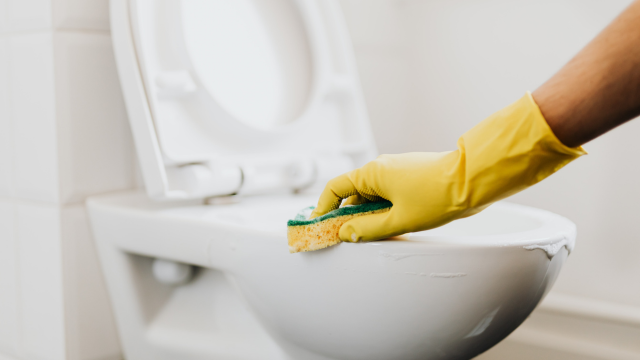
Effective toilet cleaning procedures should remove visible contamination, prevent unnecessary splashing and address the relevant hygiene risks.
Toilets and urinals should be cleaned using products approved for their materials.
Cleaning toilet bowls
Begin by checking the fixture for damage or blockages.
Apply the approved toilet cleaning product according to the manufacturer’s instructions.
Allow the specified contact time where required.
Use a suitable toilet brush to clean the accessible bowl surfaces, including areas where deposits commonly accumulate.
Avoid vigorous actions that generate unnecessary splashes.
Remove or rinse the product as directed.
Never mix bleach or chlorine-based products with acidic descalers or other incompatible chemicals.
Cleaning external surfaces
Use a separate appropriate cloth or disposable cleaning material for the flush control, lid, seat, hinges and exterior surfaces.
Work systematically and replace cleaning materials when necessary.
Where disinfection is required, use a suitable product at the correct concentration and contact time.
Cleaning urinals
Follow the same principles of product compatibility and controlled application.
Clean accessible surfaces, flush controls and surrounding splash areas.
Urinal servicing, trap treatment and internal plumbing work may require authorised maintenance personnel.
The toilet or urinal should be checked for proper operation before the task is marked complete.
Sink, Basin and Tap Cleaning
Washbasins and taps are frequently used and can develop soap deposits, water marks and limescale.
These surfaces should be cleaned using appropriate products that will not damage their finish.
Cleaning basins
Begin by removing visible debris and applying a suitable cleaner.
Pay attention to accessible corners, tap bases and areas around the drain opening.
Use a compatible cloth or non-abrasive tool.
Rinse where required and dry the surface appropriately to reduce streaking.
Cleaning taps
Tap handles are frequently touched and may need more attention than surrounding surfaces.
Clean accessible controls and remove deposits using a product suitable for the metal or coating.
Strong acidic products can damage certain finishes.
Managing faults
Cleaners should report leaking taps, blocked drains, unusual water discolouration or damaged fixtures.
They should not dismantle plumbing systems without proper authorisation.
Handwashing facilities must remain functional and adequately supplied.
Cleaners should also avoid treating a clean-looking basin as proof that the entire drainage system is free of contamination.
Routine surface cleaning and specialist plumbing maintenance are separate responsibilities.
Mirror, Glass and Surface Cleaning
Mirrors and glass surfaces contribute significantly to the appearance of a commercial washroom hygienem.
Fingerprints, water marks and splashes can accumulate even when the remaining facilities are clean.
Use a compatible glass cleaning product and suitable cloth.
Avoid abrasive materials that may scratch mirrors or damage protective coatings.
Where glass is positioned near electrical equipment, prevent inappropriate liquid exposure.
Cleaning partitions and fittings
Cubicle partitions, door surfaces, shelves and accessible fittings should be cleaned according to their material.
For example, painted panels may require a milder product than durable ceramic surfaces.
Workers should inspect for cracks, loose hinges or sharp edges and report defects.
Avoiding cross-contamination
Cloths used on toilet bowls or heavily contaminated fixtures must not be used on mirrors, basins or general surfaces.
Reusable cleaning materials should be managed through an appropriate cleaning and laundering process.
A consistent cleaning sequence helps protect the standard already achieved.
Professional washroom hygiene cleaning should leave surfaces visibly clean without introducing damage or unnecessary chemical residue.
Floor and Wall Cleaning
Washroom floors are exposed to moisture, foot traffic and occasional spills.
Cleaning must remove contamination while controlling slip risks.
HSE guidance warns that cleaning can create hazards when smooth floors are left wet.
Cleaning floors
Remove suitable loose debris before applying the approved floor-cleaning product.
Use equipment appropriate to the flooring material.
Avoid excessive water, particularly where it could enter electrical installations or damage flooring edges.
After cleaning, remove surplus moisture using a suitable method.
Access should remain restricted until the floor is sufficiently dry and safe.
Warning signs provide information but may not prevent someone entering a hazardous area.
Cleaning walls
Washroom walls may develop splashes or marks around toilets, urinals and basins.
Clean accessible areas using compatible products.
Pay attention to suitable wall junctions, partitions and splash zones.
Damaged tiles, loose fittings or deteriorating seals should be reported.
Cleaning staff should not assume that scrubbing can resolve every problem.
Persistent moisture or mould may indicate a ventilation or building defect requiring further investigation.
High-Touch Surface Cleaning
High-touch surfaces are frequently handled by washroom hygiene users and may require more frequent attention than other areas.
Examples include door handles, flush buttons, taps, cubicle locks, hand dryer controls and soap dispensers.
Cleaning these points helps remove contamination that could otherwise be transferred between surfaces.
Selecting the correct method
A suitable detergent may be used for routine cleaning.
Where disinfection is necessary, the product must be appropriate for the surface and used according to its instructions.
Cleaning should normally remove visible dirt before disinfection where the product’s directions require it.
Establishing frequency
A quiet office washroom hygiene may need a different schedule from a busy transport facility.
Cleaning frequency should reflect the number of users and the likelihood of contamination.
In healthcare environments, NHS England specifically emphasises risk-based attention to frequently touched surfaces.
Ordinary commercial workplaces can apply the underlying principle without assuming that the entire healthcare cleaning framework is mandatory.
High-touch surface cleaning should be included in both routine schedules and quality inspections.
Waste Bin and Sanitary Waste Management
Washroom cleaning includes the safe collection and disposal of ordinary refuse and sanitary waste.
Waste bins should be emptied before they overflow and maintained in a clean condition.
Workers should use appropriate bags and avoid handling waste directly where suitable tools or procedures can reduce contact.
Sanitary waste facilities
HSE welfare guidance identifies the need for appropriate sanitary disposal arrangements in facilities used by female workers.
Sanitary waste may include menstrual products and other personal hygiene materials.
Ordinary non-infectious sanitary waste is generally classified as offensive hygiene waste rather than automatically being infectious clinical waste.
However, the correct collection and disposal arrangements depend on the waste classification, quantities, premises and relevant local requirements.
Business waste responsibilities
Businesses must comply with applicable waste-duty-of-care obligations.
These include arranging appropriate storage and transfer to authorised waste handlers.
Cleaning staff should not assume that every waste stream can be disposed of in the same way.
Sharps and potentially infectious waste
Unexpected needles, sharp objects or other hazardous materials must not be handled as ordinary washroom hygiene rubbish.
The area should be made safe and the matter escalated under the workplace procedure.
Healthcare premises may have additional segregation and clinical waste requirements.
Odour Control and Washroom Hygiene
Unpleasant washroom odours can arise from several sources.
These include accumulated contamination, overflowing waste, drainage problems, poor ventilation or defective fixtures.
A fragrance product may temporarily change the smell but will not resolve an underlying cause.
Identify the source
Cleaners should inspect accessible fixtures, waste areas and surfaces for visible contamination.
Where an odour persists despite appropriate cleaning, the problem may involve plumbing or ventilation.
These issues should be referred to facilities or maintenance personnel.
Maintain ventilation
Workplace washroom hygienes should have adequate ventilation.
Cleaning teams should report obvious ventilation failures rather than attempting unauthorised repairs.
Manage waste and supplies
Regular waste removal and sufficient consumables contribute to a better washroom hygiene environment.
Soap and hand-drying facilities must remain available.
Avoid unnecessary chemical use
Repeated application of fragrance sprays or stronger disinfectants is not a substitute for removing dirt.
An effective odour-control programme combines cleaning, appropriate ventilation, waste management and timely repairs.
Reliable washroom hygiene depends on maintaining the facility rather than masking visible or hidden problems.
Washroom Cleaning Schedules and Checklists
A structured cleaning schedule helps ensure that washrooms remain usable and hygienic throughout the working day.
However, there is no single UK statutory rule requiring every commercial washroom hygiene to be cleaned at the same fixed interval.
The appropriate frequency depends on occupancy, usage, contamination and relevant sector-specific requirements.
For example, a busy public washroom may require repeated inspections and cleaning throughout the day.
A small office washroom used by relatively few employees may need a different arrangement.
Example washroom cleaning schedule
| Task | Example scheduling approach |
| Check toilet paper, soap and hand-drying supplies | At opening and at suitable intervals |
| Clean toilets, urinals and basins | Daily or more frequently according to use |
| Clean high-touch surfaces | Repeatedly where occupancy or risk requires |
| Remove waste | Before overflow and according to usage |
| Clean floors | Scheduled and whenever contamination requires |
| Detailed cleaning of fixtures and edges | Periodically based on inspection |
These are illustrative practices, not universal legal minimum intervals.
Practical washroom cleaning checklist
Before cleaning
- Inspect the washroom hygiene for hazards and defects.
- Confirm the required cleaning products, equipment and PPE.
- Review relevant COSHH instructions.
- Arrange access restrictions where necessary.
- Identify unusual contamination requiring specialist attention.
During cleaning
- Remove ordinary waste using the approved procedure.
- Clean mirrors and suitable general surfaces.
- Clean washbasins, taps and accessible fittings.
- Clean high-touch surfaces and dispensers.
- Clean toilets and urinals with dedicated equipment.
- Clean appropriate wall and floor surfaces.
- Apply disinfection where necessary, observing contact times.
- Replenish toilet paper, soap and hand-drying supplies.
After cleaning
- Confirm floors are safe before reopening the area.
- Check that fixtures are clean and functioning.
- Remove and store cleaning equipment safely.
- Report maintenance problems and outstanding tasks.
- Record completion and any required follow-up.
A checklist should support competent cleaning rather than replace active judgement.
Washroom Health and Safety Requirements
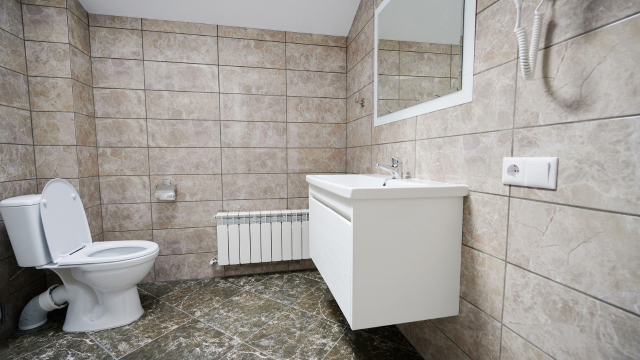
Commercial washroom cleaning must be organised in accordance with relevant workplace safety legislation.
In Great Britain, the Health and Safety at Work etc. Act 1974 establishes general duties concerning employees and others affected by work activities.
The Management of Health and Safety at Work Regulations 1999 require suitable risk assessment and management arrangements.
COSHH applies where hazardous substances are involved.
Relevant PPE and work equipment requirements may also apply.
Northern Ireland has corresponding legislation.
Preventing slips and trips
Wet floors present a particular hazard.
Cleaning should be organised to prevent people entering dangerous areas.
Trailing equipment and cleaning trolleys must not obstruct access routes unnecessarily.
Preventing chemical exposure
Cleaning products should be selected, handled and stored according to appropriate assessments.
Incompatible chemicals must never be mixed.
Preventing manual handling injuries
Waste bags, water containers and cleaning equipment can create handling risks.
Workers should use suitable methods and avoid unnecessary heavy lifting.
Responding to emergencies
Staff should know how to report chemical exposure, injury, unusual contamination and equipment defects.
Safe working requires suitable information, instruction, supervision and equipment.
Staff Training and Cleaning Responsibilities
Professional washroom cleaners need practical knowledge of cleaning methods, chemical handling and workplace safety.
Training should reflect the tasks employees are expected to perform.
For example, someone responsible for routine washroom hygiene cleaning should understand the approved cleaning sequence and how to prevent cross-contamination.
Staff using hazardous cleaning products need appropriate COSHH information and instruction.
Core training subjects
Relevant subjects include chemical safety, PPE, hand hygiene, cleaning equipment, waste handling, manual handling and reporting procedures.
Employees should also understand the difference between ordinary dirt and contamination requiring a specialist response.
Demonstrating practical competence
Completing a course does not automatically mean an employee can perform every task safely.
Employers should provide demonstrations, supervised practice and suitable assessment where necessary.
Skills Pack learning opportunities
Skills Pack offers a Control of Substances Hazardous to Health (COSHH): Essential Workplace Safety Skills course covering hazardous substances, risk assessments and protective measures.
Its Level 1, 2, 3 Health and Safety in the Workplace programme also introduces chemical and biological hazards, workplace hygiene, PPE and incident reporting.
These courses may support foundational learning.
However, online training should complement workplace instruction and demonstrated practical competence, not replace them.
Washroom Cleaning Inspections and Quality Control
Quality control helps businesses establish whether washroom cleaning has achieved the agreed standard.
A completed cleaning checklist provides useful evidence of activity, but the actual result should also be inspected.
Visual inspection
Supervisors can check whether toilets, basins, mirrors and other designated surfaces are visibly clean.
They should also identify accumulated deposits, overflowing waste or missing consumables.
Floor condition is particularly important.
A visually clean floor may still be unsafe if it remains slippery.
Functional checks
Some problems involve facility maintenance rather than cleaning.
For example, a clean washbasin may still have a leaking tap or defective drainage.
These issues should be reported to the responsible person.
Reviewing cleaning performance
Inspection results can identify recurring problems.
If a washroom hygiene repeatedly becomes dirty between scheduled visits, the cleaning frequency may need to increase.
Alternatively, the problem may involve inadequate staffing, poor equipment or unclear responsibilities.
Healthcare settings may have more formal cleanliness audit arrangements under their applicable standards.
Ordinary commercial workplaces should establish proportionate checks suited to their premises.
Quality control should encourage improvement rather than simply record completed tasks.
Common Washroom Cleaning Mistakes
Several avoidable mistakes can undermine professional washroom cleaning.
One of the most serious is using incompatible chemicals.
Applying an acidic toilet cleaner after bleach without an approved procedure can create dangerous exposure.
Another mistake is using the same cloth for toilets and handwashing surfaces.
This can transfer contamination instead of removing it.
Other common errors include:
- Failing to follow chemical dilution instructions.
- Ignoring required disinfectant contact times.
- Using unsuitable products on delicate fixtures.
- Leaving wet floors accessible to washroom users.
- Neglecting door handles and flush controls.
- Allowing soap or toilet paper supplies to run out.
- Failing to clean reusable equipment appropriately.
- Using fragrance products to mask persistent odours.
- Treating hazardous waste as ordinary rubbish.
- Neglecting maintenance defects identified during cleaning.
Businesses may also rely on fixed schedules that do not reflect actual usage.
A cleaning programme designed for a quiet office may be unsuitable for a busy visitor facility.
Good washroom hygiene maintenance requires regular inspection, appropriate procedures and the flexibility to respond to changing conditions.
How to Maintain Professional Washroom Standards
Maintaining professional washroom hygiene standards requires consistency rather than occasional intensive cleaning.
The first step is establishing a documented cleaning specification.
This should identify the required tasks, products, equipment and responsibilities.
Review cleaning frequency
Businesses should monitor how quickly washroom hygiene become dirty or run out of supplies.
The schedule should be adjusted where necessary.
Maintain cleaning equipment
Cloths, mops and reusable tools must be cleaned and stored appropriately.
Equipment should not become a source of contamination.
Respond to maintenance issues
Blocked toilets, leaking taps, damaged dispensers and ventilation problems should be reported promptly.
Cleaning cannot replace appropriate repairs.
Monitor hygiene supplies
Handwashing facilities should have adequate soap, water and drying arrangements.
Supplies should be replenished before shortages affect users.
Support staff development
Cleaners should receive refresher instruction when procedures, equipment or products change.
Supervisors should observe practical work and address unsafe practices.
Use inspection findings
Recurring deficiencies should lead to corrective action.
For example, repeated floor contamination may require a different cleaning method or more frequent checks.
By combining routine cleaning, periodic detailed attention and active quality control, organisations can maintain dependable commercial washroom cleaning standards.
Key Takeaways
Professional washroom cleaning procedures help UK workplaces maintain clean, functional and safe toilet facilities.
The appropriate cleaning frequency depends on usage, contamination and the workplace’s specific requirements.
Toilet cleaning should use dedicated tools and approved methods to reduce cross-contamination.
COSHH assessments are essential where hazardous cleaning substances are involved.
Incompatible chemicals, particularly bleach and acidic products, must never be mixed.
Suitable PPE, safe waste handling and effective wet-floor controls are important.
High-touch surfaces, sanitary waste facilities and hygiene consumables require regular attention.
Staff training, inspections and timely maintenance help sustain professional standards.
Frequently Asked Questions
What are washroom cleaning procedures?
Washroom cleaning procedures are structured methods for cleaning and maintaining toilets, urinals, basins, floors and other washroom surfaces.
They explain the equipment, products and precautions required for each task.
Professional procedures also address waste collection, hand hygiene, inspection and replenishment of supplies.
The methods should reflect the premises, contamination risks and applicable workplace requirements.
How often should workplace washroom hygiene be cleaned?
There is no universal statutory cleaning interval for every workplace washroom hygiene
The frequency depends on the number of users, contamination, type of premises and relevant sector-specific requirements.
Busy public washroom hygiene may require repeated cleaning throughout the day.
Smaller office facilities may need less frequent attention, supported by regular inspections.
Cleaning should also take place promptly when contamination creates a risk.
What cleaning products are used for washroom cleaning?
Common products include detergents, toilet cleaners, descalers, disinfectants and glass cleaners.
The appropriate product depends on the surface and type of contamination.
Workers should follow manufacturer instructions and the relevant COSHH assessment.
Bleach must never be mixed with acidic toilet cleaners or ammonia-containing products.
Disinfectants should be used where appropriate, observing the required concentration and contact time.
What PPE is required for washroom hygiene cleaning?
PPE depends on the task-specific risk assessment.
Suitable protective gloves are commonly required, while aprons, protective footwear and eye protection may be necessary.
Gloves should provide protection against the substances involved.
Not every cleaning task requires respiratory protection.
Employers must provide required PPE and ensure workers understand its correct use.
Handwashing remains important after removing gloves.
How should toilets and urinals be cleaned?
Toilets and urinals should be cleaned using approved products and dedicated equipment.
Workers should remove visible contamination, clean accessible surfaces and follow product instructions.
The cleaning process should include relevant flush controls, seats, external fixtures and surrounding surfaces.
Disinfection should be applied where required, with appropriate contact time.
Cleaners should avoid unnecessary splashing and never mix incompatible chemicals.
How should washroom hygiene waste be handled?
Waste should be collected safely and separated according to its type and the applicable waste-management procedures.
Ordinary refuse and non-infectious sanitary waste require suitable storage and authorised disposal arrangements.
Sharps and potentially infectious materials should not be handled as ordinary waste.
Businesses must comply with relevant waste-duty-of-care requirements.
Employees should understand when unusual waste requires escalation.
What should a washroom cleaning checklist include?
washroom hygiene cleaning checklist should cover toilets, urinals, basins, taps, mirrors, floors and high-touch surfaces.
It should also address waste bins, sanitary disposal facilities, soap, toilet paper and hand-drying supplies.
Relevant checks include PPE, chemical handling, wet floors and equipment condition.
A section for reporting defects and recording completed tasks is also useful.
How can businesses maintain professional washroom hygiene?
Businesses should establish appropriate cleaning schedules, use suitable equipment and provide relevant staff training.
Regular inspections help identify contamination, shortages and maintenance problems.
High-touch surfaces may require more frequent attention in busy premises.
Good ventilation, functioning facilities and responsible waste management also contribute to hygiene.
Cleaning arrangements should be reviewed when usage or workplace conditions change.
Conclusion
Effective washroom cleaning procedures are essential for maintaining hygienic, safe and professional UK workplaces.
Clean toilets, basins, floors and high-touch surfaces contribute to the quality of facilities available to employees and visitors.
However, professional cleaning requires more than removing visible dirt. Workers must use suitable products, prevent cross-contamination, manage chemical risks and maintain appropriate waste disposal arrangements.
Businesses should develop cleaning schedules that reflect the number of users and the specific conditions of their premises.
Regular inspections and staff training also help ensure that hygiene standards remain consistent.
Skills Pack offers online workplace safety and COSHH learning that may support cleaners in developing foundational knowledge of chemical handling, PPE, workplace hazards and safe working practices. Practical training and site-specific procedures remain essential.
Ultimately, successful commercial washroom cleaning combines consistent cleaning methods, reliable supplies, safe equipment and timely maintenance.
By implementing clear procedures and reviewing their effectiveness, employers can maintain professional washroom hygiene and provide facilities that are clean, functional and suitable for everyday use.