Kitchen Deep Cleaning: Commercial Cleaning Procedures and Standards
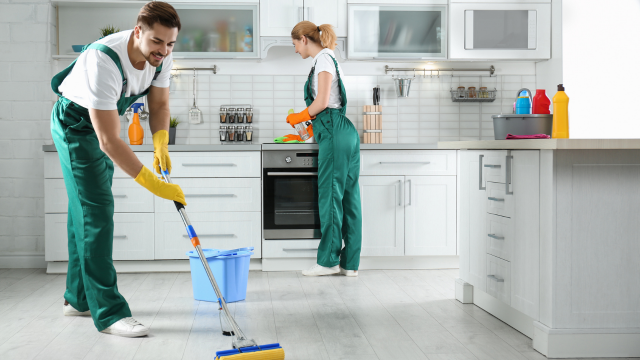

Effective kitchen deep cleaning is essential for maintaining safe, hygienic and well-managed commercial food premises. Restaurants, cafés, hotels, catering businesses and institutional kitchens all need cleaning procedures that control contamination, remove accumulated grease and support compliance with UK food safety requirements.
Commercial kitchens present particular challenges because food preparation, cooking, storage and waste handling take place in a busy environment. Grease can accumulate around cooking appliances, food residues can build up beneath equipment, and poorly maintained surfaces may create opportunities for cross-contamination.
Ordinary daily cleaning is essential, but some areas require more detailed and intensive attention. Professional commercial kitchen cleaning helps address these harder-to-reach surfaces, equipment components and persistent deposits.
However, deep cleaning is not simply a matter of applying stronger chemicals or using more water. Cleaning teams must understand food safety controls, chemical hazards, equipment limitations and appropriate waste disposal.
In the UK, food businesses must maintain food safety management procedures based on Hazard Analysis and Critical Control Point (HACCP) principles. Cleaning arrangements form an important part of these systems.
This guide explains commercial kitchen deep cleaning procedures, equipment, chemical handling, grease removal, ventilation maintenance and hygiene inspections. It also includes a practical checklist and guidance for developing an effective cleaning schedule.
What Is Kitchen Deep Cleaning?
Kitchen deep cleaning is a thorough cleaning process designed to remove accumulated dirt, grease, food residues and other contamination from commercial kitchen surfaces and equipment.
It goes beyond routine cleaning by addressing areas that may not receive detailed attention during daily maintenance.
For example, regular cleaning might involve wiping food preparation counters, washing utensils and mopping floors.
Deep cleaning could include treating accumulated grease behind suitable cooking equipment, cleaning accessible floor edges, removing deposits from appropriate appliance components and inspecting difficult-to-reach surfaces.
The precise procedures depend on the kitchen layout, equipment and food preparation activities.
A small café preparing sandwiches will have different requirements from a restaurant operating several deep-fat fryers and commercial extraction systems.
It is also important to distinguish cleaning from disinfection.
Cleaning removes visible dirt and food residues. Disinfection involves using suitable methods to reduce harmful microorganisms to an acceptable level.
Food preparation equipment and surfaces often require both processes.
An effective deep cleaning programme complements routine food hygiene controls rather than replacing them.
Why Commercial Kitchen Deep Cleaning Is Important
Commercial kitchens can accumulate contamination through ordinary cooking and food preparation activities.
Oil, grease, food particles and moisture may collect around equipment, floors and ventilation components.
If these deposits are not managed effectively, they can create hygiene and safety problems.
For example, grease on a kitchen floor can increase the risk of slipping.
Food residues in inaccessible areas may also attract pests.
Accumulated grease inside kitchen extraction systems presents an additional fire risk.
Supporting food safety
Effective cleaning reduces the likelihood that harmful bacteria or other contaminants will transfer to food.
The Food Standards Agency identifies cleaning as one of the four central elements of food hygiene, alongside cooking, chilling and preventing cross-contamination.
Maintaining equipment
Suitable cleaning helps keep accessible appliance components and surrounding surfaces in a serviceable condition.
However, cleaning cannot replace mechanical maintenance or repairs.
Supporting compliance
Food businesses must maintain appropriate hygiene procedures and demonstrate that their food safety management arrangements are effective.
Deep cleaning can contribute to these requirements by addressing areas where ordinary cleaning is insufficient.
The objective is to maintain safe conditions consistently, rather than waiting until the kitchen becomes visibly dirty.
Kitchen Deep Cleaning vs Regular Cleaning
Regular kitchen cleaning and deep cleaning have different but connected purposes.
Routine cleaning takes place throughout food preparation and after relevant tasks.
It includes washing utensils, cleaning work surfaces, removing spills and managing waste.
Deep cleaning involves more intensive treatment of selected areas and equipment.
| Regular kitchen cleaning | Kitchen deep cleaning |
| Cleaning worktops after food preparation | Detailed cleaning of suitable worktop edges and surrounding fixtures |
| Washing utensils and equipment | Cleaning accessible appliance components and accumulated deposits |
| Removing routine floor spills | Intensive treatment of grease build-up and floor edges |
| Emptying waste bins | Detailed cleaning of bins and waste storage areas |
| Maintaining visible kitchen surfaces | Cleaning suitable hard-to-reach areas |
The distinction does not mean that disinfection should wait until a scheduled deep clean.
Food-contact surfaces must be cleaned and disinfected when required by the food safety procedure, including after contact with raw food.
Similarly, spills creating immediate hazards should be addressed promptly.
Deep cleaning should be planned around the kitchen’s activities and risk assessment.
Neither approach can compensate for failures in the other.
Key Commercial Kitchen Cleaning Responsibilities
Effective kitchen hygiene requires clearly allocated responsibilities.
Food business operators must ensure that appropriate cleaning procedures are established and implemented.
Managers and supervisors should organise work, assign tasks and verify that cleaning has been completed.
Kitchen staff often perform routine cleaning throughout food preparation.
Specialist cleaners may undertake more intensive tasks outside normal service hours.
Common responsibilities include:
- Identifying surfaces and equipment requiring cleaning.
- Preparing safe access to work areas.
- Checking equipment instructions and chemical compatibility.
- Following cleaning and disinfection procedures.
- Removing food residues and accumulated grease.
- Preventing contamination of food and clean equipment.
- Handling waste through approved arrangements.
- Recording completed tasks and reporting problems.
- Checking whether cleaned areas are ready for use.
Some activities require specialist competence.
For example, internal extraction duct cleaning, gas appliance maintenance and certain electrical work should not be assigned to ordinary cleaning staff without suitable training and authority.
Responsibilities should be documented so that essential areas are not overlooked.
Kitchen Deep Cleaning Risk Assessment
A risk assessment should be completed before deep cleaning activities begin.
The assessment must consider the kitchen environment, equipment, substances and people who could be affected.
Commercial kitchen hazards can include hot surfaces, sharp edges, grease deposits, electrical equipment, cleaning chemicals and wet floors.
Moving heavy equipment may also create manual handling risks.
Identify the hazards
Inspect the areas scheduled for cleaning.
For example, cleaning beneath a commercial cooking range may involve residual heat, restricted access and electrical or gas connections.
Decide who could be affected
Consider cleaners, kitchen staff, maintenance contractors and anyone entering the premises during the work.
Establish suitable controls
Possible controls include scheduling cleaning outside food preparation periods, restricting access, using less hazardous products and providing appropriate equipment.
Cleaning staff must understand which equipment can be safely moved or accessed.
Plan for unexpected conditions
Unknown chemical residues, damaged wiring, suspected pest contamination or unsafe equipment should trigger further assessment.
Workers should not improvise specialist procedures simply to complete a checklist.
The assessment must also consider hazardous substances under COSHH and any additional risks associated with work at height.
A site-specific assessment is more useful than a generic form that does not reflect the actual kitchen.
Kitchen Cleaning Equipment and Supplies
Commercial kitchen deep cleaning requires equipment suited to the materials and contamination involved.
Common supplies include suitable brushes, non-abrasive pads, microfibre cloths, scrapers, mops, buckets and approved cleaning products.
Some tasks may also require commercial wet-cleaning equipment or specialised floor machinery.
Selecting appropriate equipment
A stainless-steel preparation surface requires a different cleaning approach from a delicate coating or electrical control panel.
Abrasive tools may damage certain materials.
Equipment should therefore be selected according to manufacturer instructions and the cleaning specification.
Separating cleaning tools
Tools used around raw food preparation areas should not create contamination risks for ready-to-eat food areas.
Separate and clearly identified cleaning materials can help.
Colour coding is one useful method, but staff must understand the organisation’s particular system.
Checking equipment
Electrical machines should be inspected before use, with defective equipment removed from service.
Reusable cloths, brushes and mops must be cleaned, disinfected where appropriate and stored safely.
Dirty cleaning tools can transfer contamination instead of removing it.
Professional cleaning depends on both suitable equipment and correct use.
Cleaning Chemicals and Safe Handling
Commercial kitchens use various cleaning products, including detergents, degreasers, sanitisers, disinfectants and descalers.
These products have different purposes.
A detergent removes dirt and grease, while a disinfectant is intended to reduce harmful microorganisms when used appropriately.
Some products combine cleaning and disinfection functions, but their application instructions must still be followed.
COSHH requirements
The Control of Substances Hazardous to Health Regulations 2002 apply in Great Britain.
Northern Ireland has corresponding COSHH requirements.
Employers must assess hazardous chemical exposure and implement suitable controls.
Concentrated oven cleaners and degreasers can cause serious skin or eye injuries.
Correct dilution and contact time
Always follow the product label and relevant safety instructions.
A disinfectant may require a specified concentration and contact time to achieve its intended effect.
The Food Standards Agency advises businesses to check for relevant standards such as BS EN 1276 or BS EN 13697.
Chemical compatibility
Never mix products unless the manufacturer expressly permits it.
Mixing chlorine-based products with acids can generate dangerous gases.
Chemical residues must also be prevented from contaminating food.
Products should be stored securely, in suitable labelled containers, away from food and food-contact materials.
Personal Protective Equipment for Kitchen Cleaning
Personal protective equipment, or PPE, helps protect workers where hazards cannot be adequately controlled through safer methods.
The necessary PPE depends on the task-specific risk assessment.
For example, cleaning an ordinary food preparation surface may require different protection from handling a corrosive oven degreaser.
Common protective equipment may include chemical-resistant gloves, suitable aprons, protective footwear and eye protection.
Selecting suitable gloves
Gloves must be compatible with the cleaning chemicals being used.
A glove suitable for ordinary detergent may not provide sufficient protection against a concentrated alkaline cleaner.
Eye and face protection
Where there is a risk of splashing, suitable eye protection may be necessary.
Footwear
Slip-resistant footwear is important in kitchens where water and grease can affect floor conditions.
Respiratory protection
Respiratory protective equipment may be required for particular hazardous exposures.
However, it should not automatically replace better ventilation, safer products or less hazardous methods.
Workers must understand how to use, remove, clean and store PPE.
Appropriate hand hygiene remains essential after removing gloves.
Cleaning Ovens, Grills and Cooking Equipment
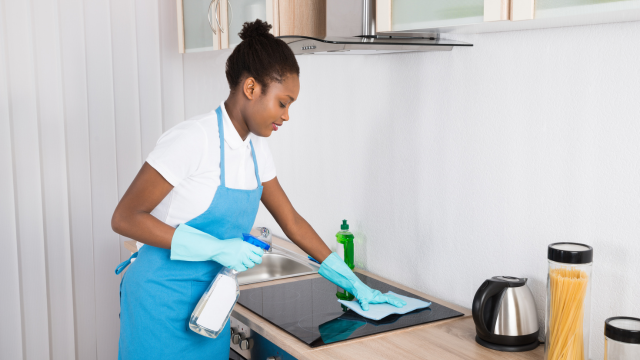
Ovens, grills and other cooking appliances can accumulate carbon deposits, grease and food residues.
Deep cleaning should follow the manufacturer’s instructions and the kitchen’s approved procedures.
Preparing equipment
Ensure the appliance is in the correct condition for cleaning.
Depending on the equipment, this may require shutdown, suitable isolation and cooling.
Only authorised personnel should disconnect gas or electrical connections.
Removing loose residues
Use appropriate tools to remove accessible food deposits.
Avoid damaging heating elements, seals, sensors or protective coatings.
Applying suitable cleaners
Use a product approved for the appliance materials.
Concentrated oven cleaners may be highly corrosive and require specific protective equipment.
Apply, remove and rinse the product as instructed.
Deep-fat fryers
Fryers require particular caution because hot oil can cause severe burns.
HSE’s guidance on emptying and cleaning fryers explains the importance of appropriate equipment, safe procedures and training.
Oil should be handled according to the appliance manufacturer’s safe cooling and draining instructions.
Never improvise with unsuitable plastic containers or attempt to move dangerously hot oil.
Internal appliance repairs and specialist dismantling should be undertaken only by competent personnel.
Cleaning Extractor Hoods and Ventilation Systems
Commercial kitchen ventilation removes heat, fumes and airborne grease produced during cooking.
Grease can accumulate on extractor hoods, filters and internal ductwork.
If deposits are not controlled, they can contribute to serious fire hazards.
Cleaning accessible hoods and filters
Kitchen staff may be authorised to clean removable grease filters and suitable accessible hood surfaces.
The work should follow the manufacturer’s instructions.
Filters should be handled carefully, and any electrical or mechanical hazards must be controlled.
Internal duct cleaning
Cleaning internal extraction ductwork is a specialist activity.
It may require access panels, specialist equipment, assessment of grease deposits and documented verification.
Ordinary kitchen cleaners should not attempt to dismantle the system or enter ductwork without appropriate competence.
TR19 Grease
The Building Engineering Services Association publishes TR19 Grease, an industry specification addressing fire-risk management in kitchen extraction systems.
It is widely used as a professional benchmark.
Cleaning frequency depends on cooking intensity, grease accumulation, inspection findings, system characteristics and applicable insurance requirements.
There is no single statutory duct-cleaning interval that applies identically to every commercial kitchen.
Businesses should arrange suitable inspection and specialist cleaning based on the actual risk.
Cleaning Floors, Walls and Ceilings
Kitchen floors, walls and ceilings can accumulate grease, food residues and moisture.
Deep cleaning should address these surfaces without creating additional hazards.
Floor cleaning
Begin by removing suitable loose debris.
Apply an approved product compatible with the flooring material and contamination.
Where appropriate, use a suitable scrubber or manual cleaning method to remove grease.
Recover excess water and cleaning solution.
HSE identifies contaminated and wet floors as important causes of slips in catering environments.
Access should remain controlled until the floor is safe.
Wall cleaning
Focus on suitable areas around preparation stations, cooking equipment and splash zones.
Use products compatible with wall finishes.
Damaged tiles, deteriorating joints and persistent moisture should be reported.
Ceiling cleaning
Accessible ceiling surfaces may require periodic attention.
However, work at height must be planned and controlled.
High-reach tools can sometimes avoid the need for elevated access equipment.
Suspended ceiling panels, electrical installations and ventilation components should not be disturbed without appropriate assessment.
Cleaning should be systematic, avoiding the transfer of overhead debris onto already cleaned food-contact surfaces.
Cleaning Food Preparation Surfaces
Food preparation surfaces require effective cleaning because they may come into direct contact with food.
The cleaning procedure should reflect the food being handled and the risk of contamination.
For example, surfaces used for raw meat preparation require appropriate cleaning and disinfection before they are used for other activities.
Two-stage cleaning
A common procedure involves:
- Removing visible food debris and grease using a suitable detergent.
- Applying an approved disinfectant to the cleaned surface for the required contact time.
The product instructions determine dilution, application and whether a final rinse is required.
Some approved combined products have their own specific procedures.
Cleaning chopping boards and utensils
Chopping boards, knives and other food-contact equipment must be cleaned appropriately.
Damaged boards with deep cuts may be difficult to clean effectively and may need replacement.
Preventing recontamination
A disinfected surface can become contaminated again if it is touched with dirty cloths or equipment.
Cleaners should use appropriate materials and prevent raw food, chemicals or waste from contacting completed areas.
The objective is to make food preparation surfaces safe for their intended use, not simply improve their appearance.
Cleaning Refrigeration and Storage Areas
Refrigerators, freezers and dry storage areas require suitable cleaning arrangements.
Food residues, spillages and damaged packaging can create contamination risks.
Preparing refrigeration equipment
Before cleaning, identify how food will be protected.
Where contents must be moved, use appropriate alternative storage that maintains safe conditions.
Do not leave chilled food at unsuitable temperatures simply to make cleaning easier.
Cleaning accessible surfaces
Remove loose debris and use products approved for shelves, drawers, handles and internal linings.
Follow the manufacturer’s instructions for electrical equipment.
Clean and disinfect food-contact surfaces where necessary.
Avoid excessive water near electrical components.
Checking seals and drainage
Door seals and accessible drainage areas may accumulate dirt.
Clean suitable components without damaging them.
Report torn seals, faulty temperature controls or other maintenance issues.
Dry storage
Storage shelves and accessible floors should be cleaned and checked for spills or signs of pests.
Food packaging should be protected from cleaning products.
Stock should be organised according to the kitchen’s food safety procedures.
Cleaning cannot compensate for poor temperature control or unsafe food storage practices.
Grease and Fat Removal Procedures
Grease and fat are common sources of contamination in commercial kitchens.
Deposits may accumulate around cooking appliances, extraction hoods, splashbacks and floors.
Effective removal requires the correct products, equipment and safety precautions.
Assessing grease deposits
Identify the type and location of the contamination.
Light surface grease may be removed using an ordinary suitable detergent.
Heavy deposits may require specialist degreasers or mechanical cleaning.
Using degreasers
Apply only products compatible with the material.
Follow dilution, contact-time and rinsing instructions.
Strong alkaline products can damage surfaces and cause chemical injuries.
Avoiding unnecessary splashing
Aggressive spraying or unsuitable high-pressure cleaning can spread contaminated material and create electrical hazards.
A controlled cleaning method is generally preferable.
Handling grease residues
Collected grease and cleaning residues should be managed according to their classification and the applicable waste arrangements.
Do not deliberately wash grease into drains.
Persistent grease accumulation may also indicate that extraction, equipment design or cleaning frequency requires review.
Grease control should be part of regular kitchen maintenance, not an occasional emergency response.
Waste Management and Disposal
Commercial kitchen cleaning generates food waste, packaging, grease, used cleaning materials and sometimes other waste streams.
These materials must be managed safely and according to the applicable requirements.
Food waste
Food waste should be removed promptly and stored in suitable containers.
Bins should be strong, cleanable and maintained in good condition.
Waste storage should not create contamination or pest risks.
Waste cooking oil
Waste cooking oil must be stored separately and collected through authorised arrangements.
It must not be poured into sinks, drains or sewers.
The Food Standards Agency warns that improper disposal can create blockages, pollution and enforcement risks.
Grease management
Food businesses should prevent fats, oils and grease entering drainage systems.
Suitable practices may include removing residues before washing and maintaining appropriate grease-management equipment.
Jurisdiction-specific waste rules
In England, workplace recycling rules require relevant businesses to separate food waste, with additional arrangements applying to smaller businesses from 2027.
Scotland, Wales and Northern Ireland have their own waste-management requirements.
Businesses should verify the rules applying to their premises and use appropriately authorised waste contractors.
Waste disposal is an essential part of kitchen hygiene and environmental responsibility.
Preventing Cross-Contamination
Cross-contamination occurs when harmful microorganisms, allergens or other contaminants are transferred between foods, surfaces, equipment or people.
Kitchen deep cleaning must avoid creating new contamination risks.
Separate raw and ready-to-eat areas
The Food Standards Agency recommends effective separation between raw and ready-to-eat food activities.
Cleaning equipment must be managed so that contamination from raw food areas is not transferred to ready-to-eat surfaces.
Use suitable cleaning materials
Reusable cloths can become contaminated.
Freshly cleaned, appropriately disinfected or suitable single-use materials may be necessary for particular tasks.
Control allergens
Cleaning must also consider allergen residues.
For example, a surface used to prepare food containing peanuts may require suitable cleaning before preparing food intended to be free from that allergen.
Disinfecting a surface does not automatically remove allergen proteins.
Protect food during deep cleaning
Food should be removed or adequately protected before chemicals and cleaning equipment are used nearby.
Cleaned areas should not be recontaminated by dirty machinery, waste or cleaning tools.
Preventing cross-contamination requires suitable procedures, trained staff and reliable supervision.
Kitchen Cleaning Schedules and Checklists
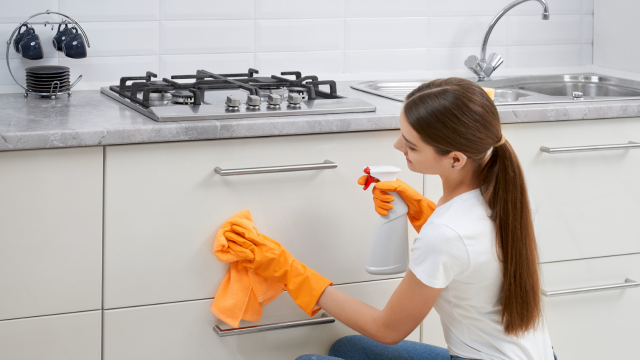
A structured cleaning schedule helps commercial kitchens maintain appropriate hygiene standards.
The Food Standards Agency advises food businesses to document which areas require cleaning or disinfection, how often tasks should occur and which methods and products should be used.
There is no universal rule that every commercial kitchen must undergo a complete deep clean every week or month.
The schedule should reflect food preparation activities, equipment, usage and assessed risks.
Illustrative cleaning frequency
Routine food-contact cleaning must take place whenever required for safe food handling.
More detailed tasks can be scheduled according to the condition of the kitchen.
For example, a busy frying station may need intensive grease removal more frequently than a low-use storage area.
Specialist extraction duct cleaning should follow inspection findings, relevant industry guidance and applicable insurance requirements.
Practical kitchen deep cleaning checklist
Before cleaning
- Confirm the scope of work and responsible personnel.
- Review risk assessments and relevant COSHH instructions.
- Check manufacturer cleaning procedures.
- Protect or relocate food under safe storage arrangements.
- Isolate or cool equipment where required.
- Prepare suitable cleaning products, tools and PPE.
- Restrict access where necessary.
During cleaning
- Remove loose debris and accessible food residues.
- Clean suitable appliance exteriors and components.
- Remove grease using approved procedures.
- Clean accessible extractor hoods and filters where authorised.
- Clean suitable walls, shelves and high-level surfaces.
- Clean refrigeration and storage areas while protecting food.
- Clean and disinfect food-contact surfaces as required.
- Clean floor edges, drains and flooring using suitable methods.
- Segregate and dispose of waste appropriately.
After cleaning
- Inspect surfaces for remaining contamination.
- Verify appropriate disinfection procedures were completed.
- Confirm equipment is correctly reassembled and safe.
- Check that floors are dry and safe.
- Return protected food and equipment appropriately.
- Record completed tasks and outstanding defects.
- Obtain supervisory approval where required.
The checklist should be adapted to the actual kitchen hygiene and food safety management system.
Commercial Kitchen Health and Safety Requirements
Kitchen deep cleaning must meet relevant health and safety requirements.
In Great Britain, the Health and Safety at Work etc. Act 1974 establishes general employer duties.
The Management of Health and Safety at Work Regulations 1999 require suitable risk assessment and management arrangements.
COSHH applies to hazardous substances, while relevant work equipment and manual handling requirements also apply.
Northern Ireland has corresponding health and safety legislation.
Chemical hazards
Concentrated cleaners may cause burns, irritation or respiratory problems.
Employers must implement appropriate exposure controls.
Slips and trips
Grease, water and cleaning equipment can create hazards.
Cleaning areas should be organised to prevent unsafe access.
Burns and electrical risks
Cooking appliances may retain heat after use.
Workers should follow appropriate shutdown, cooling and isolation procedures.
Fire safety
Grease accumulation in extraction systems presents a fire hazard.
Suitable inspection, maintenance and specialist cleaning are important.
Manual handling
Heavy equipment and containers can create musculoskeletal risks.
Cleaning methods should minimise unnecessary lifting and awkward postures.
Health and safety arrangements must reflect the actual tasks rather than relying solely on generic training certificates.
Staff Training and Cleaning Responsibilities
Commercial kitchen cleaning requires employees to understand hygiene procedures and workplace risks.
Training should be appropriate to the work performed.
For example, someone cleaning food preparation surfaces needs to understand correct disinfection methods and cross-contamination controls.
A worker handling corrosive oven cleaners requires instruction on chemical hazards and appropriate protective equipment.
Food hygiene training
UK food businesses must ensure that staff have suitable food hygiene knowledge and skills for their roles.
However, a particular food hygiene certificate is not universally compulsory for every food handler.
Training may be delivered through courses, supervised workplace instruction and other appropriate methods.
Specialist cleaning competence
Extraction duct cleaning, certain equipment dismantling and hazardous tasks require additional competence.
An ordinary kitchen hygiene cleaning employee should not be expected to perform specialist maintenance without appropriate authorisation.
Skills Pack training
Skills Pack offers a Control of Substances Hazardous to Health (COSHH): Essential Workplace Safety Skills course.
Its published content includes chemical hazards, exposure assessment, control measures, PPE and safe storage.
Skills Pack also offers Level 1, 2, 3 Health and Safety in the Workplace, which includes HACCP awareness, manual handling and equipment safety.
These courses may support foundational learning.
However, they do not replace supervised practical training, task-specific assessments or specialist certification where required.
Kitchen Cleaning Inspections and Quality Control
Quality control helps establish whether deep cleaning has achieved the required standard.
A completed checklist provides evidence that tasks were recorded, but it should not replace inspection of the actual results.
Visual inspection
Supervisors should examine relevant surfaces for remaining grease, dirt and food residues.
Particular attention may be needed around floor edges, appliance bases and accessible difficult-to-reach areas.
Food-contact surface checks
Cleaning and disinfection procedures should be verified against the kitchen’s food safety management system.
A visually clean surface is not necessarily microbiologically safe.
Where appropriate, businesses may use additional hygiene verification methods.
However, a single test should not be treated as proof that the entire kitchen hygiene is safe.
Specialist extraction reports
After professional duct cleaning, businesses should obtain appropriate documentation describing the work and relevant findings.
This helps maintain a history of extraction system maintenance.
Corrective action
Where cleaning is unsatisfactory, supervisors should identify the cause.
The problem may involve unsuitable equipment, inadequate training or insufficient cleaning time.
Corrective measures should be recorded.
Quality control should support continuous improvement rather than merely provide a completed inspection form.
Common Kitchen Deep Cleaning Mistakes
Poorly planned deep cleaning can create safety problems or fail to achieve the required hygiene standard.
One frequent mistake is using products that are unsuitable for the surface.
Strong chemicals may damage equipment or leave harmful residues.
Another mistake is failing to follow the correct cleaning and disinfection sequence.
Applying disinfectant to a heavily contaminated surface without appropriate cleaning can reduce effectiveness.
Other common mistakes include:
- Cleaning around exposed food without adequate protection.
- Mixing incompatible cleaning chemicals.
- Failing to observe required contact times.
- Using contaminated cloths across different food areas.
- Attempting to move heavy or connected equipment without authorisation.
- Handling fryer oil before it can be managed safely.
- Leaving wet or greasy floors accessible.
- Assuming accessible extractor cleaning replaces internal duct maintenance.
- Washing grease into drainage systems.
- Neglecting equipment defects identified during cleaning.
- Recording work as complete without inspection.
Another mistake is relying on occasional deep cleaning to compensate for inadequate daily hygiene.
Food-contact surfaces and equipment must receive the routine attention required by the food safety management system.
Effective deep cleaning works alongside everyday cleaning, staff training and equipment maintenance.
How to Maintain Commercial Kitchen Hygiene Standards
Long-term kitchen hygiene depends on consistent procedures rather than occasional intensive cleaning alone.
Businesses should establish a cleaning schedule based on their food preparation activities, equipment and assessed hazards.
The schedule should identify both routine tasks and periodic deep cleaning requirements.
Maintain daily cleaning
Food residues, spills and contamination should be addressed promptly.
Cleaning and disinfection should take place between relevant food preparation activities.
Review grease accumulation
Cooking intensity and equipment use can change.
Regular inspection helps identify whether grease removal or specialist extraction cleaning should become more frequent.
Maintain equipment
Damaged surfaces, defective seals and poorly functioning ventilation can create hygiene problems.
Cleaning staff should report issues requiring repair.
Train and supervise employees
Workers should understand the approved cleaning methods and how to use equipment safely.
Practical supervision helps identify knowledge gaps.
Review cleaning records
Repeated failures should trigger investigation.
For example, persistent grease deposits may indicate that the cleaning method, available time or equipment is unsuitable.
Update the food safety management system
Changes to menus, equipment or food preparation activities may affect cleaning requirements.
HACCP-based procedures and relevant records should therefore be reviewed.
Maintaining professional kitchen hygiene requires a coordinated approach involving cleaning, maintenance, risk management and quality control.
Key Takeaways
Kitchen deep cleaning removes accumulated grease, dirt and contamination from commercial kitchen equipment and surfaces.
It complements routine cleaning but does not replace everyday food hygiene requirements.
Food businesses must maintain appropriate HACCP-based food safety procedures.
Effective cleaning and disinfection require suitable products, correct dilution and appropriate contact times.
Commercial kitchen cleaning must consider chemical exposure, hot equipment, electrical hazards and slippery floors.
Extractor duct cleaning is a specialist task, with frequency determined by risk, inspection findings and relevant requirements.
Waste cooking oil must be stored and disposed of through authorised arrangements, not poured into drains.
A documented cleaning schedule, practical checklist and regular inspections help maintain consistent standards.
Staff training must be appropriate to the tasks and supported by practical competence.
Frequently Asked Questions
What is kitchen deep cleaning?
Kitchen deep cleaning is a thorough cleaning process that removes accumulated grease, dirt, food residues and other contamination from commercial kitchen surfaces and equipment.
It often includes areas that ordinary daily cleaning does not fully address, such as suitable appliance components, floor edges and accessible hard-to-reach surfaces.
Deep cleaning should complement routine food hygiene and disinfection procedures.
How often should a commercial kitchen be deep cleaned?
There is no universal statutory interval requiring every commercial kitchen to receive a complete deep clean at the same frequency.
Cleaning schedules should reflect cooking activities, equipment, grease accumulation and assessed hygiene risks.
Some areas may need daily intensive attention, while others require periodic cleaning.
Food-contact surfaces must be cleaned and disinfected whenever required for safe food handling.
Specialist extraction cleaning should be scheduled according to inspection findings and relevant industry guidance.
What equipment is needed for kitchen deep cleaning?
Common equipment includes suitable brushes, non-abrasive pads, microfibre cloths, mops, scrapers and approved cleaning products.
Some tasks require specialist floor equipment or machinery.
The correct selection depends on the surface and contamination involved.
Equipment should be checked before use and maintained appropriately.
Specialist extraction cleaning may require equipment and competence beyond ordinary kitchen cleaning.
How should commercial kitchen grease be removed?
Grease should be removed using a suitable cleaning method and a product compatible with the affected surface.
Workers should follow the manufacturer’s dilution, contact-time and rinsing instructions.
Heavy deposits may require specialist treatment.
Cleaning should avoid spreading grease or creating unnecessary chemical exposure.
Collected grease must be managed through appropriate waste arrangements rather than washed into drains.
How should extractor hoods be cleaned?
Accessible extractor hood surfaces and removable filters may be cleaned by authorised, suitably trained personnel following the manufacturer’s instructions.
However, internal ductwork often requires specialist inspection and cleaning.
The BESA TR19 Grease specification provides an industry benchmark for managing grease accumulation and associated fire risks.
Cleaning frequency should reflect system use, inspections and applicable requirements.
What PPE is required for commercial kitchen cleaning?
The necessary PPE depends on the task-specific risk assessment.
It may include suitable chemical-resistant gloves, aprons, slip-resistant footwear and eye protection.
More hazardous cleaning activities may require additional controls.
PPE must be compatible with the cleaning products and used correctly.
Employers should prioritise safer working methods and appropriate exposure controls rather than relying on PPE alone.
What should a kitchen deep cleaning checklist include?
A checklist should cover preparation, risk assessment, chemicals, PPE and equipment safety.
It should identify cleaning requirements for appliances, extraction hoods, floors, walls, food preparation surfaces, refrigeration and storage areas.
Waste disposal, cross-contamination controls and final inspections should also be included.
The checklist should record completed tasks, defects and required corrective action.
It must be adapted to the kitchen’s food safety management system.
How can businesses maintain commercial kitchen hygiene standards?
Businesses should maintain suitable routine cleaning and periodic deep cleaning schedules.
Staff must use appropriate cleaning products and follow effective disinfection procedures.
Regular inspections can identify contamination, grease accumulation and maintenance problems.
Food safety training, equipment maintenance and responsible waste management are also important.
Cleaning arrangements should be reviewed when kitchen activities or risks change.

Conclusion
Effective kitchen deep cleaning is an important part of maintaining safe, hygienic and professionally managed commercial food premises.
Restaurants, cafés, hotels and catering businesses must control grease accumulation, food residues and other contamination while following appropriate food safety procedures.
However, professional cleaning requires more than intensive scrubbing.
Businesses must assess risks, select suitable products, protect food from contamination and ensure that workers use equipment safely.
Specialist tasks, including internal kitchen extraction cleaning and certain equipment maintenance activities, require appropriately competent personnel.
Routine cleaning should continue throughout food preparation, while planned deep cleaning addresses more persistent deposits and difficult-to-reach areas.
Skills Pack offers online COSHH and workplace health and safety learning covering chemical hazards, PPE, safe handling and food safety awareness. These programmes may support introductory knowledge, but practical training and site-specific cleaning procedures remain essential.
Ultimately, effective commercial kitchen cleaning depends on consistent routines, competent staff, suitable equipment and reliable inspections.
By combining these measures with a clear cleaning schedule and appropriate HACCP-based controls, UK food businesses can maintain stronger kitchen hygiene standards and support safer food preparation.