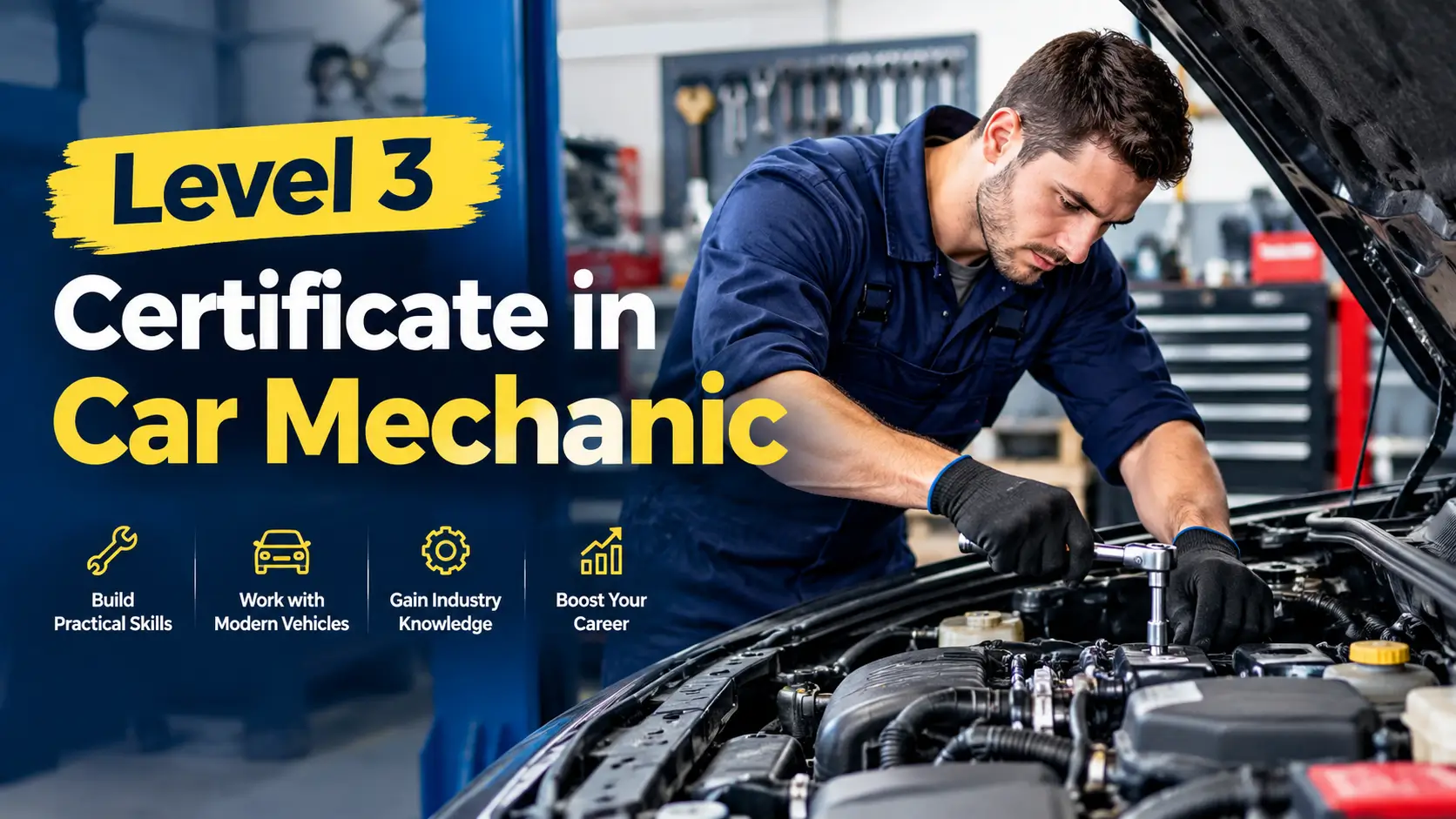
Level 3 Certificate in Car Mechanic
Level 3 Certificate in Car Mechanic Ready to Build a Career as a Car Mechanic but Don’t Know Where to...
Official Certification
Recognized by top tech firms
Learn With Confidence





About This Course
Level 3 Certificate in Car Mechanic
Ready to Build a Career as a Car Mechanic but Don’t Know Where to Start?
No mechanical experience? New to vehicle maintenance and automotive systems?
Gain essential car mechanic knowledge, understand how vehicle components work, and build a strong foundation for exciting career opportunities in the UK’s automotive industry!
✅ Master Car Maintenance Fundamentals — Learn essential vehicle maintenance principles, basic automotive mechanics, and common car servicing concepts.
✅ Understand Engine & Drivetrain Systems — Explore engine components, drivetrains, and how key mechanical systems work together to power a vehicle.
✅ Develop Automotive Systems Knowledge — Understand fuel systems, ignition systems, cooling systems, air conditioning, and exhaust systems.
✅ Explore Career Opportunities — Build industry-relevant knowledge to support your journey toward car mechanic, automotive maintenance, and vehicle servicing roles in garages and workshops.
COURSE OVERVIEW
Explore how essential vehicle systems operate with this Level 3 Certificate in Car Mechanic course. The programme introduces the principles of vehicle maintenance and repair, helping learners understand the components and systems involved in everyday car operation.
Throughout the course, you will examine engine and drivetrain systems, fuel delivery, ignition, cooling, air conditioning and exhaust systems. The curriculum also covers vehicle electrical systems, brakes, steering and suspension, providing an overview of how these components contribute to vehicle performance, control and reliability.
Designed for learners interested in car mechanics and automotive maintenance, this course provides foundational knowledge of vehicle systems and their role in maintenance and repair work.
Key Curriculum Topics
-
Engine and Drivetrain Systems: Explore the main components involved in generating and transferring power.
-
Fuel and Ignition Systems: Understand the basic functions of fuel delivery and ignition.
-
Cooling, Air Conditioning and Exhaust Systems: Examine how these systems contribute to vehicle operation.
-
Electrical and Braking Systems: Explore the roles of electrical components and braking systems.
-
Steering and Suspension Systems: Understand how steering and suspension contribute to vehicle control and stability.
COURSE CURRICULUM
Module 1: Introduction to Car Maintenance
This module introduces the fundamentals of maintaining a car and provides a starting point for understanding vehicle maintenance. It establishes foundational knowledge before learners move into individual automotive systems.
Main learning topics:
- Introduction to car maintenance
- Basic vehicle maintenance principles
- Understanding the importance of vehicle maintenance
- Foundations for further automotive learning
Module 2: Being Prepared
This module focuses on preparation for working with vehicle maintenance and repair tasks. It helps establish an appropriate foundation before examining specific vehicle systems.
Main learning topics:
- Preparing for car maintenance activities
- Understanding preparation requirements
- Approaching vehicle maintenance systematically
- Foundations for safe and organised automotive work
Module 3: The Engine
The engine is one of the central systems in a vehicle. This module introduces learners to the engine and its importance within overall vehicle operation.
Main learning topics:
- Engine fundamentals
- Main engine components
- Engine operation
- Engine maintenance principles
- Basic engine servicing knowledge
This module is particularly relevant to learners searching for a basic engine servicing course or wanting to learn car repair from a strong mechanical foundation.
Module 4: The Drivetrain
The drivetrain transfers power from the engine to the vehicle’s wheels. This module introduces the drivetrain and its role in vehicle movement.
Main learning topics:
- Drivetrain fundamentals
- Main drivetrain components
- Power transfer
- Relationship between the engine and drivetrain
- Drivetrain maintenance awareness
Module 5: The Fuel System
The fuel system is essential to engine operation. This module introduces the purpose and main components of a vehicle’s fuel system.
Main learning topics:
- Fuel system fundamentals
- Main fuel system components
- Fuel delivery
- Relationship between the fuel system and engine operation
- Fuel system maintenance awareness
Module 6: The Ignition System
The ignition system plays an important role in engine operation. This module introduces the system and its relationship with vehicle performance.
Main learning topics:
- Ignition system fundamentals
- Main ignition components
- Ignition system operation
- Relationship between ignition and engine performance
- Ignition maintenance awareness
Module 7: The Cooling System
The cooling system helps manage engine temperature during operation. This module provides an introduction to its purpose and key components.
Main learning topics:
- Cooling system fundamentals
- Main cooling system components
- Engine temperature management
- Cooling system operation
- Cooling system maintenance awareness
Module 8: The Air Conditioning System
This module introduces the air conditioning system found in vehicles and explains its place within overall vehicle systems.
Main learning topics:
- Automotive air conditioning fundamentals
- Main air conditioning system components
- System operation
- Vehicle climate control awareness
- Air conditioning maintenance considerations
Module 9: The Exhaust System
The exhaust system is an important part of a vehicle’s mechanical system. This module introduces its purpose and key components.
Main learning topics:
- Exhaust system fundamentals
- Main exhaust components
- Exhaust system operation
- Relationship between exhaust and engine operation
- Exhaust maintenance awareness
Module 10: The Electrical System
Modern vehicles depend on electrical systems for numerous functions. This module introduces vehicle electrical systems and their importance to overall vehicle operation.
Main learning topics:
- Automotive electrical system fundamentals
- Main electrical components
- Electrical system operation
- Vehicle electrical maintenance awareness
- Relationship between electrical systems and vehicle functions
This module is particularly useful for learners developing basic auto mechanics course knowledge and considering further automotive electrical training.
Module 11: The Braking System
Braking is fundamental to vehicle control and safety. This module introduces the braking system and its major components.
Main learning topics:
- Braking system fundamentals
- Main braking components
- Brake system operation
- Vehicle braking maintenance awareness
- Importance of braking systems
Module 12: Steering And Suspension
The final module introduces steering and suspension systems, both of which are important to vehicle handling and control.
Main learning topics:
- Steering system fundamentals
- Suspension system fundamentals
- Main steering components
- Main suspension components
- Relationship between steering, suspension and vehicle handling
- Steering and suspension maintenance awareness
WHO IS THIS COURSE FOR?
Aspiring Car Mechanics
This programme is suitable for people interested in beginning their journey towards automotive maintenance and repair work. It provides broad knowledge of the major systems found in cars.
Beginners Learning Car Repair
People looking to learn car repair can use the curriculum to develop an organised understanding of vehicle systems rather than studying individual components in isolation.
Automotive Career Starters
Learners considering entry-level automotive environments can develop foundational knowledge that may complement practical workplace experience and additional training.
Existing Automotive Learners
People already undertaking practical automotive training may find the programme useful for reinforcing their understanding of engines, electrical systems, brakes, suspension and other vehicle components.
DIY Vehicle Enthusiasts
Individuals interested in understanding how cars work and improving their general vehicle maintenance knowledge can use the curriculum as a structured learning pathway.
People Exploring Automobile Repair Training
Learners researching automobile repair training can use this programme to explore fundamental automotive systems before deciding whether to pursue more specialised practical training.
Future Workshop Professionals
Those interested in working in garages, vehicle service centres or fast-fit environments can develop foundational system knowledge relevant to these settings.
REQUIREMENTS
No formal entry requirements have been supplied for this programme.
Learners should review the provider’s current enrolment information for any requirements that may apply before starting.
The programme provides knowledge-based learning. Some automotive jobs may require additional practical experience, workplace training, qualifications, driving licences or manufacturer-specific training.
SKILLS YOU CAN DEVELOP
Car Maintenance Knowledge
Develop an understanding of fundamental vehicle maintenance principles and the major systems that require attention during vehicle servicing.
Engine Knowledge
Build knowledge of engine operation and the role of the engine within the wider vehicle system.
Drivetrain Understanding
Understand the purpose of the drivetrain and its relationship with engine power and vehicle movement.
Fuel System Knowledge
Develop an understanding of fuel systems and their relationship with engine operation.
Ignition System Knowledge
Recognise the importance of ignition systems and their role in vehicle operation.
Cooling System Awareness
Understand how vehicle cooling systems contribute to engine temperature management.
Air Conditioning Knowledge
Develop foundational knowledge of automotive air conditioning systems and their components.
Exhaust System Knowledge
Understand the purpose and operation of vehicle exhaust systems.
Automotive Electrical Awareness
Build foundational knowledge of vehicle electrical systems and their importance to modern cars.
Braking System Knowledge
Understand the fundamental components and operation of vehicle braking systems.
Steering and Suspension Knowledge
Develop knowledge of steering and suspension systems and their relationship with vehicle handling.
Automotive Systems Awareness
Build a broad understanding of how multiple vehicle systems contribute to overall vehicle operation.
LEARNING OUTCOMES
By completing the programme, learners should be able to:
- Explain the fundamental principles of car maintenance.
- Identify the main systems covered within modern vehicle maintenance.
- Describe the basic function of an automotive engine.
- Explain the purpose of a vehicle drivetrain.
- Describe the role of fuel and ignition systems in vehicle operation.
- Explain the purpose of automotive cooling systems.
- Identify the main functions of air conditioning and exhaust systems.
- Describe the importance of automotive electrical systems.
- Explain the fundamental purpose of vehicle braking systems.
- Describe the role of steering and suspension systems in vehicle operation.
CAREER PATHS
Motor Mechanic
Typical UK Salary: £22,000 starter to £42,000 experienced.
How the course is relevant: The curriculum directly covers many areas associated with motor mechanic work, including engines, fuel, ignition, cooling, exhaust, electrical systems, brakes, steering and suspension. The National Careers Service describes motor mechanics as professionals who service and repair cars and vans. Employers may require additional practical training, experience or qualifications depending on the role.
Light Vehicle Technician
Typical UK Salary: Motor mechanic roles, including light vehicle technician positions, are listed at approximately £22,000 to £42,000 by the National Careers Service.
How the course is relevant: The programme develops broad knowledge of car systems that can support further light-vehicle maintenance and repair training. Practical workshop competence and employer-specific requirements may be needed for technician positions.
Fast-Fit Technician
Typical UK Salary: £21,000 starter to £30,000 experienced.
How the course is relevant: Knowledge of braking, exhaust, electrical systems, steering, suspension and general vehicle maintenance is relevant to fast-fit environments. The National Careers Service notes that fast-fit technicians may work with tyres, exhausts, batteries, brakes and suspension. Additional workplace training may be required.
Auto Electrician
Typical UK Salary: £23,000 starter to £38,000 experienced.
How the course is relevant: Module 10 provides foundational knowledge of automotive electrical systems. Learners seeking specialist auto-electrical work would normally need additional specialist training and practical experience.
Heavy Vehicle Technician
Typical UK Salary: £26,000 starter to £55,000 experienced.
How the course is relevant: The programme is focused on car mechanics rather than heavy vehicles, but its foundational understanding of engines, braking, electrical, steering and suspension systems may provide useful general mechanical knowledge. Heavy vehicle maintenance requires additional specialist training.
Vehicle Maintenance Assistant
Typical UK Salary: Salary varies by employer, location, experience and job responsibilities.
How the course is relevant: The broad coverage of vehicle maintenance and individual automotive systems can support learners exploring entry-level vehicle maintenance environments. Employers may have their own practical experience and training requirements.
Automotive Workshop Trainee
Typical UK Salary: Varies depending on employer, apprenticeship or trainee arrangement.
How the course is relevant: The programme can help learners develop terminology and foundational understanding before pursuing practical workshop experience, an apprenticeship or additional automotive training.
Automotive Parts Roles
Typical UK Salary: Varies according to position, employer and experience.
How the course is relevant: Understanding engines, drivetrain systems, braking, electrical components and other vehicle systems can help learners develop automotive product knowledge useful in parts-related environments. Specific roles may require additional customer service, sales or technical training.
IMPORTANT CAREER NOTE
The Level 3 Certificate in Car Mechanic should be viewed as a foundation for automotive knowledge rather than a guarantee of employment or a replacement for practical workshop training.
The National Careers Service identifies several routes into motor mechanic work, including college courses, apprenticeships and direct application, and notes that progression can include diagnostic technician, master technician, roadside assistance and specialist electric-vehicle work with appropriate additional training.
Learners should check the requirements of individual employers and relevant professional or awarding bodies before using the programme as part of a specific career pathway.
FREQUENTLY ASKED QUESTIONS
1. What is the Level 3 Certificate in Car Mechanic?
The Level 3 Certificate in Car Mechanic is a structured programme covering fundamental car maintenance and major vehicle systems, including engines, drivetrain, fuel, ignition, brakes, electrical systems, steering and suspension.
2. Is this a basic car maintenance course?
Yes. The curriculum provides broad foundational knowledge of car maintenance and major automotive systems, making it relevant to learners looking for basic car maintenance course content.
3. Does the programme cover basic engine servicing?
Yes. The Engine module introduces engine fundamentals and provides knowledge relevant to learners searching for a basic engine servicing course.
4. Can I learn car repair with this programme?
The programme can help you learn car repair concepts by explaining the main systems and components involved in vehicle maintenance. Practical repair work requires appropriate hands-on training and experience.
5. Is this a basic mechanics course?
Yes. The curriculum covers fundamental mechanical and vehicle-system topics, making it suitable for learners searching for a basic mechanics course.
6. What vehicle systems are covered?
The programme covers the engine, drivetrain, fuel, ignition, cooling, air conditioning, exhaust, electrical, braking, steering and suspension systems.
7. Is this suitable for beginners?
Yes. The curriculum begins with an introduction to car maintenance and progresses through the major vehicle systems, making it suitable for learners developing foundational automotive knowledge.
8. Does it include electrical systems?
Yes. Module 10, The Electrical System, introduces automotive electrical systems and their importance within vehicle operation.
9. Does it cover brakes and suspension?
Yes. Module 11 covers the braking system, while Module 12 covers steering and suspension.
10. Can this help with automobile repair training?
Yes. The programme provides foundational knowledge across multiple vehicle systems and can complement further practical automobile repair training.
11. Is this a basic car mechanics course?
It can be suitable for learners searching for basic car mechanics course content because it provides broad introductory knowledge of the major systems found in cars.
12. What is car mechanic learning?
Car mechanic learning involves developing knowledge and practical understanding of vehicle systems, maintenance, fault identification and repair. This programme focuses on foundational system knowledge.
13. Can this programme help me become a motor mechanic?
It can support your knowledge development, but becoming a motor mechanic may require additional practical training, workplace experience, qualifications or other requirements depending on the employer and role. The National Careers Service identifies college courses, apprenticeships and direct applications among routes into motor mechanic work.
14. What is the difference between a basic auto mechanics course and advanced mechanic training?
A basic auto mechanics course generally establishes knowledge of vehicle systems and maintenance fundamentals, while advanced training may involve deeper diagnostics, specialist technologies and extensive hands-on practice. The appropriate pathway depends on your career goals.
15. Can this programme support a career in a garage?
It can provide foundational automotive knowledge relevant to garage environments. However, individual employers may require practical competence, experience, additional qualifications or other job-specific requirements.
Course Content
Module 1- Introduction to Car Maintenance
-
Introduction to Car Maintenance
00:00
Module 2- Being Prepared
Module 3- The Engine
Module 4- The Drivetrain
Module 5- The Fuel System
Module 6- The Ignition System
Module 7- The Cooling System
Module 8- The Air Conditioning System
Module 9- The Exhaust System
Module 10- The Electrical System
Module 11- The Braking System
Module 12- Steering And Suspension
Frequently Asked Questions
There are many things that you might want to know. Well we have the answers.
