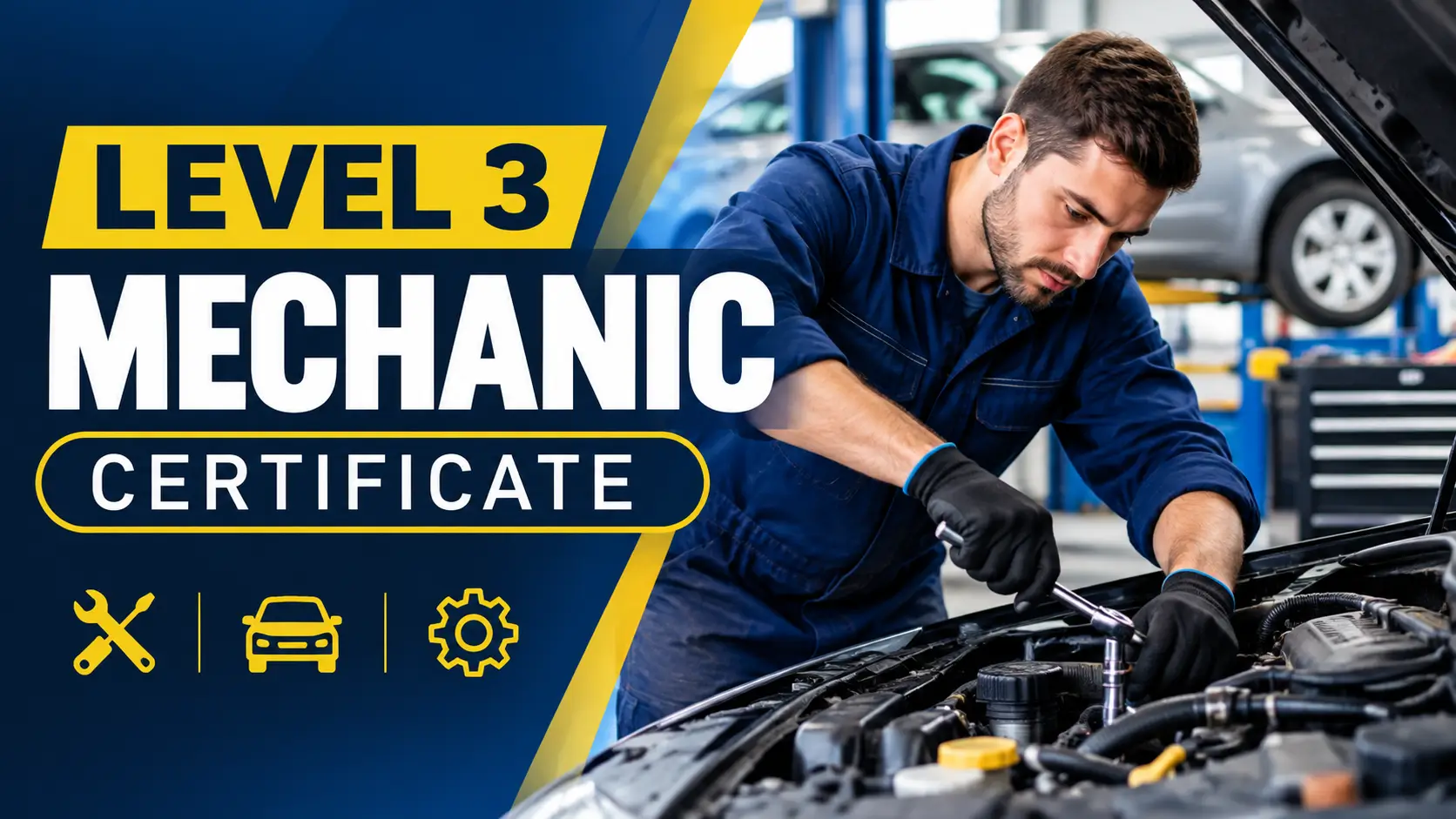
Level 3 Mechanic Certificate
Level 3 Mechanic Certificate Ready to Build a Career as a Car Mechanic but Don’t Know Where to Start? No...
Official Certification
Recognized by top tech firms
Learn With Confidence






About This Course
Level 3 Mechanic Certificate
Ready to Build a Career as a Car Mechanic but Don’t Know Where to Start?
No mechanical experience? New to automotive systems and vehicle maintenance?
Gain essential car mechanic knowledge, understand how vehicle systems operate, and build a strong foundation for exciting career opportunities in the UK’s automotive industry!
✅ Master Automotive Mechanics Fundamentals — Learn essential automotive principles, vehicle components, and how different mechanical systems work together.
✅ Understand Engine & Fuel Systems — Explore how car engines operate, how fuel is delivered, and the essential functions of engine and fuel system components.
✅ Develop Electrical & Brake System Knowledge — Understand key vehicle electrical components, braking systems, and their roles in vehicle operation and safety.
✅ Explore Career Opportunities — Build industry-relevant theoretical knowledge to support your journey toward car mechanic and automotive maintenance roles in garages, dealerships, MOT centres, and fleet maintenance environments.
COURSE OVERVIEW
Explore the essential systems involved in vehicle operation and maintenance with this Level 3 Mechanic Certificate course. The programme introduces fundamental automotive principles before examining how key mechanical and electrical components contribute to vehicle performance and reliability.
Throughout the course, you will study engine systems, fuel systems, vehicle electrical systems and braking systems. These subjects provide an understanding of how different automotive components function and why they are important in vehicle maintenance and repair.
Designed for learners interested in car mechanics and automotive technology, this online course provides foundational knowledge of vehicle systems that can support further study and an understanding of automotive workshop environments.
Key Curriculum Topics
-
Introduction to Automotive Systems: Explore the main systems involved in vehicle operation.
-
Engine Systems: Understand the fundamental functions of automotive engines.
-
Fuel Systems: Examine how fuel systems support engine operation.
-
Electrical Systems: Explore the role of electrical components in modern vehicles.
-
Braking Systems: Understand the principles and functions of vehicle braking systems.
COURSE CURRICULUM
Module 1: Introduction to Automotive Systems
This module provides an introduction to automotive systems and establishes the foundation for understanding the different components and systems found within vehicles.
Main learning topics:
- Automotive systems fundamentals
- Major vehicle systems
- Purpose of automotive systems
- Relationships between vehicle systems
- Foundations of automotive maintenance knowledge
This introductory module provides the foundation for the more specialised engine, fuel, electrical and braking topics covered later in the programme.
Module 2: Engine Systems
This module introduces engine systems and their role in vehicle operation.
Main learning topics:
- Engine system fundamentals
- Main engine components
- Engine operation
- Relationship between engine components
- Engine maintenance awareness
Understanding engine systems is central to automotive learning and can provide useful background for learners considering further practical mechanic training.
Module 3: Fuel Systems
This module focuses on vehicle fuel systems and their relationship with engine operation.
Main learning topics:
- Fuel system fundamentals
- Main fuel system components
- Fuel delivery
- Relationship between fuel systems and engines
- Fuel system maintenance awareness
The module provides foundational knowledge that can complement further study and practical automotive training.
Module 4: Electrical Systems
Modern vehicles rely heavily on electrical systems. This module introduces automotive electrical systems and their importance within vehicle operation.
Main learning topics:
- Automotive electrical system fundamentals
- Main electrical components
- Electrical system operation
- Electrical system maintenance awareness
- Relationship between electrical systems and vehicle functions
This knowledge can be useful for learners who intend to pursue more specialised automotive electrical training in the future.
Module 5: Brake Systems
Brake systems are fundamental to vehicle control and safety. This module introduces the principles and components associated with vehicle braking systems.
Main learning topics:
- Brake system fundamentals
- Main brake components
- Brake system operation
- Brake maintenance awareness
- Importance of vehicle braking systems
Understanding braking systems is relevant to a wide range of automotive maintenance environments and practical mechanic training pathways.
WHO IS THIS COURSE FOR?
Aspiring Mechanics
This programme is suitable for people who want to build foundational knowledge of automotive systems before progressing into practical mechanic training.
Beginners in Automotive Maintenance
Learners with limited automotive knowledge can use the five-module curriculum to develop an organised understanding of key vehicle systems.
People Searching for a Level 3 Mechanic Course Online
Learners specifically looking for a level 3 mechanic course online can use this programme to study core automotive subjects in a structured format.
Learners Comparing Level 2 and Level 3 Mechanic Training
People researching a level 2 mechanic course online or level 2 mechanic course can use the curriculum to compare subject coverage. However, course titles should not automatically be treated as equivalent to regulated qualification levels.
Future Apprentices
People considering a mechanic apprenticeship can develop introductory automotive knowledge before or alongside practical workplace development, depending on the apprenticeship provider’s requirements.
Existing Automotive Workers
People already working around vehicles may use the programme to reinforce their understanding of engine, fuel, electrical and brake systems.
Career Changers
People considering a move into automotive maintenance can use the programme to explore core mechanic subjects before deciding whether to pursue practical training.
Part-Time Learners
People looking for a part time mechanic course may find structured automotive study useful alongside other commitments, subject to the provider’s current delivery arrangements.
REQUIREMENTS
No formal entry requirements have been supplied for this programme.
Learners should check the provider’s current enrolment information for any requirements that may apply before starting.
Specific mechanic jobs, apprenticeships and practical automotive roles may have additional requirements relating to experience, qualifications, driving licences or practical competence.
SKILLS YOU CAN DEVELOP
Automotive Systems Knowledge
Develop an understanding of the main systems that contribute to vehicle operation.
Engine Systems Knowledge
Build foundational knowledge of engines, their components and their role within vehicles.
Fuel System Knowledge
Understand the basic purpose and operation of automotive fuel systems.
Electrical Systems Awareness
Develop foundational knowledge of vehicle electrical systems and their components.
Brake Systems Knowledge
Understand the basic purpose, components and operation of vehicle braking systems.
Automotive Component Awareness
Develop familiarity with important components within engine, fuel, electrical and brake systems.
Vehicle Systems Understanding
Understand how different automotive systems contribute to overall vehicle operation.
Maintenance Awareness
Develop foundational awareness of considerations relevant to vehicle maintenance.
Automotive Technical Vocabulary
Build knowledge of terminology associated with major automotive systems.
Practical Training Preparation
Develop theoretical foundations that can complement future hands-on automotive learning.
LEARNING OUTCOMES
By completing the programme, learners should be able to:
- Explain the purpose of major automotive systems.
- Identify the main systems found within vehicles.
- Describe the basic function of engine systems.
- Identify key components associated with engine systems.
- Explain the fundamental purpose of automotive fuel systems.
- Describe the role of electrical systems in vehicle operation.
- Identify important components associated with automotive electrical systems.
- Explain the fundamental purpose and operation of brake systems.
- Recognise the relationship between major vehicle systems and overall vehicle operation.
- Demonstrate foundational knowledge suitable for further automotive study and practical training.
CAREER PATHS
Motor Mechanic
Typical UK Salary: £22,000 starter to £42,000 experienced.
How the course is relevant: The curriculum covers engine, fuel, electrical and brake systems, providing foundational knowledge relevant to motor mechanic work. Practical competence and additional training are normally important for hands-on mechanic roles. The National Careers Service identifies college courses, apprenticeships and direct application as possible routes into motor mechanic work.
Motor Vehicle Technician
Typical UK Salary: £22,000 starter to £42,000 experienced.
How the course is relevant: The programme provides introductory knowledge of core automotive systems relevant to vehicle maintenance. Further technical training, practical experience and employer requirements may apply to technician positions.
Vehicle Maintenance Technician
Typical UK Salary: Varies according to employer, location, experience and specialism.
How the course is relevant: Engine, fuel, electrical and brake system knowledge can provide useful foundations for vehicle maintenance work. Practical workshop competence and additional qualifications may be required.
Vehicle Fitter
Typical UK Salary: £21,000 starter to £34,000 experienced.
How the course is relevant: The programme introduces several vehicle systems relevant to maintenance and fitting environments. Further practical training may be required depending on the specific role. The National Careers Service identifies vehicle fitter as a role involving fitting and maintaining components on vehicles.
Fast-Fit Technician
Typical UK Salary: £21,000 starter to £30,000 experienced.
How the course is relevant: Brake systems are particularly relevant to fast-fit environments, while general automotive systems knowledge can provide additional background. The National Careers Service notes that motor vehicle fitters can work on areas including brakes, suspension, exhausts, batteries and tyres.
Apprentice Mechanic
Typical UK Salary: Apprentice pay varies according to age, apprenticeship year, employer and working hours.
How the course is relevant: The programme can provide introductory theoretical knowledge that may complement an apprenticeship. However, an apprenticeship is a separate employment and training route, and this course does not guarantee an apprenticeship placement.
Automotive Workshop Assistant
Typical UK Salary: Varies according to employer, location and experience.
How the course is relevant: Knowledge of vehicle systems, engines, fuel, electrical components and brakes can provide useful background for people seeking entry-level workshop environments.
LEVEL 3 MECHANIC COURSE ONLINE VS LEVEL 2 MECHANIC COURSE
People searching for a level 3 mechanic course online may also encounter programmes marketed as a level 2 mechanic course online or level 2 mechanic course.
Course titles alone should not be used to assume that two programmes represent regulated qualification levels. The exact curriculum, awarding organisation and qualification framework should be checked with the provider.
For this programme, the supplied curriculum covers:
- Introduction to Automotive Systems
- Engine Systems
- Fuel Systems
- Electrical Systems
- Brake Systems
These subjects provide a broad foundation in key automotive systems.
Learners comparing programmes should consider the actual content, practical training opportunities, assessment arrangements, awarding status and progression routes rather than relying solely on the words “Level 2” or “Level 3” in a course title.
MECHANIC APPRENTICESHIP AND CAREER PROGRESSION
A mechanic apprenticeship can be an important route into automotive maintenance because apprenticeships combine employment with structured training and practical workplace development.
This Level 3 Mechanic Certificate is separate from an apprenticeship. Completing the programme does not automatically provide an apprenticeship placement or employment.
The National Careers Service identifies apprenticeships as one possible route into motor mechanic work. It also lists college courses and direct applications among routes into the occupation.
Learners interested in apprentice mechanic jobs should therefore research current apprenticeship vacancies and check the specific eligibility, training and employment requirements of each employer.
The course can provide useful introductory knowledge, while an apprenticeship can provide the practical workplace development required for a hands-on automotive career.
MECHANIC JOBS AND CAREER DEVELOPMENT
People searching for mechanic jobs may encounter a wide variety of positions, from general motor mechanic roles to vehicle technician, fast-fit and specialist automotive positions.
The exact requirements vary by employer.
A strong automotive career pathway can involve several stages:
Foundation Knowledge → Practical Training → Workplace Experience → Specialist Development → Career Progression
The Level 3 Mechanic Certificate can contribute to the foundation-knowledge stage. Learners may then choose to pursue practical training, apprenticeships, workplace experience or additional specialist study.
Specialist areas can include automotive electrical systems, diagnostics, electric and hybrid vehicles, commercial vehicles or other technical areas. Additional training is generally needed for specialist responsibilities.
PART TIME MECHANIC COURSE: WHO CAN BENEFIT?
People searching for a part time mechanic course may have existing employment, education or other commitments and want to develop automotive knowledge alongside them.
A flexible study approach can be useful for:
- Career changers
- Automotive enthusiasts
- Existing vehicle workers
- Prospective apprentices
- Learners preparing for practical training
- People exploring mechanic careers
Learners should check the provider’s current study format and timetable before enrolling, as availability and delivery arrangements can change.
FREQUENTLY ASKED QUESTIONS
1. What is the Level 3 Mechanic Certificate?
The Level 3 Mechanic Certificate is a programme covering automotive systems, engine systems, fuel systems, electrical systems and brake systems.
2. Is this a level 3 mechanic course online?
The programme is titled Level 3 Mechanic Certificate and is available through the supplied course page. Learners should check the provider’s current delivery information for the latest study format.
3. Does the course cover engine systems?
Yes. Module 2 focuses specifically on Engine Systems.
4. Does it cover fuel systems?
Yes. Module 3 covers Fuel Systems and introduces their role within vehicle operation.
5. Does the programme cover automotive electrical systems?
Yes. Module 4 covers Electrical Systems.
6. Does it teach brake systems?
Yes. Module 5 focuses on Brake Systems, including their fundamental purpose and operation.
7. Is this a level 2 mechanic course?
No. The supplied course title is Level 3 Mechanic Certificate. Learners comparing it with a level 2 mechanic course should examine the exact qualification and curriculum information rather than assuming the titles are equivalent.
8. Is this suitable for someone looking for a level 2 mechanic course online?
It may be useful for someone comparing automotive learning options, but it is specifically presented as a Level 3 Mechanic Certificate. Learners should choose a programme based on their intended learning level, curriculum and progression requirements.
9. Is this a part time mechanic course?
The course is a mechanic-focused training programme. Learners should check the provider’s current delivery arrangements to confirm whether a specific part-time study schedule is available.
10. Can this help me get mechanic jobs?
The programme can develop foundational automotive knowledge, but it does not guarantee employment. Employers may require practical experience, additional qualifications, licences or other job-specific requirements.
11. Can I apply for apprentice mechanic jobs after completing it?
You can apply for relevant apprenticeship opportunities if you meet the employer’s eligibility requirements. However, completing this programme does not guarantee an apprenticeship placement.
12. Is this a mechanic apprenticeship?
No. A mechanic apprenticeship is a separate employment and training pathway. This programme provides automotive education and does not itself constitute an apprenticeship.
13. What is covered in a mechanic apprenticeship?
Apprenticeship content varies by programme and employer, but it generally combines structured learning with practical workplace experience. Applicants should check the specific apprenticeship standard and vacancy requirements.
14. Is this suitable for beginners?
Yes. The curriculum starts with an introduction to automotive systems and then progresses through engines, fuel, electrical and brake systems.
15. Can this course prepare me for practical mechanic training?
It can provide foundational theoretical knowledge that may complement practical automotive training. Hands-on competence generally needs to be developed through appropriate practical training and workplace experience.
Course Content
Module 1_ Introduction to Automotive Systems.
-
Introduction to Automotive Systems.
00:00
Module 2_ Engine Systems.
Module 3_ Fuel Systems.
Module 4_ Electrical Systems.
Module 5_ Brake Systems.
Frequently Asked Questions
There are many things that you might want to know. Well we have the answers.
